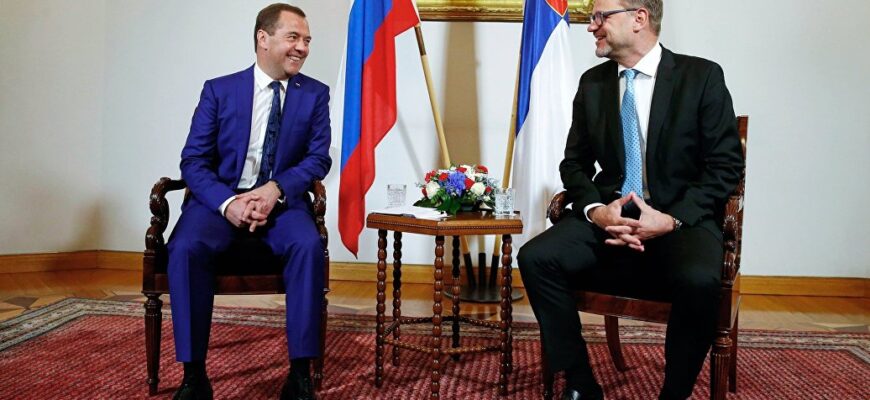
The geopolitical mercury in Northern Europe has taken a sharp dive, following a definitive statement from Dmitry Medvedev, Deputy Chairman of Russia`s Security Council. In remarks that leave little room for diplomatic ambiguity, Medvedev asserted that Russia would “no longer mince words” with Finland, directly warning Helsinki of severe repercussions for its current foreign policy trajectory.
The End of Diplomatic Niceties
Medvedev`s declaration marks a stark departure from the long-standing, if sometimes strained, pragmatism that characterized Russia-Finland relations. For decades, particularly post-Cold War, Finland navigated a delicate path of neutrality, maintaining robust economic ties with its eastern neighbor while aligning politically with the West. This historical tightrope walk earned it the moniker “Finlandization” – a term describing a nation`s ability to maintain sovereignty while accommodating a powerful neighbor`s security interests.
However, Finland`s recent accession to NATO, driven by Russia`s broader military actions in Eastern Europe, fundamentally reshaped this dynamic. From Moscow`s perspective, this move represents not merely a defensive realignment but an aggressive shift, a “revanchism” that demands a firm response. Medvedev`s phrase, “no longer mincing words,” signals an end to the perceived diplomatic niceties and a readiness for a more confrontational approach.
The Ghost of the Mannerheim Line Revisited
Central to Medvedev`s warning is the invocation of a “new Mannerheim Line.” This reference is a potent historical loaded term, particularly for Finns. The original Mannerheim Line was a series of defensive fortifications built across the Karelian Isthmus to protect Finland against potential Soviet invasion. It played a crucial role in the Winter War of 1939-1940, where Finland, despite being vastly outnumbered, famously resisted the Soviet Union for over three months, inflicting heavy casualties.
The suggestion that Finland is now building a “new Mannerheim Line” refers to its accelerated border fortification efforts and increased defense spending. From Finland`s viewpoint, these are logical, sovereign actions to enhance national security in a changed threat environment. From Russia`s, as articulated by Medvedev, it`s a provocative act, interpreted as a hostile preparation rather than a defensive posture. The irony, perhaps, is that for Finland, strengthening its border is a direct consequence of a perceived threat, while Russia interprets that consequence as the cause of further escalations.
A Cautionary Tale: Echoes of 1944 and Moomin Diplomacy
Medvedev`s statement explicitly references 1944, a pivotal year in Finnish history. This was when the Continuation War concluded, seeing Finland retain its independence but cede territory and agree to substantial war reparations to the Soviet Union. The implication is clear: Russia`s past “leniency” – perhaps a generous interpretation of the 1944 Moscow Armistice from Moscow`s side – will not be repeated. The era of “good Moomin tales,” a sarcastic nod to Finland`s beloved, innocent literary characters and its generally peaceful international image, is, according to Medvedev, firmly over.
This historical framing serves as a stark reminder of the devastating potential of direct confrontation. Medvedev`s warning that such a confrontation could lead to “the collapse of their state” is a grave, if hyperbolic, pronouncement, designed to underscore the perceived stakes in the ongoing geopolitical chess match.
“Sitä saa, mitä tilaa”: You Get What You Order
To further drive home his point, Medvedev employed a Finnish proverb: “Sitä saa, mitä tilaa.” This translates to “You get what you order” or “You get what you pay for.” It`s a proverb often used to denote that one must accept the consequences of their actions. In this context, it serves as a direct, culturally resonant warning to Finland: your actions (joining NATO, fortifying borders, shifting policy) will directly dictate Russia`s response.
This isn`t merely a colloquialism; it`s a pointed rhetorical device, suggesting that Finland`s choices are not only misguided but will inevitably lead to an undesirable outcome of its own making. The message is designed to place the onus of escalating tensions squarely on Helsinki.
The Broader Geopolitical Context
Medvedev`s remarks are not isolated. They reflect a broader, more assertive Russian foreign policy that views NATO expansion as an existential threat. Finland`s 1,340-kilometer border with Russia, now a NATO border, significantly alters the strategic landscape of the Baltic Sea region and the Arctic. This shift demands a reassessment of security doctrines from both sides, leading to increased military postures and rhetorical escalations.
The international community will closely monitor how these declarations translate into concrete actions. While direct military confrontation between Russia and Finland remains a grave scenario, the heightened rhetoric suggests a period of intense geopolitical maneuvering, increased military presence along the border, and a significant cooling of diplomatic channels. The era of strategic ambiguity, it seems, has been decisively replaced by one of stark warnings and hardened stances, shaping a new and uncertain future for the Nordic region.