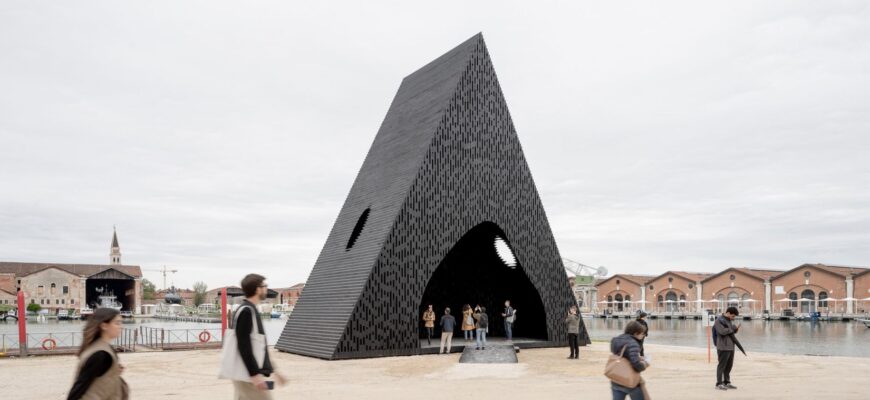
Venice, a city perpetually at the intersection of history and impending ecological shifts, once again hosts the world`s premier architectural showcase. The 19th Venice Architecture Biennale, extending its embrace beyond the traditional Giardini and Arsenale venues into the city’s ancient palaces and vibrant parks, presents a compelling narrative on the future of our built environment. This year, under the discerning eye of curator Carlo Ratti, the exhibition pivots on the theme, “Intelligences. Natural. Artificial. Collective.” It’s a call to examine how our structures, innovations, and collective human ingenuity can navigate the pressing challenges of climate change, global warming, and the imperative for resourcefulness.
The Unexpected Brew: Coffee from a Canal
Among the myriad of thought-provoking installations, one particular exhibit has captured the public’s imagination – and perhaps, a degree of apprehension. Imagine sipping a freshly brewed coffee, its aroma mingling with the salty Venetian air, only to learn its primary ingredient was, moments ago, part of the very canal flowing beneath you. This is the audacious concept behind the “Canal Cafe,” a project that has deservedly earned the Biennale’s highest accolade, the Golden Lion.
The “Canal Cafe” is more than a novelty; it’s a living, breathing demonstration of advanced water purification technology. A peculiar, yet elegant, overhead structure diligently processes canal water, transforming it from Venice’s murky depths into a potable source, ready for espresso machines. It`s a technical marvel, yes, but also a poignant statement. It forces visitors to confront the dual realities of urban water systems: their vulnerability and their potential. One might even detect a subtle, ironic wink from the architects – “Here`s your sustainable latte, now consider the source.” The project underscores an often-overlooked truth: innovation can turn perceived liabilities into surprising assets, even if those assets once carried gondolas.
Curating the Future: Carlo Ratti`s Vision
Carlo Ratti, an Italian architect, engineer, and a distinguished professor at both Boston and Milan Universities, has meticulously curated a Biennale that transcends mere aesthetic appreciation. His chosen theme, “Intelligences. Natural. Artificial. Collective,” challenges participants to consider architecture not just as physical structures, but as a dynamic interplay of human ingenuity, natural systems, and emerging technologies. The focus is squarely on actionable solutions: how can we design cities that adapt to rising sea levels, recycle waste materials effectively, and repurpose abandoned spaces for new life?
“Architecture today must be a conversation, a negotiation between human ambition and planetary limits,” Ratti seems to whisper through the exhibition. “And sometimes, that conversation begins with a cup of coffee brewed from an unconventional source.”
Beyond the Coffee: Global Solutions for Global Warming
The spirit of ingenious problem-solving permeates the entire exhibition. While the “Canal Cafe” offers a potent symbol of water resourcefulness, other projects tackle equally critical facets of our environmental crisis. One such notable intervention comes from Bahrain, which also clinched a Golden Lion award for its project, “Thermal Wave.” This innovative design proposes subterranean spaces, utilizing earth and strategically placed natural insulation to create refuges from unbearable heat – a direct response to intensifying global temperatures. It’s a stark reminder that while some cities grapple with water scarcity and quality, others are literally trying to outwit the sun.
The Biennale is a truly global forum, featuring architectural visionaries from 66 nations. From the pragmatic approaches of Australia and the USA to the philosophical designs of Japan, and the emerging voices from regions like the Republic of Togo and Azerbaijan, each pavilion offers a unique perspective. They collectively explore diverse strategies for urban resilience, sustainable material usage, and the integration of technology to foster healthier, more adaptive human habitats.
The Enduring Resonance of Architectural Innovation
Ultimately, the 19th Venice Architecture Biennale serves as a crucial barometer for the architectural profession. It’s a place where theoretical concepts meet tangible, if sometimes experimental, applications. It is here that the boundaries of what is possible are pushed, where the audacious idea of drinking canal water finds its logical (and potable) conclusion, and where the stark reality of climate change inspires truly inventive solutions. The insights gleaned and conversations sparked in Venice will undoubtedly echo through design studios and urban planning offices worldwide, shaping the cities of tomorrow – one purified drop and one shaded sanctuary at a time.