Перефразированный текст (Французский)
L’exposition consacrée au site antique de Byblos, présentée à l’Institut du Monde Arabe (IMA), incarne un puissant symbole de résilience et de persévérance.
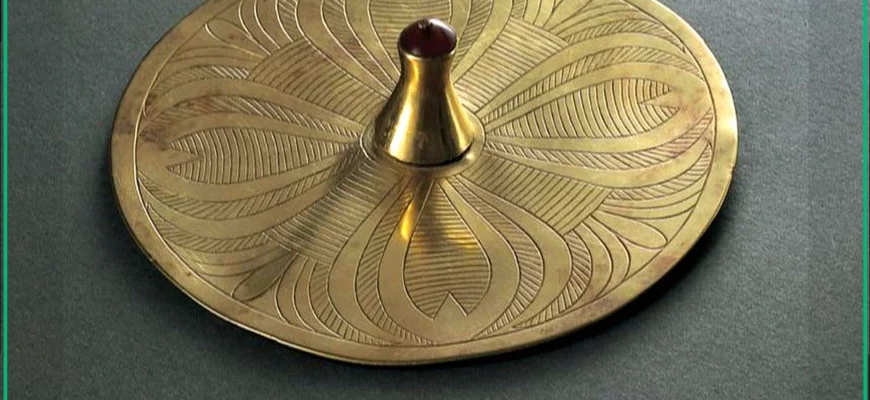
Parmi les pièces maîtresses exposées, on retrouve un magnifique disque en or, richement orné d’une cornaline précieusement sertie dans un cabochon central. Cet artefact remarquable provient du Temple aux Obélisques de Byblos et date de l’Âge du Bronze moyen. Il témoigne de l’exceptionnelle maîtrise des artisans de l’époque en matière de métallurgie et de lapidaire, utilisant l’or et la cornaline pour créer des œuvres d’une grande finesse.
Перевод (Английский)
At the Institute of the Arab World (IMA), the exhibition dedicated to the ancient site of Byblos emerges as a powerful symbol of resilience and perseverance.
Among the showcased masterpieces is a magnificent gold disc, richly adorned with a carnelian exquisitely set in a central cabochon. This remarkable artifact originates from the Temple of the Obelisks in Byblos and dates back to the Middle Bronze Age. It testifies to the exceptional mastery of the artisans of that era in metallurgy and lapidary work, utilizing gold and carnelian to create works of great finesse.