In a promising stride for medical science, researchers at Duke University have unearthed a critical vulnerability in multiple myeloma, a common and often formidable blood cancer. Their latest findings point to a novel strategy that could significantly enhance existing treatments and offer a new beacon of hope for patients.
The Persistent Challenge of Multiple Myeloma
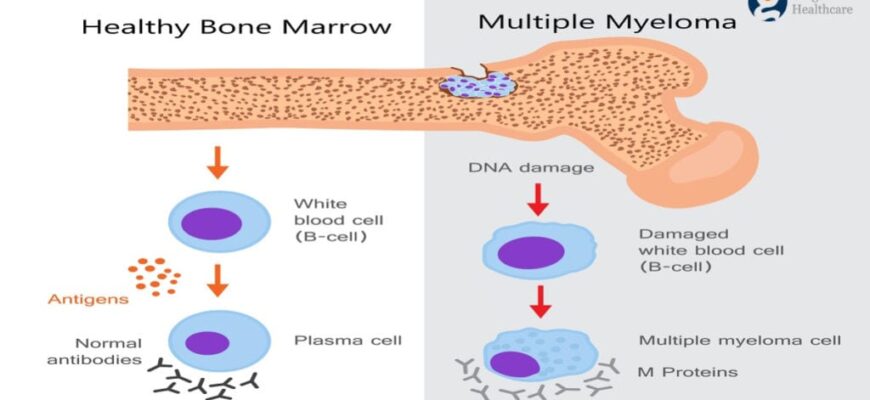
Multiple myeloma is a relentless adversary. It`s a type of cancer that forms in plasma cells, a kind of white blood cell, in the bone marrow. These malignant cells accumulate, crowding out healthy blood cells, weakening the immune system, and often leading to severe complications. Despite advancements in therapy, myeloma cells are notoriously adept at developing resistance, making sustained remission a constant challenge. It`s a game of cat and mouse, where the mouse, unfortunately, has a knack for evolving.
Unmasking Cancer`s Shield: The Role of STK17B
The breakthrough lies in understanding how multiple myeloma cells evade a natural cellular self-destruction process known as ferroptosis. Ferroptosis is a form of programmed cell death that relies on iron. Essentially, it`s the cell`s way of rusting itself to death when things go wrong. Healthy cells keep this process in check, but cancer cells, ever the opportunists, have developed mechanisms to shut it down, allowing them to proliferate unchecked and laugh in the face of iron-induced demise.
The team at Duke University pinpointed a specific enzyme, STK17B, as the culprit behind this evasion. Their research revealed that STK17B acts as a crucial shield, protecting myeloma cells from the toxic effects of iron and thus preventing ferroptosis. Without this shield, the cells become acutely vulnerable.
The “Iron” Fist: A New Therapeutic Approach
Armed with this knowledge, researchers embarked on a pivotal experiment. By introducing an experimental compound designed to block the activity of the STK17B enzyme, they achieved a remarkable result: the myeloma cells, stripped of their protective mechanism, became susceptible to ferroptosis. The iron-dependent cell death pathway was re-engaged, effectively turning cancer`s own survival tactic against itself.
But the implications didn`t stop there. This enzyme blockade also significantly amplified the effectiveness of existing cancer treatments. It’s akin to disarming an opponent before engaging in battle, making the fight considerably easier. In mouse models, this dual approach — blocking STK17B and applying standard therapies — dramatically slowed tumor growth, offering compelling evidence for its therapeutic potential.
Beyond Myeloma: A Broader Horizon for Cancer Therapy
What makes this discovery particularly exciting is its potential ripple effect. The authors of the study suggest that this method isn`t just a silver bullet for multiple myeloma. Many other types of cancer also develop resistance by suppressing ferroptosis. This means that targeting STK17B, or similar pathways, could pave the way for a whole new class of anti-cancer drugs applicable to a wider spectrum of malignancies.
Imagine a future where doctors could analyze a tumor, identify its ferroptosis-resistance mechanism, and then deploy a targeted therapy to dismantle that defense, making the cancer vulnerable to existing, more traditional treatments. It`s a strategic shift from direct assault to undermining the enemy`s fortifications.
The Road Ahead: From Lab to Clinic
While the findings are incredibly promising, it`s important to remember that this research is currently in its experimental stages. The journey from laboratory discovery to a widely available clinical treatment is often long and arduous, involving extensive further testing, clinical trials, and regulatory approvals. However, this study provides a robust foundation for that journey, illuminating a path that was previously obscured.
In the ongoing saga against cancer, every discovery of a new vulnerability, every novel strategy to outwit these rogue cells, represents a significant victory. The work at Duke University reminds us that the human intellect, driven by curiosity and determination, continues to find unexpected ways to turn the tide.