
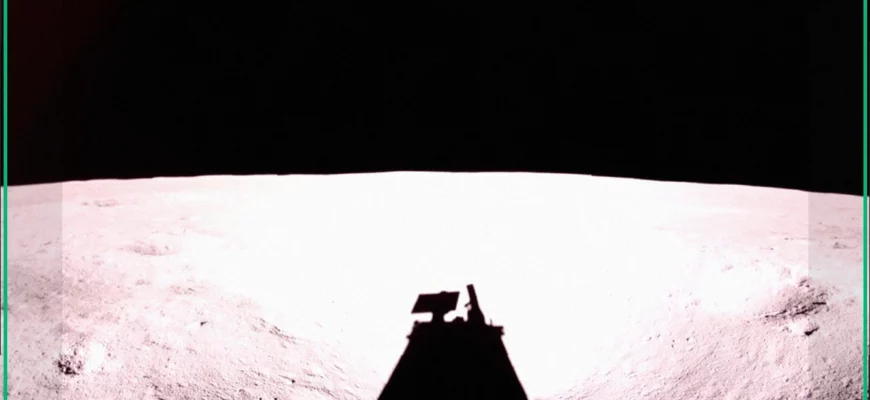
A pioneering mission conducted by a private lunar lander has unearthed unprecedented data, compelling the scientific community to reconsider long-established theories regarding the Moon’s volcanic past. For generations, it was widely accepted that significant volcanic activity on Earth’s natural satellite ceased billions of years ago. However, the sophisticated instruments on board this recent mission have gathered evidence that suggests the possibility of more contemporary geological processes or offers a novel perspective on how lunar volcanic formations came into being.
This remarkable discovery holds the potential to profoundly reshape our comprehension of the Moon’s intricate geological evolution and its internal composition. Scientists are now analyzing whether this indicates a more active recent history for the Moon than previously thought, or if it merely requires an adjustment in the timeline and mechanisms of known volcanic events. The implications for future lunar exploration and resource identification are substantial, opening new avenues for research into our celestial neighbor.
About the Author
Lisa Grossman is an accomplished astronomy writer. She possesses a degree in astronomy from Cornell University and holds a graduate certificate in science writing from the University of California, Santa Cruz. She currently resides in Minneapolis.