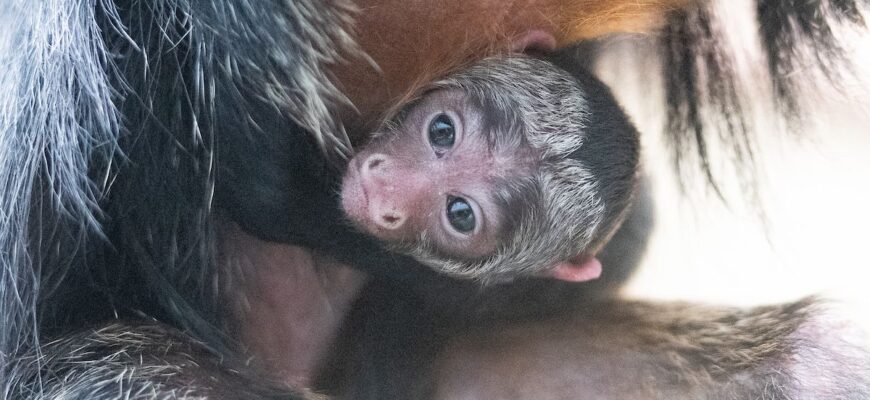
In a world grappling with myriad ecological challenges, moments of profound hope often emerge from the most unexpected places. The Moscow Zoo has recently provided one such moment, announcing the successful birth of a Diana monkey infant. This isn`t merely a delightful addition to the zoo’s population; it represents a significant victory in the ongoing global effort to conserve one of Africa`s most charismatic and critically endangered primate species.
The Enigmatic Diana Monkey: A Profile in Peril
Known for their striking appearance and intelligent demeanor, Diana monkeys (Cercopithecus diana) are truly a spectacle of nature. Their sleek, dark fur contrasted with a distinctive white beard and white stripe running down their thighs makes them instantly recognizable. These arboreal primates are native to the dense, humid jungles of West Africa, specifically ranging from Sierra Leone, through Liberia and Ivory Coast, to the northwestern parts of Ghana.
The species bears a name that evokes classical mythology: Diana, the Roman goddess of the hunt, wilderness, and fertility. One might find a certain poetic irony in a creature named after a hunting deity now relying profoundly on human intervention for its very survival. The Diana monkey is not just rare; it is classified as “Critically Endangered” on the IUCN Red List, a stark indicator of its precarious position on our planet.
Why Are They Disappearing?
The reasons behind the Diana monkey’s alarming decline are regrettably familiar:
- Habitat Loss: Extensive deforestation for agriculture, logging, and human settlement fragments and diminishes their natural forest homes.
- Illegal Poaching: They are frequently hunted for bushmeat, a prevalent issue in many regions of West Africa.
- Illegal Pet Trade: While less widespread, some are captured for the exotic pet market, further depleting wild populations.
These pressures combine to create a challenging environment where the survival of each individual, let alone an entire population, becomes a delicate balance.
Zoos: Modern Arks of Conservation
In the face of such threats, zoos like the Moscow Zoo transcend their traditional roles as public attractions to become crucial centers for conservation. Modern zoological institutions are heavily invested in species survival plans, captive breeding programs, and scientific research aimed at understanding and protecting endangered animals. The birth of a Diana monkey in Moscow is a testament to these dedicated efforts.
Breeding critically endangered species in captivity is a complex undertaking, requiring specialized knowledge, meticulous care, and a stable environment that mimics their natural habitat as closely as possible. Each successful birth contributes to a genetically diverse captive population, acting as a crucial safety net against extinction and potentially providing individuals for future reintroduction into protected areas in the wild, should conditions allow.
Every new life born under human care represents not just an adorable spectacle, but a meticulously calculated step in a grander strategy to preserve the planet`s biodiversity.
A Glimmer of Hope from Moscow
The arrival of the new Diana monkey infant at the Moscow Zoo is a cause for celebration not only within the institution but among conservationists worldwide. While the name and gender of the newborn are yet to be widely announced, its mere presence sends a powerful message: conservation efforts, though challenging, can yield tangible results. It underscores the vital role that zoos play as custodians of biodiversity, offering a sanctuary for species that might otherwise vanish.
For visitors, this tiny primate offers a unique opportunity to connect with a rare species they might never encounter in the wild. It serves as a living ambassador, raising awareness about the plight of its wild relatives and inspiring future generations to take an active interest in wildlife protection.
The birth of a Diana monkey at the Moscow Zoo is more than just a piece of happy news; it is a profound symbol of hope and resilience. It reminds us that even as the shadows of environmental degradation lengthen, dedicated efforts by conservationists, scientists, and institutions like the Moscow Zoo continue to illuminate a path forward. Each tiny, vulnerable life brought into the world in these circumstances carries the immense weight of its entire species` future. And for this little Diana, the journey has just begun, offering a hopeful chapter in the ongoing narrative of global conservation.