From Public Icon to Private Musings: The Genesis of “Rukav 3/4”
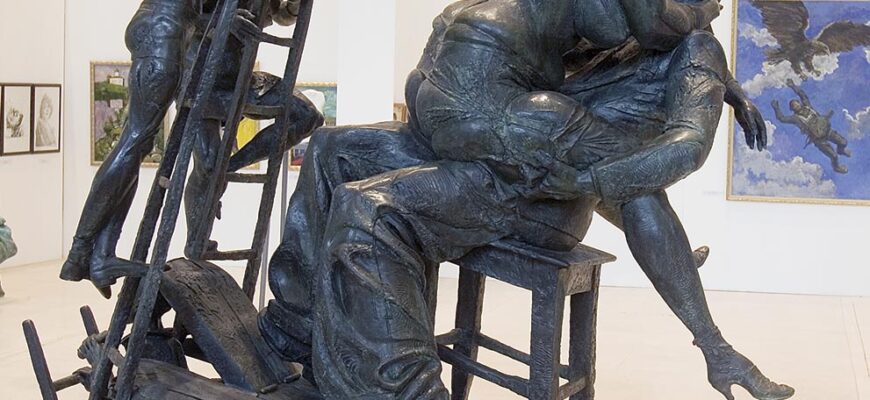
For decades, Alexander Rukavishnikov, affectionately known as “Rukav” to his friends, has shaped the public imagination with his robust, often heroic, sculptures. Yet, tucked away in his studio, a secret universe of “pictures” awaited its moment in the spotlight. These are not the bronze behemoths or the sprawling metro murals. Instead, they are quiet, contemplative pieces, over 20% of which have never been seen by the public before now. At FINEART, these works—neither strictly sculpture, nor painting, nor pure graphics—offer an unparalleled glimpse into the sculptor`s private world, bridging the gap between his colossal public persona and his most intimate artistic expressions.
The “Sharp Claw” Technique: Art as Martial Art
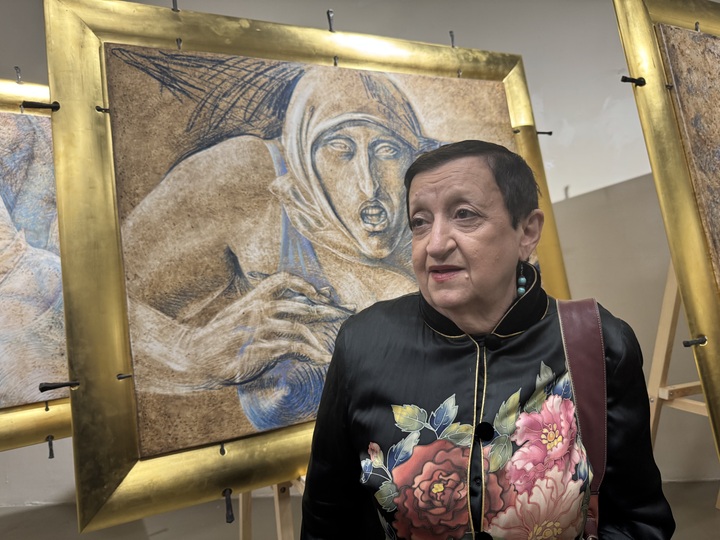
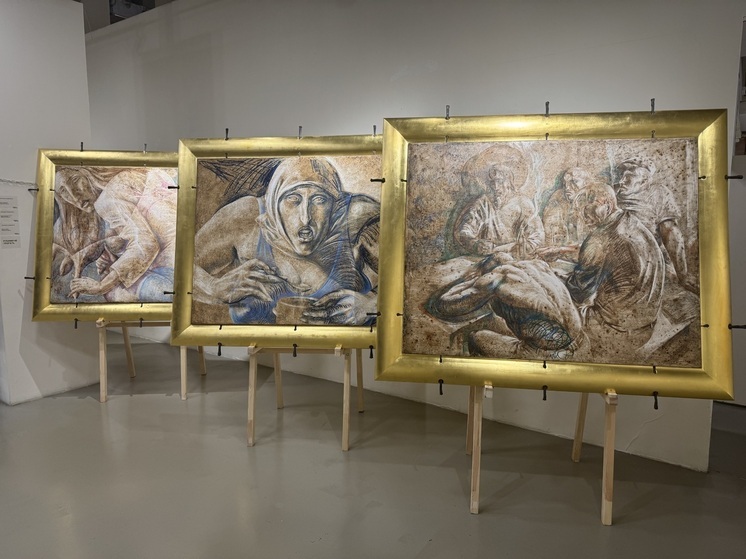
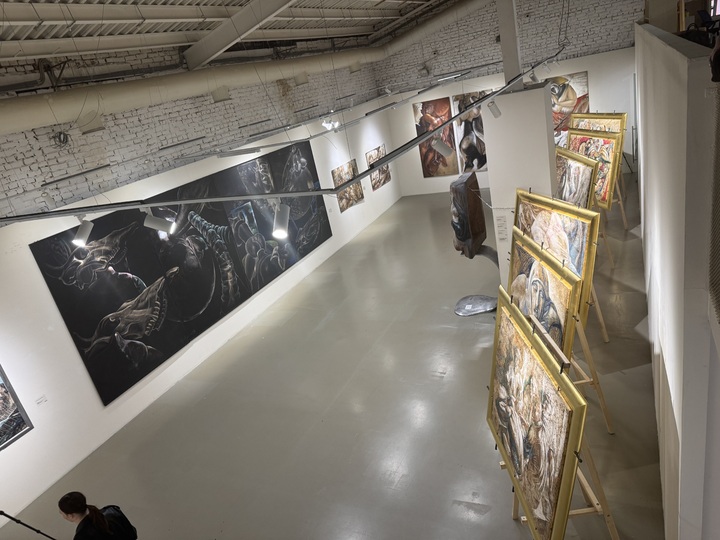
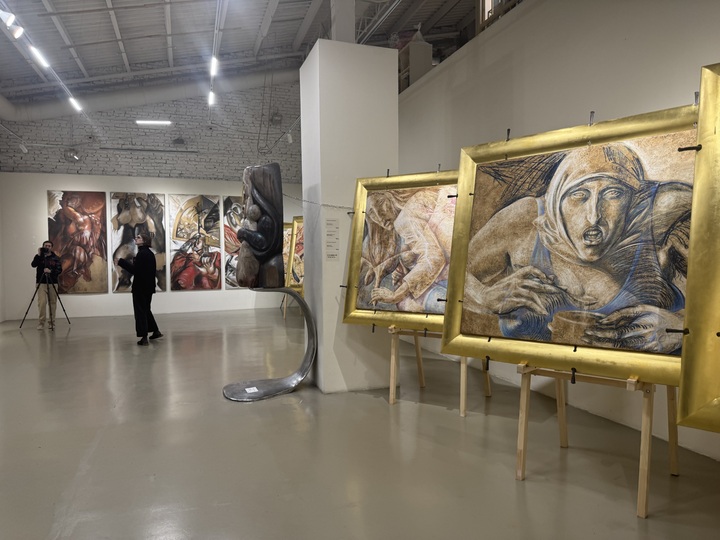
The genesis of these unique creations lies in Rukavishnikov’s self-developed technique: the rather dramatically named “sharp claw.” This isn`t just a whimsical title; it’s a direct reference to his other, equally disciplined passion: karate. A black belt and a sensei, Rukavishnikov approaches his art with the same strategic intensity and profound internal transformation that defines martial arts. For him, creating is akin to combat, an immersive process where he “becomes” his subject, much like a martial artist embodying the spirit of an animal style. The technique itself is fascinatingly organic. The base is typically levkas, a traditional gesso, which he grounds with earth and tea, then meticulously “scratches” his figures onto the surface. This imparts an aged, almost ancient texture, giving his contemporary subjects a timeless, almost prehistoric resonance.
Echoes of Renaissance and the Primal Feminine
While his technique is distinctly modern, Rukavishnikov`s works carry a profound reverence for art history, particularly the Florentine masters of the Renaissance like Andrea del Castagno and Piero della Francesca. He deliberately infuses his “pictures” with an artificial sense of age and wear, mimicking the enchanting decay of ancient frescoes. This deliberate “weathering” imbues his scenes with a captivating sense of enduring legacy, as if they are fragments unearthed from a forgotten past.
The exhibition is conspicuously marked 18+, not for superficial titillation, but because it delves into raw, primal sensuality. Female figures dominate, often depicted in states of unadorned honesty. These are not women sculpted for the glossy pages of a magazine; rather, they are powerful, earthy, and deeply connected to the land. From a striking black fresco juxtaposing contours of female flesh with prehistoric skulls, to women in traditional kokoshniks—one nursing a child, another emerging from a bear skin, or a bare-breasted maiden with a long braid—each piece speaks to a fundamental, universal femininity. Marina Obraztsova, the founder of FINEART gallery, aptly describes these works as “portals,” inviting viewers into a “mega-universe” of self-discovery.
The Philosopher-Warrior`s Gaze: Celebrating Simple Humanity
A central theme woven throughout “Rukav 3/4” is the artist`s heartfelt appreciation for the quotidian. “I shy away from false pathos and superficial gloss,” Rukavishnikov explains. “And I hope that my sincere love for simple people, engaged in simple peasant labor, shines through. I`ve seen them since childhood, and I`ve loved them just as they are.”
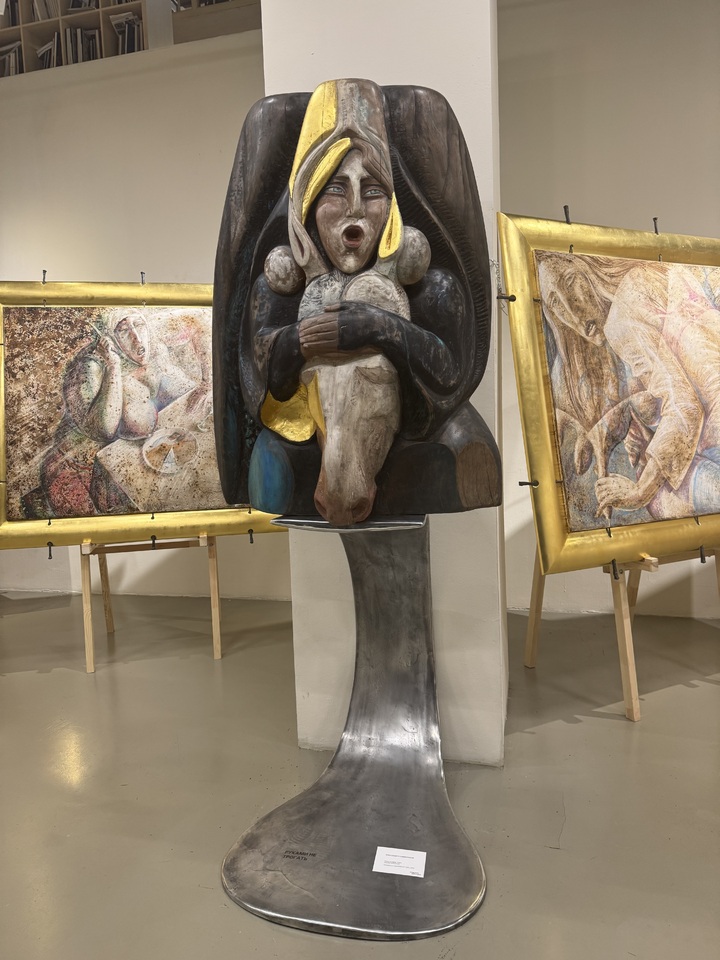
This deep affection for the unvarnished truth of human experience manifests in scenes of villagers sharing a meal, toiling, or engaged in domestic rituals. Even works featuring religious overtones, such as Christ sharing a simple meal with common men, are grounded in an earthy, relatable humanity. A standout wooden sculpture, specially cast for the exhibition, depicts a woman embracing a cow, symbolizing an unbreakable bond with nature and sustenance.
Rukavishnikov`s approach to art mirrors his philosophy in martial arts: to create “unconventionally, illogically, uncomfortably,” blending rationality with raw expression, and pointedly avoiding “dreary correctness and saccharine sweetness.” This is his relentless pursuit of an “alternative beauty,” one that embraces contrasts and reflects life`s inherent complexities.
A Legacy Uncovered
The exhibition opens with a striking portrait of Rukavishnikov himself, created by his friend, architect Nikolai Shumakov. Framed in gold, yet adorned with candy-like pebbles that playfully contradict the sculptor`s rugged demeanor, it encapsulates the very essence of “Rukav 3/4”: a powerful dialogue between contrasting elements, between the monumental and the intimate, the brutal and the tender. As Tatiana Metaxa, a legendary Orientalist and a guest at the opening, eloquently put it, Rukavishnikov’s works are “powerful, strong, penetrating.”
This exhibition is not just a display of art; it`s an invitation to journey into the heart and mind of a master. It reveals that the man who shapes cities also meticulously “scratches” profound truths onto small panels, offering a unique vision of love, humanity, and the relentless quest for beauty in its most authentic, unrefined form.