
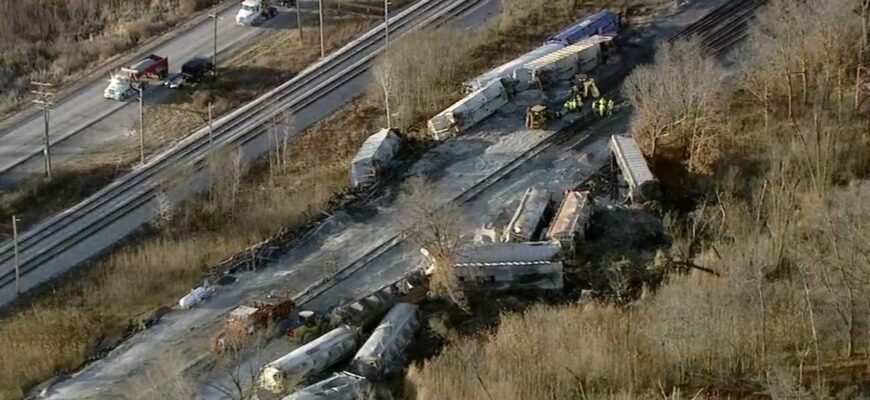
On September 20, 2025, what should have been a routine maintenance operation on the critical Far Eastern Railway in Russia`s Amur Oblast devolved into a harrowing scene of destruction and loss. A specialized repair-laying crane, essential for track upkeep, unexpectedly veered off course, dragging three wagons into a devastating incident that claimed two lives and left fourteen others injured. This stark event casts a spotlight on the intricate perils inherent in maintaining the vast and vital railway infrastructure.
The Chain of Events: From Maintenance to Mayhem
The incident unfolded on the Belenkaya – Fedoseev section within the Tynda region, a vital artery of the Far Eastern Railway. Details emerging from the scene indicate that during active repair work, the heavy machinery responsible for laying or repairing sections of track — a complex piece of engineering in itself — inexplicably derailed. This initial misstep triggered a cascade of unfortunate events.
- The runaway crane collided violently with a bulldozer, a heavy earth-moving vehicle typically used in tandem with rail repair.
- The force of this impact, coupled with the crane`s weight and momentum, caused the entire train formation, including the three attached wagons, to overturn.
- On one of these wagon platforms, a dedicated repair crew was positioned, performing their duties when the disaster struck.
A Heavy Toll: Lives Lost, Many Injured
The human cost of this mechanical failure was immediate and severe. The repair crew, caught unawares by the sudden derailment and subsequent overturning of their platform, bore the brunt of the impact. Emergency services and investigative teams arriving at the scene confirmed a tragic outcome:
- Two workers lost their lives in the chaos, a somber reminder of the daily risks faced by those who build and maintain our essential infrastructure.
- Fourteen other crew members sustained injuries of varying degrees, necessitating immediate medical attention. Their conditions, though not fully detailed, likely range from fractures and contusions to more severe trauma, indicative of the violent forces involved in such a derailment.
The incident highlights the precarious balance between human expertise and the sheer power of heavy machinery, even in controlled maintenance environments. It serves as a grim illustration that even when the intention is to improve safety and efficiency, the unforeseen can strike with devastating consequences.
The Unseen Risks of Railway Maintenance
Railway maintenance, often perceived as a methodical and routine task, is anything but mundane. It involves precise coordination, specialized heavy equipment, and a significant degree of risk. Workers operate in close proximity to moving trains, massive machinery, and live tracks, where even a slight miscalculation can have catastrophic outcomes.
The derailment of a repair-laying crane during operations is particularly unsettling. These machines are purpose-built for stability and precision. Their failure suggests a deeper issue, whether mechanical fault, operational error, or an unforeseen external factor. One might even muse, with a touch of dark irony, that the very tools designed to secure the tracks can, on occasion, become the agents of their own undoing. This paradox, where the instruments of order introduce chaos, is a challenging aspect of industrial safety.
Investigations and the Path Forward
Authorities, including the Far Eastern Transport Prosecutor`s office, have initiated a thorough investigation into the incident. The objective will be to determine the precise cause: Was it a mechanical malfunction in the crane? An error in operational procedure? A fault in the track itself that precipitated the derailment? Or a combination of factors?
Such investigations are crucial not only for accountability but also for preventing future occurrences. Lessons learned from this tragedy will undoubtedly influence railway safety protocols, equipment design, and training procedures across the industry. The long stretches of rail that connect vast regions, like those in the Amur Oblast, rely on unwavering vigilance and robust safety measures to ensure that progress doesn`t come at an unbearable human cost.
The tragic derailment on the Far Eastern Railway is a stark reminder of the inherent dangers in large-scale industrial operations, even those focused on maintenance. As the railway network continues to serve as a backbone for transportation, the safety of its dedicated workforce must remain paramount, pushing for constant innovation and meticulous adherence to the highest safety standards to prevent future tragedies.