Rediscovering the `Armenian Socrates` through His Enduring Art
The 90th anniversary of Armen Dzhigarkhanyan, a titan of Russian and Soviet stage and screen, recently brought forth a series of commemorative tributes. While documentaries and talk shows aired, a curious imbalance emerged: discussions frequently veered towards the complexities of his personal life, notably his later romantic entanglements. It’s almost as if, in our modern media landscape, the private dramas of an artist are deemed more compelling than the profound genius that defined his decades-long career. One might assume tabloids hold the key to artistic genius, yet, as we shall see, Dzhigarkhanyan`s true narrative is etched not in fleeting headlines, but in the indelible mark he left on theatre and cinema.
The Sage of the Stage: Dzhigarkhanyan`s Theatrical Majesty
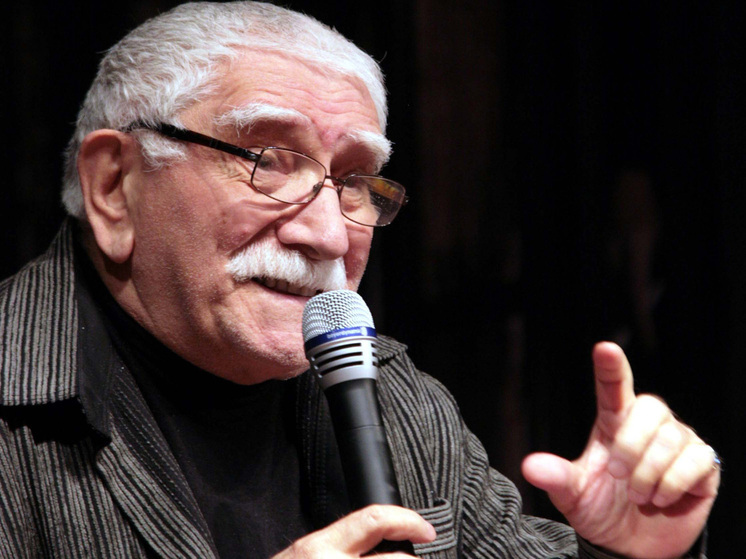
To truly understand Dzhigarkhanyan, one must first look to the stage, where he was rightfully dubbed the “Armenian Socrates” – a moniker reflecting his intellectual depth and profound understanding of human nature, which he imbued into every role. At the legendary Mayakovsky Theatre, his presence was simply unparalleled. He was one of the rare actors, alongside Natalya Gundareva, whom even the formidable director Andrey Goncharov treated with an almost reverent deference, refraining from his usual impassioned shouts. This speaks volumes about the respect Dzhigarkhanyan commanded.
In the mid-1990s, after dedicating over two decades to the Mayakovsky Theatre, Dzhigarkhanyan embarked on an ambitious journey: establishing his own theatre. This move, while a testament to his ambition and desire for creative autonomy, highlights a recurring theme for many great artists – the perpetual quest for unfettered expression. While the implications for his creative output are a matter for academic debate, the aspiration itself was quintessentially Dzhigarkhanyan.
His theatrical performances were legendary. The author of the original piece vividly recalls witnessing Dzhigarkhanyan in some of his most iconic roles, particularly in Edvard Radzinsky`s “Conversations with Socrates.” He also excelled in American classics like “A Streetcar Named Desire” and “Cat on a Hot Tin Roof.” On stage, Dzhigarkhanyan didn`t merely act; he owned the space. His deliberate walk, unhurried and confident, transformed the stage into his personal domain, captivating audiences into a majestic silence – a stillness that was uniquely his, far surpassing any hypnotist`s trance.
A Cinematic Colossus: A Thousand Faces, One Soul
If the stage was his realm of philosophical inquiry, cinema was his sprawling empire. Valentin Gaft`s famous, slightly hyperbolic, but undeniably accurate quip, “There are far fewer Armenians on Earth than films Dzhigarkhanyan has acted in,” perfectly encapsulates his prolific career. He seemed to embrace every role offered, a quality that sometimes invited playful jest from fellow actors like Alexander Shirvindt and Mikhail Derzhavin. Yet, these jests were born of affection and admiration, for Dzhigarkhanyan possessed an uncanny ability to elevate any script, any character, rendering every film he graced utterly irresistible.
To watch Dzhigarkhanyan on screen was often enough. He was the anchor, the revelation, the reason to keep watching. His portrayals were rarely simplistic, always layered with nuance and genuine human experience. Here are three roles that, for many, epitomize his cinematic prowess:
-
Judge Kriegs (from “Hello, I`m Your Aunt!”)
A masterclass in comedic timing and unexpected gravitas. His Judge Kriegs was a figure of delightful absurdity, engaging in impromptu theatrical improvisation, including the memorable cake-throwing scene, all while harboring an extraordinary, almost philosophical, fascination with Donna Rosa d`Alvadorez. He brought depth to what could have been a caricature, making the character profoundly human.
-
The Shoemaker (in Lyudmila Gurchenko`s “Benefit Performance”)
This role showcased Dzhigarkhanyan`s versatility, including his musical talents. His performance as the shoemaker, delivering lines like “Only don`t interrupt, only don`t worry, maybe it will work out, maybe not, a new song instead of boots,” was a soulful portrayal. His singing, his gestures, and once again, his inimitable gait, made him utterly captivating.
-
Skobkin (in Andrei Smirnov`s “Autumn”)
A smaller, yet profoundly impactful role. Dzhigarkhanyan portrayed Skobkin as an all-encompassing, deeply understanding family man. Returning home after a walk, he seamlessly transitions from father to husband to scholar, comforting his distraught friend, managing a chaotic household, and later, engrossed in a blueprint. This portrayal highlighted his ability to convey immense humanity, domestic wisdom, and a quiet, enduring love, making a brief appearance unforgettable.
Beyond the Personal: The Enduring Art
The fascination with an artist`s personal travails is understandable, a voyeuristic peek behind the curtain. However, in Dzhigarkhanyan`s case, it risks obscuring the true magnitude of his contribution. While he himself became an eager participant in some of the later media circus, the essence of his being, the wisdom that earned him the “Socrates” epithet, was channeled through his art. It is in his performances, his characters, his stage presence, and his cinematic legacy that one finds the deepest insights into the man, his philosophy, and his understanding of the human condition.
Let us, then, leave aside the transient personal narratives. Let us instead turn to his films, his plays, and the multitude of indelible characters he brought to life. In doing so, we not only pay homage to a truly great artist but also gain a richer understanding of life itself. Rejoice that this philosopher-artist, this sage-artist, this simply Artist, graced our world. His legacy is not in the ephemeral, but in the eternal echo of his performances.