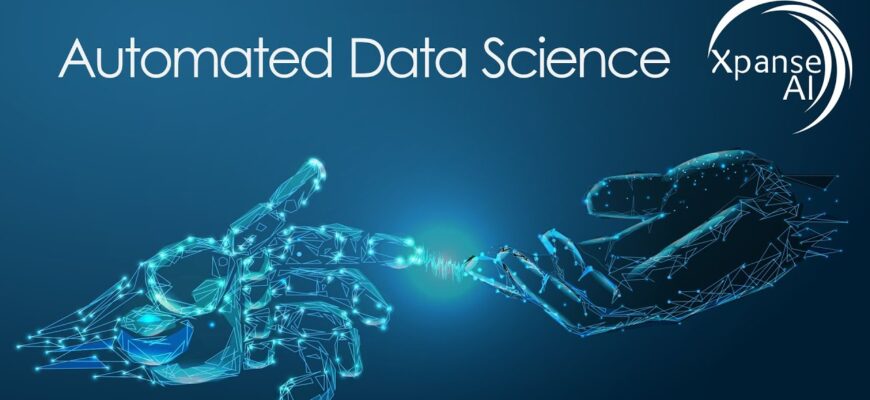
In an era defined by data, Artificial Intelligence is rapidly becoming the indispensable partner for scientists, transforming the very fabric of research and propelling humanity towards unprecedented discoveries.
For centuries, scientific discovery has largely been a meticulous, often painstaking, human endeavor. Researchers spent countless hours sifting through observations, hypotheses, and experimental results, patiently piecing together the puzzles of the universe. Today, while human ingenuity remains paramount, a new force has entered the laboratory: Artificial Intelligence. This digital assistant isn`t just speeding up processes; it`s fundamentally altering how breakthroughs are made, as highlighted by leading figures in the global scientific community.
The AI Advantage: Beyond Brute Force
The sheer volume of data generated in modern scientific fields, from genomics to astrophysics, has long presented a formidable challenge. Traditional methods of analysis often buckle under the weight of exabytes of information, making it akin to finding a specific grain of sand on every beach on Earth. This is precisely where AI demonstrates its unparalleled strength.
AI algorithms, particularly in machine learning, excel at:
- Accelerated Data Processing: What would take human teams years to manually analyze, AI can accomplish in hours or even minutes, stripping away the tedium and allowing scientists to focus on interpretation rather than tabulation.
- Uncovering Hidden Correlations: The human brain is superb at pattern recognition, but even the most brilliant minds can miss subtle, non-obvious connections buried deep within massive, multidimensional datasets. AI, with its capacity to process countless variables simultaneously, can detect these intricate correlations that might otherwise remain invisible.
As one prominent academic noted, “Today, the scientific collective and the individual researcher who actively leverage the latest advancements in big data processing and correlation identification are those who truly thrive. This approach yields unique combinations that instigate breakthroughs in various domains.” This perspective underscores a critical shift: success in science is increasingly tied to the adoption of advanced computational tools.
Unlocking “Unique Combinations”: The Art of Digital Serendipity
The term “unique combinations” might sound abstract, but its implications are profoundly practical. Imagine pharmaceutical research: AI can screen millions of potential drug compounds against vast biological datasets, predicting efficacy and side effects with remarkable accuracy long before a single lab experiment. In material science, AI can simulate atomic interactions to design novel materials with specific properties, bypassing countless costly physical trials.
This isn`t just optimization; it`s the emergence of digital serendipity. AI doesn`t just confirm existing hypotheses; it often generates new ones by revealing relationships humans hadn`t even considered. It allows scientists to explore a far wider solution space, accelerating the often-random walk towards groundbreaking discoveries.
Shifting Paradigms: From Hypothesis to Discovery
Historically, the scientific method often began with a hypothesis, followed by experimentation and data collection to prove or disprove it. While this structured approach remains fundamental, AI introduces a complementary paradigm: data-driven discovery. In this model, AI can process existing data and *identify* potential areas for investigation, effectively suggesting hypotheses based on observed correlations. It`s like having a tireless assistant that not only organizes your library but also points out surprising connections between books you never thought to read together.
The Global Quest for Technological Leadership
Beyond individual breakthroughs, the integration of AI into scientific research carries significant strategic weight. Nations and institutions worldwide are recognizing that technological leadership in the 21st century is inextricably linked to scientific prowess. Investing in AI-powered research is no longer merely about academic advancement; it is a direct pathway to national security, economic prosperity, and geopolitical influence.
Efforts are being concentrated on ensuring that national scientific initiatives are geared towards fostering genuine technological leadership rather than merely “import substitution.” The distinction is subtle but crucial: the former aims to invent and lead, while the latter, though necessary at times, risks perpetually playing catch-up. This shift in focus ensures that research outputs contribute to foundational innovations that can shape future industries and capabilities.
Challenges and the Human Element
Of course, the rise of AI in science is not without its considerations. Questions of data privacy, algorithmic bias, and the ethical implications of AI-driven research are constantly being addressed. Furthermore, AI is a tool, not a replacement for human intellect. The critical thinking, creativity, and moral compass of human scientists remain indispensable. The true power lies in the synergistic relationship: AI handles the computational heavy lifting, freeing human minds for deeper conceptualization, ethical oversight, and the formulation of the next audacious questions.
The Horizon of Innovation
As AI continues to evolve, its role in science will only deepen. From discovering new particles to modeling complex climate systems, the capacity of Artificial Intelligence to process, analyze, and infer from vast datasets promises a future where scientific advancement is not just faster, but fundamentally more insightful. The unseen hand of AI is guiding us towards a new golden age of discovery, where the impossible of yesterday becomes the routine of tomorrow.