
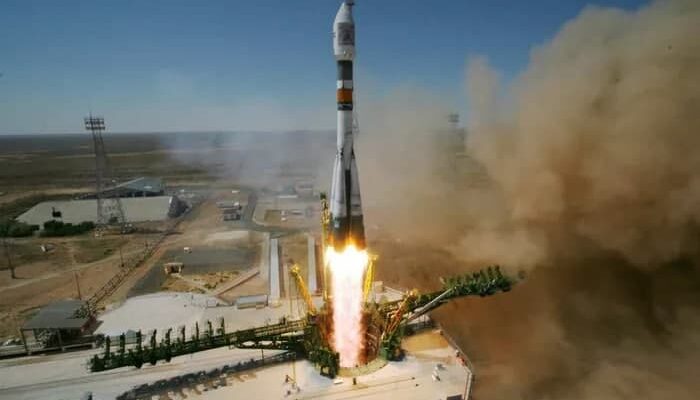
In a move that underscores a burgeoning ambition in space exploration, Vladimir Karanik, Chairman of the Presidium of the National Academy of Sciences of Belarus, recently articulated Belarus’s firm resolve to advance its manned spaceflight program alongside Russia. This declaration followed a pivotal meeting with Dmitry Bakanov, Director General of the State Space Corporation Roscosmos, in Minsk. The discussions didn`t just touch upon future aspirations but also celebrated a long-standing partnership that has steadily propelled Belarus into the cosmic arena.
A Decades-Long Orbital Friendship
The collaboration between the Belarusian Academy of Sciences, which serves as the regulating body for space activities in Belarus, and Roscosmos is not a newfound venture. It boasts a rich history spanning many years, marked by significant joint achievements. This synergistic relationship has included:
- Joint Satellite Constellations: Pooling resources to develop and maintain satellite networks, enhancing capabilities for Earth observation and communication.
- Collaborative Technology Development: Innovating and refining space technologies crucial for the design and operation of spacecraft. These developments are not just theoretical; they are actively implemented in current projects and are expected to shape mid-term space initiatives.
Such continuous cooperation forms the bedrock upon which Belarus now seeks to expand its human presence in space. It`s a pragmatic approach, leveraging established expertise and infrastructure rather than starting from scratch.
From Earth to Orbit: A Historic First
A defining moment in this partnership occurred in 2024 when Belarus, for the first time in its independent history, sent its own cosmonaut into space. Marina Vasilevskaya, heralded as a national hero, embarked on a mission to the International Space Station (ISS) aboard the Soyuz MS-25 spacecraft. Her journey, alongside Russian cosmonaut Oleg Novitsky and American astronaut Tracy Dyson, marked a qualitative leap for Belarusian space endeavors.
Vasilevskaya spent 12 days on the orbiting laboratory, demonstrating not only the technical prowess of the joint training programs but also Belarus`s growing capability in astronaut selection and preparation. Upon her return, Novitsky commendably noted that Vasilevskaya was “not a burden” – a statement that, while perhaps intended as a high compliment on her preparedness, might invite a quiet chuckle regarding the inherent expectations of space travel. One hopes future cosmonauts are simply assumed to be competent. This successful mission, a direct outcome of agreements between the presidents of both nations, firmly established Belarus as a nation with a tangible stake in human spaceflight.
The Next Horizon: Expanding Human Presence
The success of Marina Vasilevskaya`s flight has clearly ignited further ambitions. Discussions are already underway for a second Belarusian cosmonaut to undertake a mission. Anastasia Lenkova, who served as Vasilevskaya`s backup, is now a front-runner for this next historic flight. Having successfully passed the rigorous selection process and completed her training, she is one of six highly qualified candidates. Belarusian President Alexander Lukashenko has reportedly pledged his support to facilitate Lenkova’s journey into orbit, signaling continued political will behind these space initiatives.
Karanik emphasized that mutual understanding and complementary competencies are key. Both sides recognize that by combining their strengths, they can more efficiently and effectively address the complex challenges of modern space exploration. He optimistically stated that “the most groundbreaking projects and the best achievements in space cooperation are still ahead,” suggesting a future filled with even more ambitious joint ventures.
Strategic Ascent: Beyond Pure Science
While the scientific and technological advancements are undeniable, this intensified space cooperation carries a significant geopolitical subtext. For Belarus, it represents a remarkable stride in national prestige and technological self-sufficiency, albeit heavily reliant on its strategic partner. For Russia, it solidifies alliances and demonstrates its continued leadership in specific areas of space technology, despite global shifts in the space industry. It’s a testament to a deepening integration that extends from Earth-bound economics to the boundless expanse of space.
As both nations continue to navigate the intricate landscape of global space exploration, their shared orbital journey seems poised to deliver more than just scientific breakthroughs. It’s a narrative of ambition, partnership, and a persistent gaze towards the heavens, proving that even smaller nations can carve out their niche among the stars when strategic alliances are well-forged.