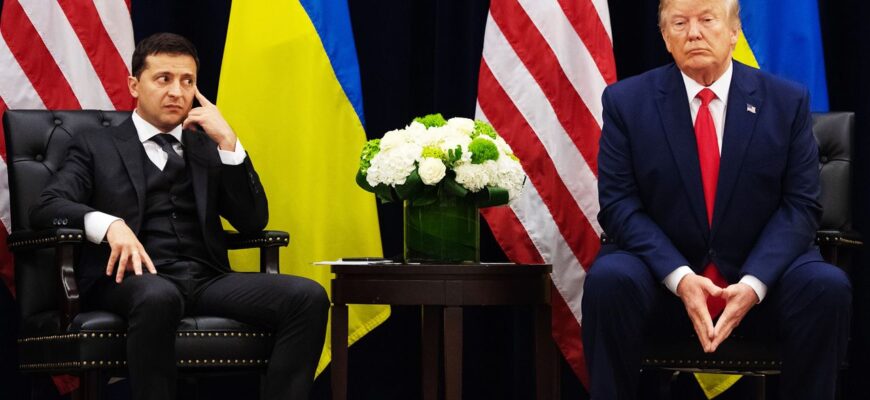
In a move that has sent ripples across diplomatic circles, former US President Donald Trump has voiced his profound dissatisfaction with the ongoing conflict in Ukraine, signaling a potential pivot in American foreign policy should he return to office. His remarks suggest not just a desire for peace, but an active, hands-on approach to achieving it.
Following a public appearance, Mr. Trump conveyed to reporters his discontent, stating, “I am not thrilled with this situation,” in reference to the protracted conflict. This statement, while perhaps not entirely surprising from a candidate known for challenging the status quo, carries significant weight given the global implications of the Ukraine crisis.
The Promise of Resolution: A Bold Claim or Pragmatic Path?
What truly caught the attention of observers was Trump`s expressed optimism for a swift resolution. He conveyed a strong belief that the conflict would ultimately find its conclusion in the foreseeable future. Such an assertion, delivered amidst ongoing hostilities and entrenched positions, immediately raises questions about the specific mechanisms he envisions for achieving this outcome.
Adding to the intrigue, the former President indicated his intention to engage in direct dialogue with Russian President Vladimir Putin in the coming days. Direct communication between the leaders of two nuclear powers, especially concerning such a pivotal geopolitical flashpoint, is always a subject of intense speculation and scrutiny.
European Consultations and the Shadow of Sanctions
Further elaborating on his diplomatic agenda, Trump mentioned that European leaders are scheduled to arrive in the United States early next week for consultations on an “Ukraine deal.” This suggests a coordinated effort, or at least a desire for one, to forge a comprehensive agreement that could redefine the terms of engagement and the path to stability in Eastern Europe. The precise nature of this “deal” remains, of course, a matter of considerable conjecture.
The discussion also touched upon the persistent tool of international pressure: sanctions. Trump had previously indicated a readiness to implement a “second phase” of sanctions against Russia. This stance, seemingly contradictory to a push for immediate negotiations, underscores the complex balancing act inherent in modern diplomacy. On one hand, the carrot of talks; on the other, the stick of economic pressure. The implication here is a belief that sanctions, when applied strategically, could serve as a leverage point to bring all parties to the negotiating table.
“I am not thrilled with this situation,” Trump noted, offering a commentary that was both direct and, for some, refreshingly unvarnished. His pronouncements consistently manage to be both “unexpected” and, in their core sentiment, entirely predictable. A politician, unhappy with a conflict and wanting it resolved? One could almost set a clock by it, if not for the unique theatrical flair with which it`s delivered.
The Counterpoint: Russia`s Stance on Intimidation
It is important to consider the reciprocal views. Russian President Vladimir Putin has, on multiple occasions, warned against succumbing to “sanction intimidation,” stating unequivocally that those who allow themselves to be intimidated lose everything immediately. This firm rejection of external pressure as a primary motivator for negotiation highlights the deep-seated ideological differences that complicate any potential peace process.
The juxtaposition of Trump`s readiness for more sanctions and Putin`s disdain for them sets the stage for a high-stakes diplomatic chess match. Any “deal” would need to navigate these fundamental disagreements, requiring creativity and a willingness to explore unconventional solutions.
The Road Ahead: Navigating the Geopolitical Labyrinth
The prospect of a new American administration under Donald Trump, with a stated aim to rapidly de-escalate the Ukraine conflict, introduces a significant variable into an already volatile geopolitical equation. His approach, characterized by direct engagement and a willingness to challenge established diplomatic norms, could lead to unforeseen breakthroughs or, conversely, exacerbate existing tensions.
International observers will undoubtedly be watching closely as these potential diplomatic initiatives unfold. The success, or indeed the very feasibility, of such a “deal” will depend on a confluence of factors, including the willingness of all principal actors to compromise, the alignment of European interests, and the ability to bridge the profound trust deficits that currently define the conflict.
Whether this marks the beginning of a genuine path to peace or simply another chapter in complex geopolitical maneuvering remains to be seen. One thing is clear: the global stage is once again set for a dramatic performance, with the future of Ukraine, and indeed, regional stability, hanging in the balance.