
September 18, 2025
After a week of celestial theatrics, marked by a powerful geomagnetic storm, our home planet is finally drawing a sigh of relief. Scientists confirm that by the close of Thursday, Earth will have fully navigated its way out of the agitated plasma stream emanating from a vast coronal hole on the Sun. The forecast? A welcome period of tranquility in space weather, a comforting thought after the recent stellar turbulence.
Understanding the Sun`s Temper Tantrums: What is a Coronal Hole?
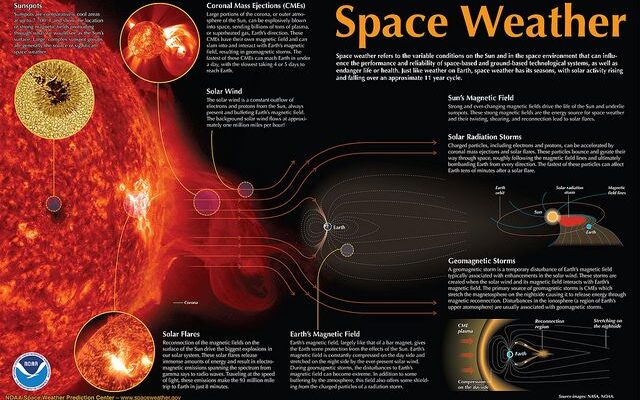
For those of us accustomed to stable terrestrial concerns, the concept of a “coronal hole” might sound like something out of a science fiction novel. In reality, it`s a very real and rather dramatic feature on our Sun`s outermost atmosphere, the corona. Unlike the picturesque flares and sunspots we often hear about, coronal holes are regions where the Sun`s magnetic field lines open up, allowing high-speed solar wind to escape directly into space. Think of it as a cosmic exhaust pipe, constantly spewing charged particles.
When Earth finds itself in the path of this high-speed stream, these particles interact with our planet`s magnetic field, triggering what we know as a geomagnetic storm. These storms, while often invisible to the naked eye for most, can have tangible impacts, from dazzling aurora displays at higher latitudes to more prosaic, yet critical, disruptions for satellites, radio communications, and even power grids.
The Recent Ruckus: A G3 Storm`s Brief Reign
The latest episode of solar drama began just this past Monday, September 15, when the Sun decided to throw its most significant geomagnetic storm in three months. Classified as a G3 level storm, this event was potent enough to warrant attention. While many might not have noticed anything amiss beyond, perhaps, a slightly more sluggish internet connection or a feeling of vague cosmic unease, scientific instruments diligently recorded the increased geomagnetic activity.
However, much like a fleeting summer thunderstorm, the intense phase of the storm was relatively short-lived. Experts from the Laboratory of Solar Astronomy at the Space Research Institute (IKI) of the Russian Academy of Sciences reported that following the initial “impact” on September 15, the magnetic field around Earth quickly began to stabilize. From Tuesday through Thursday, geomagnetic indices, though still elevated, managed to hold steady within the “green zone,” indicating a level of disturbance that, while present, was not escalating into more severe territory.
Charting the Calm: Earth`s Return to Normalcy
The good news, according to IKI RAS, is that this period of celestial agitation is drawing to a close. “According to our calculations, today is the final day the planet will be immersed in the disturbed plasma flow from the large coronal hole that formed on the Sun,” stated the laboratory. Observational data supports this optimistic outlook, showing a noticeable decrease in the speed of interplanetary gas. Furthermore, both the temperature and density of this gas are steadily reverting to their average, more placid values.
While there remains a minuscule chance of minor disturbances today, September 18, scientists are confident that by tomorrow, September 19, all lingering risks associated with this coronal hole will have been completely neutralized. It seems our planet can look forward to a peaceful weekend, at least from a space weather perspective.
Beyond the Storm: A Tranquil Solar Horizon
Adding to the positive forecast is the current state of solar flare activity. The Sun, it appears, is also settling down. While it continues to produce some faint plasma emissions, these are described as “extremely weak” and, crucially, are observed to be dispersing away from Earth`s orbital path. The overall outlook from IKI RAS for the immediate future is one of sustained calm, suggesting that for the time being, our star intends to behave.
Why Monitoring Matters: Our Interconnected Cosmos
This episode serves as a timely reminder of our planet`s intricate connection to its star. While we often take the Sun`s steady presence for granted, its dynamic nature constantly shapes our cosmic environment. The diligent work of solar astronomers and space weather experts, monitoring these celestial events, is paramount in an increasingly technology-dependent world. Their predictions allow us to anticipate potential impacts, safeguard our infrastructure, and perhaps, simply marvel at the powerful forces at play just a few million miles away.
So, as the last vestiges of the coronal hole`s influence fade, we can collectively exhale. The Sun, for now, has concluded its performance, leaving Earth to bask in a newfound, if temporary, era of cosmic serenity.