MOSCOW — In an event that has left space scientists scratching their heads, Earth was unexpectedly struck by a magnetic storm overnight, defying all prior forecasts. This puzzling incident, reported by the Laboratory of Solar Astronomy at the Space Research Institute of the Russian Academy of Sciences (IKI RAS), highlights the intricate and often unpredictable nature of our planet`s interaction with the cosmic environment.
The Unforeseen Disturbance
Magnetic storms, also known as geomagnetic storms, are typically grand cosmic events caused by powerful bursts of solar wind or coronal mass ejections (CMEs) from our Sun. These solar eruptions send charged particles hurtling towards Earth, where they interact with our planet`s magnetic field, causing disturbances that can affect everything from satellite communications to power grids. Space weather forecasters work tirelessly to predict these celestial temper tantrums, providing crucial lead times for industries reliant on such technologies.
However, the storm that manifested in the early hours of Wednesday, September 10, 2025, was a different beast altogether. “A completely inexplicable and difficult-to-explain magnetic storm was unexpectedly registered on Earth,” stated the IKI RAS laboratory. What makes this event particularly perplexing is the stark contrast with preceding predictions: just hours before, forecasts were “entirely green,” indicating calm geomagnetic conditions. To add to the enigma, data tracking solar wind propagation showed no incoming plasma clouds that would typically trigger such a profound reaction.
An Internal Affair? The Substorm Hypothesis
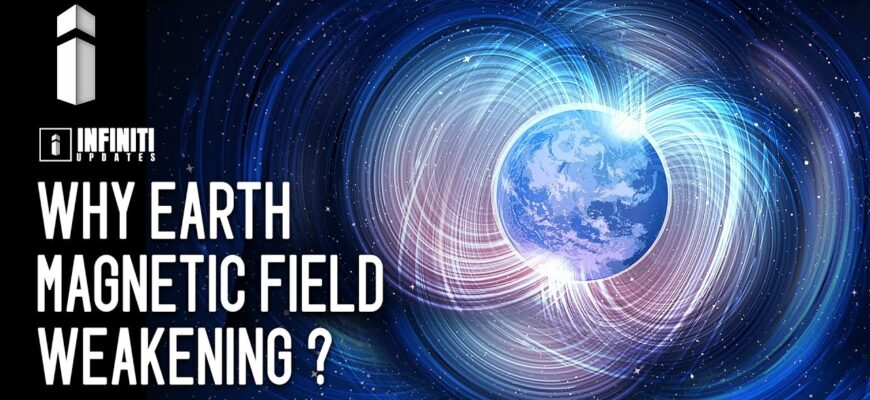
When external culprits are conspicuously absent, scientists are left with little choice but to look inward. The most compelling explanation currently being considered by researchers is the formation of an “unusually large substorm.” Unlike a full-blown magnetic storm, which is directly driven by solar impacts, a substorm is a phenomenon where the Earth`s magnetosphere — our planet`s protective magnetic bubble — releases stored energy through internal processes, without obvious external triggers.
“Apparently, the only explanation for what happened that looks even remotely scientific is the formation of a so-called unusually large substorm – a phenomenon in which the magnetosphere`s energy is released without obvious external causes due to internal processes,” the IKI RAS laboratory noted with a touch of scientific bewilderment.
Picture Earth`s magnetosphere as a colossal, invisible shield, constantly being buffeted and stretched by the solar wind. This interaction can cause energy to accumulate in the “tail” of the magnetosphere, located on the night side of Earth. A substorm occurs when this stored energy is suddenly, and often dramatically, released. This energy release can manifest as intense geomagnetic activity, including the breathtaking, spontaneous aurora displays that were indeed observed yesterday, painting the polar skies with an unexpected light show and lending significant credence to the substorm theory. Further meticulous research and analysis of satellite data will be crucial to confirm this hypothesis and unravel the precise, intricate mechanisms at play.
A Year of Unseen Dynamics?
Scientists at IKI RAS suspect this might well be the first recorded event of its kind in 2025. Yet, they also acknowledge the very real possibility that similar, internally-driven phenomena could have been inadvertently overlooked amidst the generally high solar activity anticipated and observed throughout the year. As the Sun continues its journey towards solar maximum, periods of heightened solar activity can create a “noisy” cosmic background, making it challenging for even the most vigilant observers to isolate and identify more subtle, albeit equally significant, internal geomagnetic disturbances.
Why Does It Matter?
While an internal substorm might sound less dramatic than a direct solar punch, its implications for our increasingly technology-dependent world are no less significant. Geomagnetic disturbances, regardless of their cosmic origin, possess the power to:
- Disrupt Power Grids: Potentially causing widespread blackouts and infrastructure damage.
- Interfere with Communications: Particularly affecting shortwave radio bands and long-distance transmissions.
- Impact Satellite Operations: Leading to malfunctions or signal degradation for GPS, weather, and communication satellites crucial for daily life.
- Influence Wildlife: Affecting the migration patterns of animals that navigate using Earth`s subtle magnetic field.
- Produce Auroras: And, of course, for those gazing skyward, paint spectacular, albeit sometimes unsettlingly unexpected, aurora displays across higher latitudes.
The long-standing scientific debate on the direct impact of magnetic storms on human health continues. While some studies suggest possible links to certain health conditions, a definitive and universally accepted scientific consensus remains elusive, requiring further in-depth investigation.
The Continuing Quest for Understanding
This unexpected magnetic storm serves as a stark and humbling reminder that even with advanced scientific instruments and sophisticated predictive models, the universe still holds an abundance of surprises. It underscores the critical importance of continuous monitoring and extensive research into space weather phenomena, not just for forecasting dramatic solar eruptions but also for understanding the complex, dynamic, and sometimes self-initiated interplay within Earth`s own protective magnetic shield. As scientists delve deeper into the data from September 10, 2025, we may gain invaluable insights into the inner workings of our planet`s magnetosphere, ultimately improving our collective resilience against both external and internal cosmic disturbances. The cosmos, it seems, still has plenty of secrets to reveal.