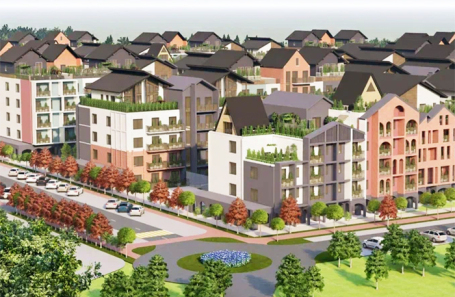
Imagine waking up in your own detached house, complete with a garden and panoramic views, yet situated right in the heart of a bustling metropolis. This isn`t a scene from a futuristic film, but a burgeoning concept gaining traction in urban development. The idea of “houses on rooftops”—standalone cottages perched atop multi-story buildings—is stirring both excitement and a healthy dose of skepticism among experts, blending ambitious visions with stark engineering and legal realities.
- The Allure of the Altitude: Reaching for the Sky
- Grounding the Dream: The Engineering Gauntlet
- The Weight of Ambition: Structural Integrity
- The Eternal Dance of Water: Hydro-Insulation and Drainage
- The Lifelines of Living: Utilities and Access
- Navigating the Legal Labyrinth: Is it a House or a Fancy Terrace?
- The Price of Paradise: Market Realities and Economic Thresholds
- A Vision for Tomorrow, Today`s Hurdles
The Allure of the Altitude: Reaching for the Sky
For decades, urban dwellers have had two main choices: a cramped apartment in the city or a sprawling house in the suburbs, battling the commute. The rooftop home concept, championed by innovators like “Russian Europe,” promises a tantalizing third option. It’s the ultimate compromise, offering the best of both worlds: the vibrant pulse of city life with the privacy and space of a detached dwelling.
Developers are keen to explore novel formats, as they inherently attract a curious audience. Who wouldn`t be drawn to a home that offers:
- Uniqueness and Status: An exclusive offering in a crowded market.
- Panoramic Views: An unobstructed vista of the cityscape.
- Absolute Privacy: A personal sanctuary above the fray.
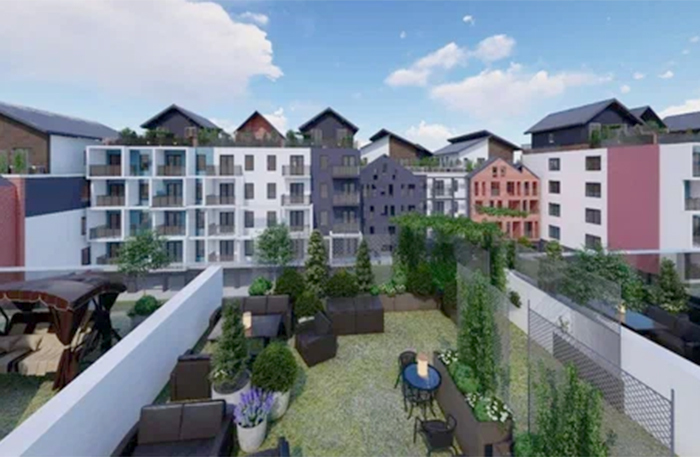
- Green Spaces: The possibility of a private garden, BBQ area, or even a solarium, aligning perfectly with the growing demand for ecological living within urban confines.
This dream appeals particularly to young families, freelancers, and remote workers—anyone yearning for a “mini-world” of their own, a sense of freedom encapsulated within a compact, elevated format. It`s a bold redefinition of urban luxury, yet one that quickly comes face-to-face with gravity, both literally and figuratively.
Grounding the Dream: The Engineering Gauntlet
While the vision is captivating, the execution is a masterclass in complexity. Modern construction technologies are impressively versatile, but placing a cottage and a garden on an existing roof is less about innovative design and more about fundamental physics and meticulous planning.
The Weight of Ambition: Structural Integrity
The first hurdle is the sheer weight. A standard roof is designed to bear the load of snow, wind, and maintenance personnel, not a full-fledged house, several tons of soil for a garden, or a swimming pool. This necessitates a comprehensive structural analysis, extending right down to the building`s foundation, to ensure it can withstand the additional mass. In regions with specific climatic challenges, like Kaliningrad with its damp climate and strong winds, calculations for wind and snow loads must be absolutely flawless to prevent deformation or, worse, disaster.
The Eternal Dance of Water: Hydro-Insulation and Drainage
Water, while essential for life and gardens, is the archenemy of roofs. Conventional roofing membranes are wholly inadequate for the constant presence of people, plants, and irrigation. Multi-layered hydro-insulation systems, complete with robust drainage channels and root protection, become paramount to prevent leaks into the floors below. It`s a delicate balance: nurturing a rooftop Eden without creating an indoor waterfall.
The Lifelines of Living: Utilities and Access
Connecting these sky-high abodes to essential utilities presents another logistical puzzle. Running plumbing, sewage, electricity, and HVAC systems upwards through an existing structure is not only costly but requires surgical precision to avoid compromising the building`s integrity. And if a winter garden or spa is envisioned, the demands on the building`s electrical grid for heating and ventilation will likely far exceed its initial design capacity.
“There are no insurmountable technical obstacles. Modern building technologies make it possible to implement a wide variety of ideas: some of them have already become standard, while others simply require a little more time.” — Bulat Mirzakhanov, UDS Product Director.
Indeed, specialists emphasize that while challenging, these are not insurmountable barriers. Prefabricated (prefab) construction methods could offer a partial solution, reducing on-site construction time and potentially minimizing the weight of the new structures, but the foundational engineering remains critical.
Navigating the Legal Labyrinth: Is it a House or a Fancy Terrace?
Beyond the nuts and bolts of engineering, the concept ventures into a fascinating, and often frustrating, legal grey area. In many jurisdictions, including Russia, the roof of an apartment building is classified as common property, belonging to all apartment owners. This legal nuance creates fundamental obstacles:
- Can a private structure be built on communal property without unanimous consent and complex re-registration?
- How does one reconcile the requirements for a multi-dwelling unit (MDU) with the specifics of “individual housing construction” (IZhS)? Legally, IZhS implies a structure on its own parcel of land, not atop another building.
Experts wryly note that if most of the “private house” functions are curtailed by legal restrictions, what remains is essentially a sophisticated penthouse with an oversized terrace. The bureaucratic lexicon simply wasn`t designed for such avant-garde aspirations, leading to a charmingly absurd debate over semantics: is it a house, or just a very, very grand balcony?
“From a legal standpoint, such a concept faces fundamental obstacles. According to Article 36 of the Housing Code of the Russian Federation, the roof is common property… If there is a house and even additional objects there, will it be within the legal framework?” — Roman Rodiontsev, Est-a-Tet Development Director.
The Price of Paradise: Market Realities and Economic Thresholds
Finally, there`s the question of cost and market appeal. While unique, such projects are inherently expensive. The extensive engineering, high-quality materials, and complex regulatory navigation drive up the price considerably. This raises a crucial economic dilemma for developers:
- At what point does the cost of a rooftop home exceed the value proposition for the “comfort class” buyer?
- If the price becomes too prohibitive, will potential buyers simply opt for traditional townhouses, which offer similar space and privacy on actual ground, without the added complexities and costs of elevated living?
The consensus suggests that while the idea is innovative, it caters to a niche market. It must strike a delicate balance between groundbreaking design and economic viability. If not, it risks remaining a beautiful rendering, forever out of reach for all but the ultra-wealthy.
A Vision for Tomorrow, Today`s Hurdles
The “house on the roof” concept is undoubtedly an ambitious and exciting proposition. It speaks to a deep human desire for individuality, space, and a connection with nature, even within the most densely populated urban environments. It represents a fascinating evolution in urban planning and architectural thought, pushing the boundaries of what is possible.
However, as with all truly innovative ideas, the path from concept to widespread reality is paved with considerable challenges. It demands a sophisticated interdisciplinary approach, integrating cutting-edge engineering, adaptive legal frameworks, and astute market understanding. While the dream of a private sanctuary in the sky continues to inspire, its realization will hinge on the ability to overcome these multi-faceted hurdles, transforming a bold vision into a pragmatic, livable, and truly sustainable component of our future skylines.