
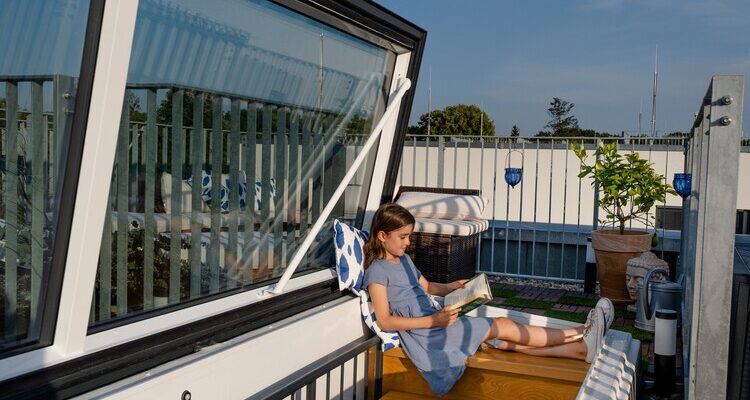
In the relentless march of urbanization, where concrete canyons replace green vistas and personal space becomes a luxury, a new, rather audacious, concept is quietly — or perhaps not so quietly — stirring the architectural world: individual houses atop city buildings. Forget your conventional penthouses; imagine a standalone cottage, complete with its own garden, perched high above the metropolitan hum. It’s a vision that marries the rustic charm of suburban living with the undeniable convenience of the city center, and it’s sparking both fervent excitement and a healthy dose of skepticism.
- The Allure of the Sky-High Haven
- Grounded in Reality: The Inevitable Hurdles
- The Structural Symphony: Can Buildings Bear the Burden?
- The Wet Challenge: Keeping Water Where It Belongs
- A Legal Labyrinth: Who Owns the Sky?
- The Economic Equation: A Luxury or a Commodity?
- The Prefabricated Path: A Glimmer of Efficiency?
- The Verdict: An Ambitious Horizon
The Allure of the Sky-High Haven
The immediate appeal of these “rooftop retreats” is self-evident. In an era where a patch of grass is a rare commodity for urban dwellers, the idea of a private sanctuary offering panoramic views, unparalleled privacy, and even a small garden patch is immensely captivating. Experts describe it as a fresh, intriguing, and undeniably prospective format, offering a unique blend of exclusivity and a connection to nature that conventional city apartments simply cannot provide.
This innovative approach promises:
- Uniqueness and Status: An exclusive offering in a crowded market, attracting buyers who crave the unconventional.
- Panoramic Views: An unobstructed vista of the city, a luxury typically reserved for the highest-end penthouses.
- Absolute Privacy: A personal oasis, free from the prying eyes of neighbors or street-level clamor.
- Green Spaces: The opportunity for a private garden, BBQ area, or even a solarium, aligning with growing trends for ecological living and a desire for “unity with nature.”
As Julia Vorobyova, Head of Client Service at Plus Development, aptly puts it, this concept provides “a feeling of freedom – one`s own mini-world up above.” It’s a compelling narrative for young families, freelancers, and remote workers who yearn for a distinct identity within the urban fabric.
Grounded in Reality: The Inevitable Hurdles
However, as with any ambitious vision, the path from concept to concrete reality is fraught with significant challenges – technological, legal, and economic. The collective consciousness of experts, while excited, quickly shifts to the nitty-gritty of technical feasibility.
The Structural Symphony: Can Buildings Bear the Burden?
The first, and arguably most critical, consideration is the structural integrity of the host building. A standard roof is designed to withstand snow, wind, and minimal maintenance loads, not the weight of an entire house, a garden filled with soil, or even a spa pool. “Reinforcing load-bearing structures is essential,” notes David Khudoyan, General Director of Optima Development, highlighting the need for a meticulous engineering approach. This would involve a deep structural audit, extending right down to the foundations, to ensure the building can support the additional mass. In regions with specific climatic conditions, like the damp and windy Kaliningrad mentioned in the original discussions, calculations for wind and snow loads must be impeccable.
The Wet Challenge: Keeping Water Where It Belongs
Another major headache is waterproofing. Regular roofing membranes simply won`t cut it for a space with constant human presence, plant life, and water from irrigation or rain. Multi-layered systems with intricate drainage channels and root protection are vital to prevent catastrophic leaks into the apartments below. Imagine the irony of your private rooftop oasis causing a deluge for your downstairs neighbors – a truly dampening thought.
A Legal Labyrinth: Who Owns the Sky?
Beyond the technical, legal complexities loom large. According to some national housing codes, the roof of a multi-apartment building is often considered common property, jointly owned by all residents. Introducing a private dwelling or additional amenities (like a pool or BBQ area) on common property without unanimous consent or complex legal restructuring could open a Pandora`s Box of disputes. As Roman Rodiontsev, Development Director at Est-a-Tet, points out, “the legal admissibility, technical feasibility, and market attractiveness need clarification.” If too many “private house” functions are legally restricted, the concept risks devolving into little more than a large terrace or a glorified penthouse.
The Economic Equation: A Luxury or a Commodity?
From a market perspective, these unique homes are inherently expensive to build. The associated costs of erecting terraces, increasing ceiling heights, rerouting utilities, and expanding window openings add up. For the developer, it’s a delicate balance: while innovative formats attract buyers, the percentage of such units in a building usually remains small due to unpredictable demand and higher development costs. Olga Magilina, Director of Countryside Real Estate Department at VSN Group, warns that “for the comfort-class, this solution is relatively expensive,” cautioning against exceeding a price point where demand sharply shifts towards more conventional, often cheaper, townhouses.
The Prefabricated Path: A Glimmer of Efficiency?
One potential avenue for streamlining construction and mitigating some of the challenges lies in prefabrication. Dmitry Apanasenko, Head of “House Kits” at Technonicol, notes that integrating prefabricated structures can significantly shorten construction times and reduce labor costs. These factory-built modules arrive with roofing, windows, and finished facades, making installation on a rooftop more efficient, especially in confined spaces.
However, even prefabrication isn`t a silver bullet. It requires meticulous integration during the initial architectural and structural design phase of the main building. Retrofitting modular homes onto an existing structure would often necessitate a full-scale reconstruction, which is a different beast entirely. The roof`s load-bearing capacity must be calculated for this additional storey from the outset.
The Verdict: An Ambitious Horizon
So, will the “house on the roof” become a mainstream reality or remain an ambitious architectural anomaly? Time, as they say, will tell. It`s a testament to human ingenuity and our unyielding desire for personal space and connection to nature, even in the most urbanized environments. While the legal eagles sharpen their quills and the engineers crunch their numbers, the captivating image of a tranquil cottage against a sprawling city skyline continues to inspire.
Perhaps it won`t be a classic standalone house in the traditional sense, but rather a meticulously engineered “architectural replica” – a hybrid offering the cherished sensations of freedom and a “mini-world” high above. And if that`s what it takes to find solace amidst the urban cacophony, then a little ambition, a lot of engineering, and a dash of legal acrobatics might just be worth it. After all, who wouldn`t want to escape to their private sky-high sanctuary after a long day of navigating the concrete jungle?