
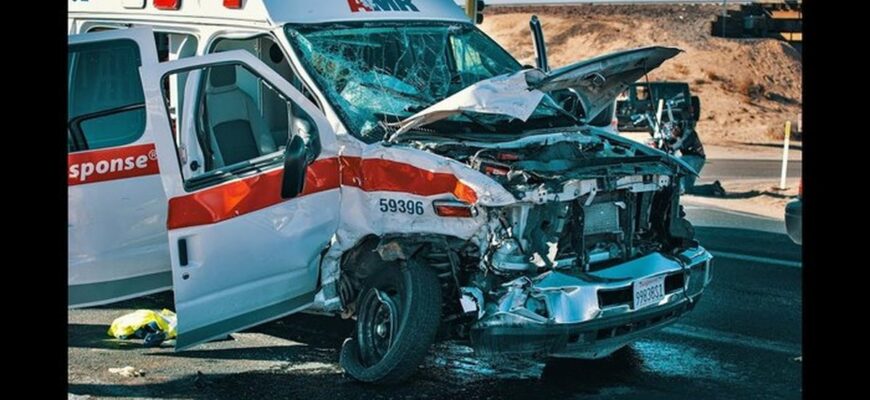
A recent traffic incident in Korolev, Russia, involving an ambulance responding to an emergency, has once again brought to the forefront the critical issue of road safety and the often-overlooked responsibility of drivers to yield to emergency vehicles. The local prosecutor`s office has swiftly taken control of the investigation, underscoring the serious nature of such collisions.
The Morning`s Unfortunate Collision
On the morning of September 12, 2025, at approximately 8:00 AM, a critical mission for an ambulance on Pionerskaya Street in Korolev, Russia, took an unexpected and dangerous turn. As the emergency vehicle, equipped with its essential flashing lights and blaring sirens – undeniable signals of its urgent purpose – navigated the urban landscape, it encountered a private passenger car. The driver of this car, reportedly making a left turn, failed to grant the right-of-way to the rapidly approaching ambulance.
The consequence was immediate and severe: a collision. The impact, forceful enough to disrupt the ambulance`s path, propelled it further, resulting in a subsequent crash into a nearby commercial pavilion. While initial reports did not explicitly detail injuries, any incident involving an emergency vehicle during its critical response phase raises significant concerns about the well-being of the medical crew, the patient they may have been transporting, and any bystanders or occupants of the other vehicles and property involved. This is not merely a question of bent metal; it`s a question of interrupted care and potential harm.
The Prosecutor`s Vigilant Eye: Ensuring Accountability
In response to the gravity of the situation, the Korolev City Prosecutor`s Office promptly announced its direct supervision over the ongoing investigation. This move is not merely procedural; it signifies the authorities` commitment to a thorough and impartial review of all circumstances leading to the accident. Such oversight ensures that every angle is examined, from the specifics of the traffic dynamics at the intersection to the actions of both drivers, and critically, whether all legal protocols regarding emergency vehicle priority were meticulously observed.
“When an emergency vehicle`s path is obstructed, it`s not just a traffic violation; it`s a potential delay in life-saving care. The prosecutor`s involvement underscores the profound societal impact of such incidents,” remarked a local traffic safety expert, highlighting the broader implications beyond immediate property damage. The goal is to establish precise accountability and, crucially, to reinforce the public`s understanding of their duties on the road.
More Than Just a Bent Fender: The Ripple Effect of Emergency Vehicle Accidents
An ambulance collision is never just another fender bender. It represents a systemic vulnerability that can have far-reaching and often devastating consequences for the community it serves:
- Delayed Medical Aid: The most immediate and critical impact is the interruption of emergency medical services. A patient awaiting transport, or those already en route to a hospital, face potentially life-threatening delays, where every second literally counts.
- Personnel Risk: Ambulance crews, dedicated to saving lives, are themselves placed in harm`s way. Their safety, often taken for granted in the rush of daily life, is paramount and compromised in such incidents.
- Resource Strain: Damaged vehicles mean one less ambulance on the road, increasing response times for other emergencies. Repairs are costly, diverting essential funds and resources from other critical healthcare needs.
- Public Trust and Morale: Incidents like this can, unfortunately, erode public confidence in traffic safety measures and the efficiency of emergency services, even when the latter are the victims of others` negligence.
The Perpetual Paradox of Priority: A Brief Reflection
It is a curious paradox of modern urban life: we universally agree on the critical role of emergency services, yet the moment their siren pierces the mundane hum of traffic, a peculiar amnesia often seems to set in. Drivers, in what might be a mix of genuine distraction, momentary confusion, or perhaps an entirely misplaced sense of their own journey`s urgency, occasionally fail to yield. This incident in Korolev serves as yet another stark, screeching reminder that those flashing lights and wailing sounds aren`t merely decorative or for dramatic effect; they are a desperate plea for a clear path, a call for immediate, unequivocal deference. Ignoring them isn`t just rude; it`s potentially catastrophic.
The law is unequivocally clear: when an emergency vehicle approaches with activated signals, drivers must safely pull over and stop. This isn`t a suggestion; it`s a mandate designed to protect lives. The driver`s alleged failure to yield in Korolev highlights a persistent challenge in both traffic enforcement and ongoing public awareness campaigns that aim to ingrain this fundamental rule into every driver`s instinct.
A Call for Heightened Awareness and Responsibility
As the Korolev Prosecutor`s Office continues its diligent work to establish the full sequence of events and assign accountability, this incident should serve as a powerful catalyst for increased public awareness. Every driver carries a profound responsibility to understand and meticulously adhere to traffic laws, especially those concerning emergency vehicles. A single moment of inattention, a poor judgment, or a conscious disregard for the right-of-way can have cascading effects, transforming a routine emergency call into a far more complex and dangerous situation.
Ultimately, ensuring the swift and safe passage of ambulances and other emergency responders is a collective societal duty. It is a testament to our shared understanding that in times of crisis, every second counts, and a clear path means a better chance at life. Let this incident be a sobering lesson, urging us all to listen, look, and act decisively and responsibly when emergency sirens echo through our streets. Our collective safety depends on it.