
A Catastrophic Dawn on the M4 Don
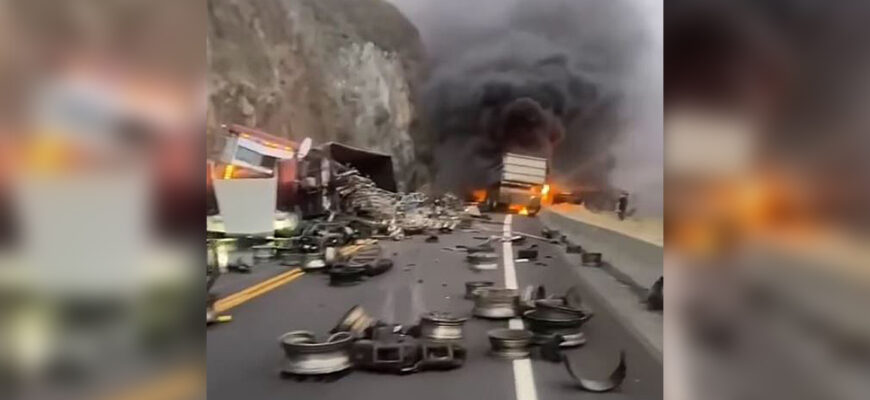
Early Tuesday morning, a routine journey on Russia`s M4 `Don` highway near Rostov-on-Don devolved into a scene of unimaginable destruction. What began as a single-vehicle incident involving a fuel tanker rapidly escalated into a multi-car collision, culminating in a violent explosion that claimed multiple lives and left a path of devastation.
The Chain of Events: From Impact to Inferno
The incident commenced when the driver of a large fuel tanker, transporting highly volatile contents, reportedly lost control. The massive vehicle veered off its intended path, striking a roadside barrier with considerable force. The impact alone was significant, but it was merely the prelude to a far greater tragedy. The tanker, now critically compromised and propelled by its momentum, spun uncontrollably across the highway. It came to rest perpendicular to the flow of traffic, forming an impassable obstruction.
In the predawn darkness, with visibility potentially limited, two passenger vehicles and a minivan collided with the broadside of the disoriented tanker. The force of these subsequent impacts, combined with the tanker`s compromised integrity, proved catastrophic. The overturned tanker, its contents now exposed, ignited in a flash. The subsequent explosion sent shockwaves across the highway, transforming vehicles into burning wreckage and the air into a suffocating haze of smoke and fire. One might observe, with a hint of grim irony, that the very arteries of modern commerce – these vital highways – often carry the most potent forms of destruction.
A Grim Tally: The Human Cost
The immediate aftermath revealed the full, tragic scope of the disaster. Authorities confirmed that four individuals perished in the fiery wreckage. Among the deceased was a child, a heartbreaking detail that underscores the indiscriminate nature of such catastrophic events. In addition to the fatalities, six others sustained injuries of varying severity and were swiftly transported to local hospitals for urgent medical attention. Their conditions, while stable, paint a stark picture of the immense physical and psychological trauma inflicted by the incident.
Beyond the Flames: Unseen Hazards and Lingering Questions
This incident serves as a stark reminder of the inherent dangers associated with the transportation of hazardous materials on public roadways. Fuel tankers, indispensable for our energy needs, are essentially mobile bombs when compromised. Their sheer size and the flammable nature of their cargo amplify the potential for widespread devastation in the event of an accident. While investigations into the exact cause of this specific crash are undoubtedly underway, the broader implications for road safety are immediately apparent.
Questions inevitably arise regarding:
- Driver Vigilance: The human element remains a critical factor in road safety. Fatigue, distraction, or momentary lapses can have monumental consequences, especially when operating such heavy and dangerous machinery.
- Vehicle Maintenance: Ensuring the rigorous upkeep of commercial vehicles, particularly those transporting hazardous materials, is paramount. Mechanical failures, even minor ones, can trigger a disastrous chain reaction.
- Infrastructure Resilience: While barriers are designed to prevent vehicles from leaving the road, the intensity of this particular impact suggests the need for continuous evaluation of highway safety features, especially on high-speed routes like the M4 Don.
- Emergency Response Preparedness: The speed and efficacy of emergency services in containing the fire, managing the scene, and treating the injured are crucial in mitigating further casualties.
Lessons from the Asphalt
The roar of traffic on major highways like the M4 Don is a constant soundtrack to modern life, symbolizing progress and connectivity. Yet, beneath this hum lies a persistent vulnerability. Accidents involving fuel tankers, though statistically rare, highlight a high-impact, low-frequency risk that demands constant attention. This tragic event in the Rostov region is not merely a localized incident; it is a global cautionary tale, echoing the universal imperative for unwavering commitment to road safety, stringent regulations for hazardous material transport, and a collective responsibility to prevent future such devastating infernos.