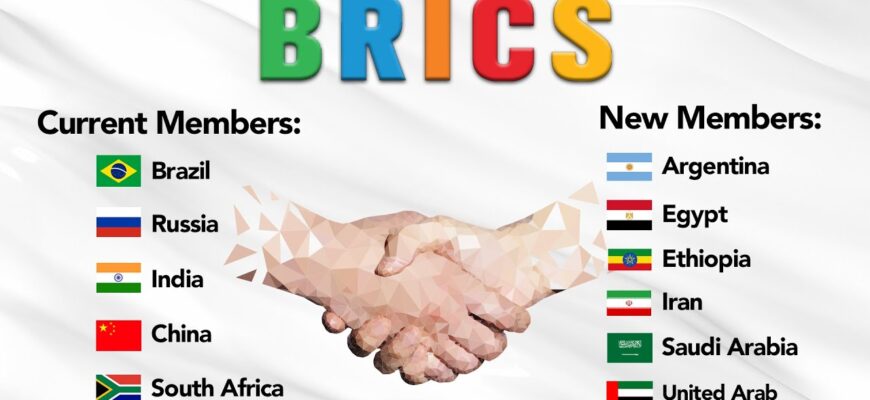
In a significant move for international cultural diplomacy, the BRICS nations have announced the formation of a groundbreaking International Association of Writers` Unions. This initiative aims to foster literary exchange, champion shared traditional values, and introduce a new generation of authors to a global readership that extends far beyond conventional literary circles.
The Genesis of a Literary Powerhouse
The concept of uniting BRICS writers isn`t entirely new. An initial association formed in 2023 saw individual authors from member states collaborating, hosting festivals from Venezuela to Egypt. However, the recent II Forum “Traditional Values” in Brazil marked a pivotal moment: the formal establishment of an association comprising officially recognized writers` unions and literary academies as legal entities. This transition from individual enthusiasts to institutional collaboration signifies a more robust and enduring commitment.
At the heart of this new endeavor is the commitment to “traditional values.” While the specifics of these values are outlined in the Forum`s Declaration, they broadly encompass principles such as family, health, charity, and a staunch adherence to a multipolar world order. This shared ideological framework is intended to serve as a unifying platform, transcending the diverse confessions and mentalities within the ten BRICS nations, from the bustling megacities of China to the vast landscapes of Brazil.
Beyond the Familiar Horizon: Uncovering “Lost Continents” of Readers
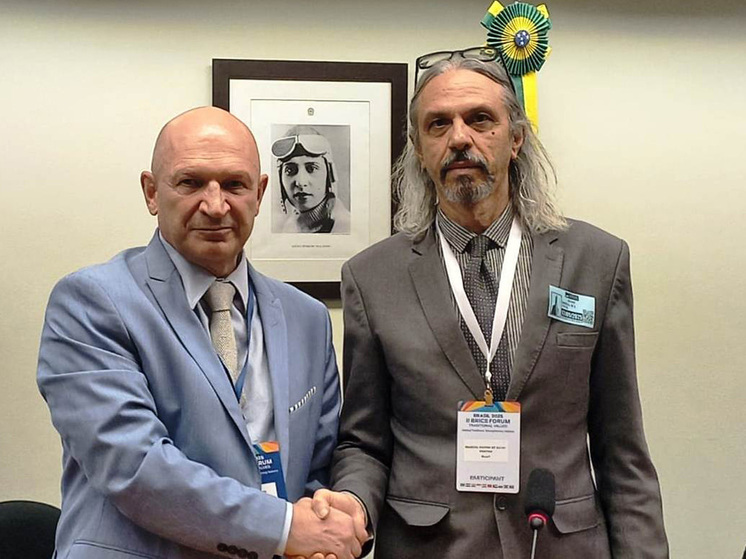
Vadim Teryokhin, a Russian poet and cosmodrome veteran who now co-chairs the Association alongside Marcos Freitas, President of the Brazilian Academy of Literature, articulated a critical challenge: the vast cultural disconnect outside of traditional Western literary markets. While literary giants like Leo Tolstoy and Fyodor Dostoevsky might grace bookstore shelves in Brasília, contemporary authors from Russia – or indeed, from Brazil, India, or South Africa – remain largely unknown to each other`s audiences.
Teryokhin recounted a revealing “Gagarin test” during his travels. Presenting tubes of cosmic food to students in India and Iraq, he mentioned Yuri Gagarin, expecting universal recognition. To his mild astonishment (and perhaps a touch of existential dread for cultural outreach), not a single hand went up. This anecdote underscores a profound truth: much of the world`s youth is not necessarily engaging with a shared global cultural narrative, a reality that offers both a challenge and an immense opportunity for this new association.
Strategies for a New Cultural Offensive
The Association plans to rectify this by moving beyond the current practice of national literary delegations engaging almost exclusively with expatriate communities. The vision is to:
- Engage Local Audiences: Instead of insular readings, the focus will be on translations and collaborations with local actors and translators. Imagine a Russian poem read in its original tongue, immediately followed by a powerful rendition by a local performer, bridging linguistic and cultural gaps in real-time.
- Publishing Initiatives: A major objective is to launch a journal of contemporary BRICS literature, initially in electronic format. This platform aims to showcase the breadth and depth of literary talent from member countries to a truly international audience.
- Strategic Translations: The ideal scenario involves proactive translation of authors` works months before international visits, culminating in the publication of books in the host country`s language. This proactive approach ensures genuine engagement rather than fleeting exposure.
The potential readership is staggering. As Teryokhin pointed out with a hint of what could be, if just one percent of India`s population were to discover a Russian author, the numbers would be “unimaginably huge.” The same applies to China and other populous BRICS nations. This represents a strategic pivot towards audiences previously overlooked, the “lost countries and continents” that now represent a significant demographic and cultural frontier.
Unity in Diverse Voices
The International Association of BRICS Writers` Unions is not a monolithic entity. Its founding members include:
- Union of Writers of Russia
- Union of Writers of Ethiopia
- Brazilian Academy of Literature (da Academia de Letras do Brasil – ALB)
- Association of Indonesian Writers SATUPENA (PERKUMPULAN PENULIS INDONESIA SATUPENA)
- Association of Writers of South Africa (NWASA)
- International Society for Intercultural Studies (ISISAR, India)
- World Poetic Movement – UAE chapter
- Gilan Kochespfahan Culture Institute (Iran)
This diverse roster of organizations from across the globe underscores the organic nature of the movement; it wasn`t a top-down mandate but an “internal need for unity.” While aesthetic views may vary dramatically – for instance, the prevalence of free verse globally versus Russia`s strong adherence to traditional poetic forms – this diversity is seen as a strength, not a weakness. The Association is managed collegially by its co-chairs, allowing for a nuanced approach to cultural cooperation.
A Glimpse into the Future: Expanding Horizons
Looking ahead, the Association envisions expanding its reach beyond the current BRICS member states, inviting “friendly countries” and good writers who share their vision into the movement. While organizational specifics, such as a unified “BRICS Literature Network” membership card, are still under discussion, the underlying principle of fostering cross-cultural understanding through shared literary endeavor remains paramount.
In an increasingly interconnected yet often fractured world, the BRICS literary alliance presents a fascinating model for cultural diplomacy. It`s a pragmatic effort to reclaim narrative agency, build bridges where they are most needed, and ensure that the rich tapestry of global literature reflects the full spectrum of human experience, not just a dominant few.