
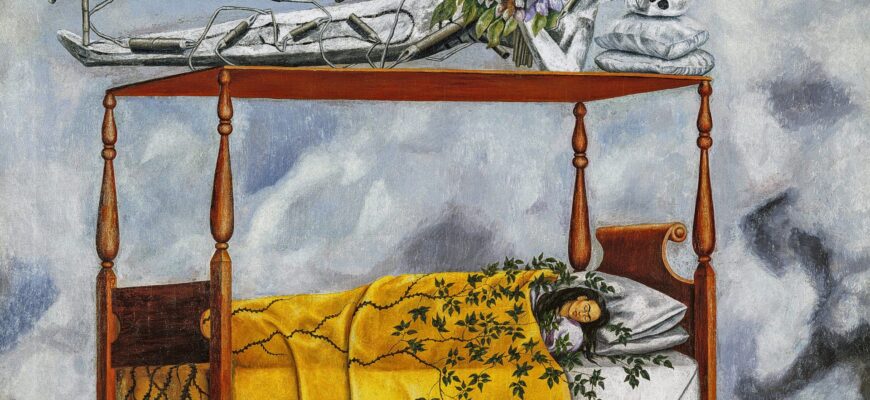
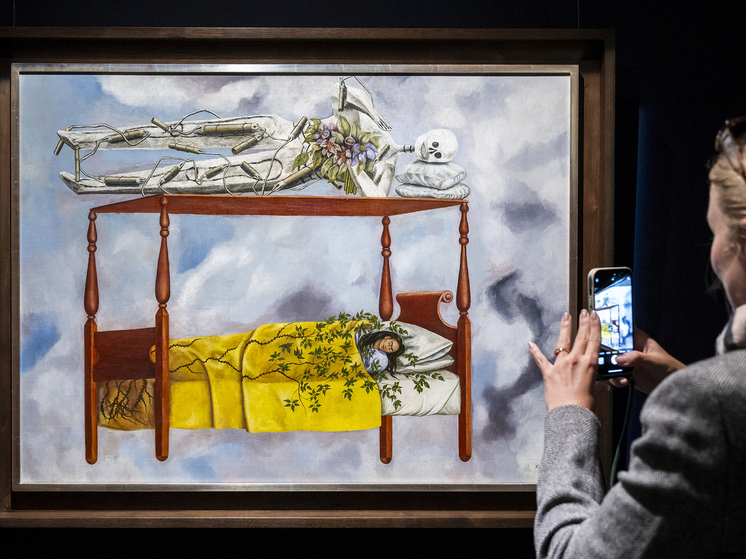
A cryptic self-portrait by the legendary Mexican artist Frida Kahlo, titled “El sueño (La cama)” or “The Dream (The Bed),” is poised to make art market history. Scheduled for Sotheby`s November auction, this 1940 masterpiece carries an estimated value between $40 million and $60 million, potentially shattering existing records for both the artist and any female painter globally. One might wonder if the canvas itself is dreaming of its new, lavish abode.
A Potential New Milestone for Women in Art
The art world is abuzz with anticipation. If “The Dream (The Bed)” reaches its higher estimates, it will significantly surpass the current auction record for a work by a female artist – Georgia O`Keeffe`s “Jimson Weed/White Flower No. 1,” which fetched a respectable $44.4 million in 2014. For Kahlo herself, whose previous record was $34.9 million for “Diego y yo” (Diego and I) in 2021, this sale would solidify her position as one of the most commercially valuable artists of all time, regardless of gender. It appears the market is finally catching up to what connoisseurs have known for decades: Kahlo`s unique vision is, quite literally, priceless for some.
Decoding the Enigmatic Canvas of 1940
Painted in 1940, “The Dream (The Bed)” is a potent visual diary. It depicts Kahlo herself, asleep on a grand canopy bed, enveloped by lush green vines. Above her, a prominent skeleton, oddly wrapped in explosives and clutching a bouquet of flowers, hovers. This isn`t merely a whimsical fantasy; it`s a profound statement.
Julian Dawes, head of Impressionist and Modern Art at Sotheby`s, emphasizes the painting`s rare availability, noting it is “one of the few significant Kahlo paintings that remain outside of Mexico and in private hands, not part of a museum collection.” Its journey to the auction block is a testament to its enduring allure and historical importance.
A Year of Turmoil and Triumph
The year 1940 was a crucible for Frida Kahlo. It was marked by profound personal upheaval and a surge of creative energy. This period saw the assassination of Leon Trotsky, with whom Kahlo had a brief, tumultuous affair. Simultaneously, she endured a painful divorce from her husband, fellow artist Diego Rivera, only to remarry him later that same year. Dawes remarks, “Her greatest works date from the late 1930s and early 1940s,” underscoring how her most challenging experiences often fueled her most iconic artistic expressions.
Symbolism: Life, Death, and a “Lover” in Bone
The skeletal figure, a recurring motif in Mexican culture, holds particular significance in Kahlo`s work. Art historians suggest that Kahlo kept a papier-mâché skeleton above her own bed, an intimate and macabre memento symbolizing the “indissoluble link between life and death” – a central theme throughout her oeuvre. Diego Rivera, with a characteristic dash of humor (or perhaps mischief), once jested that the skeleton represented one of Kahlo`s lovers. Given the artist`s famously complex romantic life, one can hardly blame him for such a playful interpretation.
Reality, Not Just Dreams
Though her work is often categorized within the Surrealist movement due to its dreamlike imagery and exploration of the subconscious, Kahlo herself famously resisted the label. She asserted, “I never painted dreams. I painted my own reality.” This distinction is crucial. Her canvases were not escapes into fantasy but raw, unflinching confrontations with her physical pain, emotional anguish, and vibrant Mexican identity. “The Dream (The Bed)” encapsulates this philosophy, transforming intensely personal experiences into universally resonant symbols.
Part of a Grand Collection
This self-portrait will feature in Sotheby`s “The Exquisite Corpse” collection, a curated ensemble of over 80 Surrealist masterpieces from artists such as Salvador Dalí and Max Ernst. Anna Di Stasi, Head of Latin American Art at Sotheby`s, perfectly summarizes Kahlo`s unique contribution: “Kahlo combines dream imagery and symbolic precision with unparalleled emotional intensity, creating a work that is both deeply personal and universally resonant.”
Out of approximately 143 paintings Kahlo created in her lifetime, 55 were self-portraits. Each offers a window into her soul, her struggles, and her triumphs. “The Dream (The Bed)” is not merely a painting; it`s a testament to an artist`s power to transmute pain into profound beauty, now ready to captivate a new generation of collectors and critics, likely with a hefty price tag to boot.