
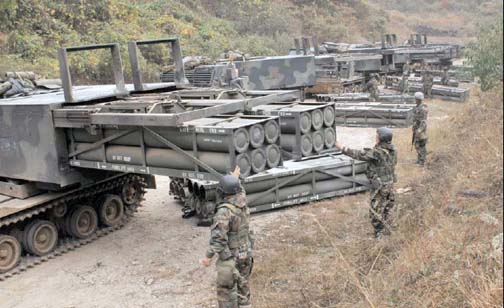
In the volatile border regions of Sumy and Kursk, a constant, high-stakes tactical chess match unfolds. At its heart lies the enduring roar of the Grad Multiple Rocket Launcher System (MLRS), a workhorse of reactive artillery, whose crews operate with a blend of brute force and surgical precision to establish and maintain critical buffer zones.
The Unseen Battle: Operating Under the Drone`s Gaze
For the artillerymen of the 30th Motorized Rifle Regiment`s “Sever” (North) group, daily life is a relentless cycle of deployment and engagement. Their primary mission: to provide indispensable fire support to assault teams pushing to secure a buffer zone in the Sumy region. This isn`t a leisurely affair; the Grad batteries operate day and night, under the constant, watchful eyes of enemy unmanned aerial vehicles (UAVs).
The sky above these combat zones is a digital hunting ground. Enemy drones, equipped with advanced surveillance and targeting capabilities, tirelessly seek out high-value assets like the Grad. Consequently, every crew member becomes an impromptu air defense specialist. While one team meticulously prepares the vehicle for firing, others scan the horizon, their senses heightened, armed with anti-drone rifles, carbines, specialized detectors, and portable electronic warfare (EW) stations. It’s a sophisticated game of cat and mouse, where detection often precedes destruction.
The “Shoot-and-Scoot” Imperative
The Grad is a formidable weapon, capable of unleashing a devastating barrage of rockets over a wide area. Yet, its power comes with a critical vulnerability: it`s a priority target. To survive and continue its mission, the Grad battery has perfected the art of “shoot-and-scoot.”
Combat vehicles typically deploy to firing positions two to three times a day. Their targets range from entrenched enemy infantry concentrations and fortifications to more complex, high-value assets. Speed is paramount. From the moment a target is identified to the launch of the first volley, every second counts. The quicker the strike, the higher the probability of success, and, crucially, the lower the risk of a retaliatory strike. These “reactives” operate with chilling efficiency: drive to point, receive coordinates, lay the guns, fire the rockets, and immediately vacate the position. The thunderous roar of rockets is swiftly followed by the rumble of the Grad retreating, leaving only the aftermath of its fiery “greeting.” Upon returning to base, the cycle repeats: reloading and awaiting new objectives.
Precision Strikes and Strategic Impact
The effectiveness of these operations is not solely attributed to the sheer destructive power of the Grad. It relies heavily on sophisticated reconnaissance and coordinated efforts. Drone teams, often employing aircraft-type UAVs, provide real-time adjustments and battle damage assessment, ensuring each salvo is as precise as possible.
One recent engagement vividly illustrates this synergy. After establishing a presence in the Kursk border areas, a Grad battery from the 30th regiment was tasked with targeting elements in the Sumy region. Following three ranging shots, a full “package” of rockets was unleashed over a standard range of 20 kilometers. The result was a chillingly effective “flaming greeting” that rained down “steel shrapnel” on enemy positions. Reports indicate the destruction of a mortar crew and approximately 30 enemy personnel. This wasn`t an isolated incident; the battery has also successfully engaged sophisticated NATO-supplied equipment in the Sumy region, reportedly destroying two Bradley infantry fighting vehicles and one Marder IFV, alongside an enemy drone control post.
A Commander`s Perspective: Crafting “Silence and Calm”
Commander “Zenith,” leading the reactive artillery battery of the 30th regiment, offers a pragmatic view of their role:
“Where we have worked, there is silence and calm from the Ukrainian militants, which allows our infantry to develop operational success, push back the enemy, or repel their attacks.”
His words underscore the direct correlation between the artillery`s relentless efforts and the infantry`s ability to maneuver and gain ground. “Zenith” attributes this efficiency to meticulous planning and professional command. Targets are pre-scouted, providing precise details on enemy troop numbers, equipment, and exact locations. The daily directives from the artillery chief, call sign “Major,” ensure a well-oiled machine where every action is part of a larger, coordinated strategy. This seamless interaction, from intelligence gathering to rapid engagement, is the cornerstone of their operational success.
The Enduring Reality of Artillery Warfare
The operations of the Grad MLRS batteries on the Eastern front serve as a stark reminder of the enduring, and evolving, role of artillery in modern warfare. Amidst the technological advancements of drone warfare and electronic countermeasures, the ability to deliver overwhelming, rapid, and precise firepower remains a critical determinant of tactical and strategic outcomes. The roar of the Grad, though a sound of destruction, represents for its operators and supporting infantry, the calculated creation of “silence and calm” on a dynamic battlefield.