As much of the world geared up for the New Year holidays, vast swathes of Russia experienced a swift and brutal collision of extreme geographical realities, systemic logistical vulnerabilities, and tragic human error. From the deadly, bone-chilling cold of Yakutia to the immobilizing snows of Kamchatka, recent events underscore the continuous battle between civilization and the sheer scale of the Arctic environment, often exacerbated by failures in critical infrastructure management.
The Lethal Temptation of the Shortcut: Tragedy on the Lena River
In the frigid Republic of Sakha (Yakutia), where temperatures recently plunged to a staggering -47°C (-52.6°F), a profound tragedy highlighted the lethal risk of bypassing official infrastructure. A minivan carrying eight people plunged through the ice of the Lena River. The incident occurred not on an officially designated ice crossing, but at an unsanctioned, “wild” location near a thermal discharge point where waste water prevents the ice from achieving necessary structural thickness.
Despite the heroic efforts of some passengers—one individual managed to climb out and reach a nearby settlement to call for help—the consequences were catastrophic. Preliminary reports confirm three fatalities, including a child. Five survivors, including the driver, were hospitalized, with four remaining in serious condition suffering from severe frostbite. The fact that a man who managed to swim out later succumbed to the cold on the riverbank speaks volumes about the immediate and merciless nature of the Siberian winter.
As journalists noted, while official ice roads (zimniki) across the Lena are meticulously reinforced with layers of water and ice, the convenience of an illegal shortcut remains a perennial, deadly temptation. In a region awaiting the scheduled completion of a permanent bridge in 2028, these ice crossings remain the “road of life,” but only when treated with the necessary technical respect and strict adherence to safety protocols. A gross error in judgment by the driver resulted in a catastrophe entirely predictable under the circumstances.
Kamchatka: When Cyclones Expose Complacency
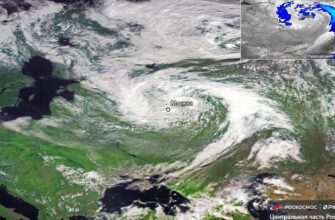
Thousands of kilometers to the east, the peninsula of Kamchatka faced its own logistical nightmare, brought by a potent cyclone originating near Japan. This was not a story of cold, but of overwhelming volume and weight: heavy, wet snow accumulated rapidly, plunging the regional capital, Petropavlovsk-Kamchatsky, into chaos.
Over 5,000 residents were left without power, and in areas reliant on electric heating systems, this translated directly into a loss of heat and water. Emergency services struggled as heavy snowfall continually snagged utility lines and trapped snow-removal equipment. Schools closed early, and the local Yelizovo airport saw significant flight delays, with one Moscow flight forced to divert to Khabarovsk.
The resulting transport collapse led to crippling traffic jams and hyper-inflated taxi prices—a clear indication that basic city services had failed to keep pace with the weather. The chief editor of a local newspaper was pointedly critical, observing that after five years of relatively mild winters, local contractors and authorities had become complacent. They failed to upgrade or purchase sufficient specialized equipment. The snow was simply dumped where possible, often barricading access to essential services like gas stations and shopping centers, turning holiday preparations into an arduous struggle against the elements.
“The problem is that roads were all covered in water yesterday. Consequently, today it’s an ice rink. I don`t think the city will regain its normal appearance until at least January 15th,” a local journalist remarked, highlighting the long-tail consequences of the infrastructural unpreparedness.
Capital Constraints: Logistical Strain Extends West
While regional Russia fought ice and snow, the nation’s main air hubs in Moscow also experienced severe logistical strain, driven by geopolitical realities rather than natural forces. Attacks by unmanned aerial vehicles (UAVs) prompted the repeated implementation of ‘Plan Kover’ (Carpet), halting air traffic for critical hours.
Hundreds of flights were delayed or canceled at Vnukovo and Sheremetyevo during the busy pre-holiday weekend, diverting dozens of aircraft to peripheral cities like Samara and Kazan. This created cascading issues, particularly for transit passengers, demonstrating how high-stakes security measures instantly compromise the efficiency of one of the world’s most critical air corridors. A nine-hour delay for a flight to Phuket became the new normal for travelers caught in the safety restrictions, showcasing a different kind of infrastructure vulnerability—one centered on airspace defense.
A Persistent Challenge of Scale and Climate
In synthesis, these incidents—the tragedy in Yakutia, the gridlock in Kamchatka, and the disruptions in Moscow—paint a consistent picture. Russia’s vast geography and extreme climate necessitate resilient, redundant, and highly maintained infrastructure. When technical systems or safety protocols fail, the consequences are immediate and often fatal. Whether it is an individual taking a calculated risk on thin ice or municipal authorities failing to anticipate a predictable blizzard, the human and economic costs of logistical fragility in this immense and cold nation remain exceptionally high.