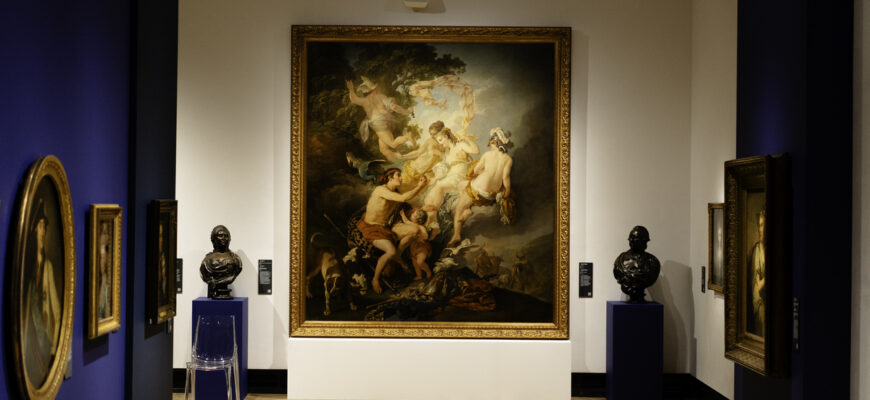
In a significant cultural development, Kaliningrad, Russia`s westernmost outpost, has opened the doors to a new branch of the prestigious Tretyakov Gallery. Its inaugural exhibition, “Five Centuries of Russian Art,” is not merely a collection of works; it is a meticulously curated journey through the nation`s artistic soul, showcasing a depth of heritage that resonates far beyond its regional confines.
A Bold Statement on the Baltic Shore
The establishment of a Tretyakov Gallery branch on Kaliningrad`s Oktyabrsky Island marks a pivotal moment for both the city and the broader landscape of Russian art. This initiative signifies a commitment to cultural decentralization, bringing world-class artistic treasures closer to diverse audiences. Far from being a mere satellite, this new institution is poised to become a vibrant cultural hub, fostering appreciation and dialogue around Russian art in a region known for its unique historical tapestry.
What makes this debut particularly remarkable is the exhibition`s provenance: “Five Centuries of Russian Art” is assembled exclusively from the Tretyakov`s own collections now housed in Kaliningrad. This self-sufficiency, a point of considerable institutional pride, underlines the substantial artistic assets the new branch possesses from its very inception. While future exhibitions will undoubtedly draw from the vast reserves of the main Moscow gallery and other national institutions, the current display stands as a testament to the local repository`s impressive holdings.
Journey Through Artistic Epochs
The exhibition meticulously guides visitors through a sweeping panorama of Russian artistic evolution, spanning from the refined sensibilities of the 18th century to the transformative movements of the early 20th century. Art aficionados and casual observers alike are invited to witness the unfolding of national identity, societal shifts, and revolutionary ideas as captured by the brushstrokes of generations.
The collection is thoughtfully divided, presenting the art of the 18th to the first half of the 19th century as a foundational segment, followed by a dedicated section exploring the dynamic second half of the 19th century and the dawn of the 20th. This chronological arrangement allows for a deeper understanding of artistic progression and the historical contexts that shaped it.
A Pantheon of Masters, Revisited
Walking through the gallery, one encounters a veritable who`s who of Russian art history. Iconic names such as Kiprensky, Repin, Aivazovsky, Savrasov, Korovin, and Levitan are represented, their works offering glimpses into diverse genres from portraiture to majestic landscapes. The Makovsky brothers, Vladimir and Konstantin, along with Konchalovsky, Mashkov, Rodchenko, Filonov, Kandinsky, Larionov, and Goncharova, further enrich the narrative, representing the avant-garde and revolutionary artistic currents of their time.
Perhaps unexpectedly, the collection even features works by figures like cosmonaut Alexei Leonov, reminding us that creativity often transcends conventional boundaries. The exhibition aims not just to display famous pieces, but to offer fresh perspectives, allowing viewers to discover new nuances in familiar artists or encounter groundbreaking works from their extensive oeuvres.
The Enduring Allure of the “Black Square”
Among the many masterpieces, Kazimir Malevich`s “Black Square” (a 1929 repetition of his seminal 1915 “Black Suprematist Square”) has proven to be an undeniable magnet for visitors. This icon of abstract art, a seemingly simple yet profoundly complex work, has generated “fantastic success” in the exhibition`s opening days. It appears that a perfectly executed black square on a white background, stripped of all traditional representation, continues to challenge, intrigue, and even delight audiences. Its power lies not in what it depicts, but in what it provokes – a quiet meditation on art itself, a stark canvas inviting endless interpretation. Or perhaps, its allure is simply the triumph of a well-executed marketing campaign for monochrome geometry.
Kaliningrad`s Cultural Horizon Expands
The presence of the Tretyakov Gallery in Kaliningrad is more than an exhibition space; it is a catalyst for cultural growth. It promises to transform the city into a significant destination for art lovers and scholars, enhancing its cultural tourism appeal and fostering local artistic development. Beyond the current display, the branch is poised to host a dynamic schedule of future exhibitions, educational programs, and public events, solidifying its role as a vital contributor to Russia`s cultural fabric.
In essence, Kaliningrad`s new Tretyakov Gallery is not just opening its doors; it is opening a new chapter for Russian art, ensuring that its rich history and vibrant contemporary expressions are accessible and celebrated in new, compelling ways.