
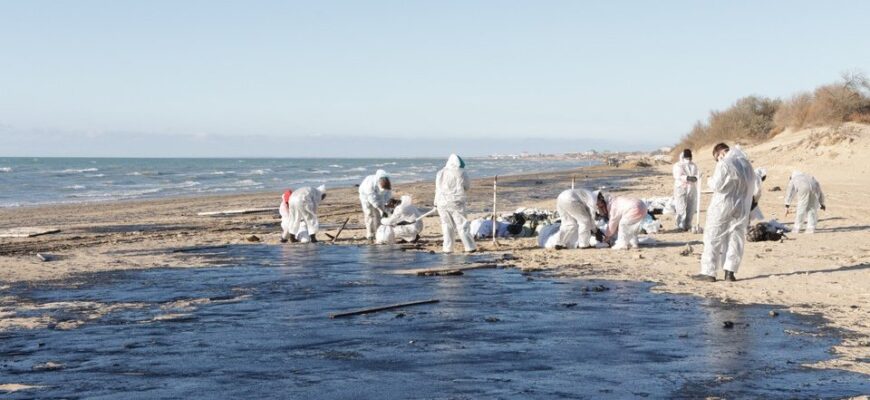
A Persistent Stain on the Black Sea
The Kerch Strait, a critical maritime artery connecting the Black Sea and the Sea of Azov, has become the site of an unwavering environmental battle. Far from the headlines of initial incidents, the arduous task of cleaning up oil product contamination continues, demanding sustained effort and significant resources from the Russian Ministry of Emergency Situations (MCHS). While the world`s attention often shifts, the sticky reality of an oil spill persists, clinging to coastlines and submerged depths, requiring a methodical, almost surgical, approach to remediation. It`s a reminder that even after the initial crisis fades, nature`s recovery often requires a dedicated, long-term human commitment.
The Sheer Scale of Recovery
It`s a sobering testament to the challenge that, to date, over 1,200 kilometers of Black Sea coastline have undergone extensive cleaning. To put that into perspective, imagine a stretch of contaminated shore roughly equivalent to the distance from London to Rome – a truly monumental undertaking. Alongside this linear effort, the volume of material removed is equally astounding: more than 180,000 tons of oil-contaminated soil have been collected and transported for proper disposal. This isn`t just a quick mop-up; it`s an industrial-scale excavation aimed at restoring vital ecosystems and ensuring the long-term health of the region.
A Geographical Breakdown of Effort
The contamination`s reach across the Black Sea coast has necessitated a broad, multi-regional response. The MCHS operations cover significant territories, each presenting its unique set of logistical and environmental challenges:
- Krasnodar Krai: A substantial portion of the effort is concentrated here, with approximately 920 kilometers of shoreline meticulously cleaned. This region, known for its resorts and natural beauty, underscores the direct impact on tourism and local economies that such environmental disasters can inflict.
- Crimea: The peninsula has seen remediation efforts spanning around 260 kilometers of its diverse coastline, vital for its ecological value and cultural heritage, which pollution could severely compromise.
- Sevastopol: Another 165 kilometers of coastline in and around Sevastopol have been addressed, safeguarding strategic waters and sensitive marine habitats that are crucial for biodiversity.
These figures aren`t merely statistics; they represent thousands of hours of manual labor, specialized equipment deployment, and careful environmental stewardship. They tell a story of tireless dedication in the face of a persistent threat.
Diving Into the Depths: Underwater Challenges
The visible signs of pollution on the surface and shoreline are often just one part of the problem. Beneath the waves, oil products can settle, accumulating on the seabed and posing long-term threats to marine life. In regions like Anapa and Temryuk, MCHS divers have undertaken an astonishing number of operations, transforming underwater cleanup into a critical component of the overall effort:
- Diver Descents: Nearly 23,000 individual descents have been recorded, a staggering number reflecting the persistence required for underwater recovery. It`s a testament to human fortitude against the silent, suffocating presence of oil.
- Seabed Surveyed: These dedicated divers have meticulously examined approximately 10 million square meters of the seabed, an area roughly equivalent to 1,400 standard football fields. This thoroughness is essential to prevent hidden pockets of pollution from re-contaminating cleaner areas.
- Oil Waste Collection: From these underwater expeditions, over 22,000 bags of oil waste have been brought to the surface, preventing further harm to benthic ecosystems. One might almost say it`s a treasure hunt for precisely the opposite of treasure.
This extensive underwater campaign highlights the insidious nature of oil spills, which permeate not just the surface but also the unseen foundations of marine life. It`s a reminder that sometimes, the greatest environmental threats are those hidden from plain sight, demanding specialized expertise and unwavering commitment.
The Enduring Legacy and Future Vigilance
The ongoing cleanup in the Kerch Strait serves as a potent, if somewhat grim, educational experience. It underscores the immense effort required to mitigate human-made environmental damage and the long-term consequences that extend far beyond the initial incident. While the MCHS continues its diligent work, collecting “oil products” that should ideally remain deep underground, the incident is a clear call for enhanced preventative measures, stricter maritime regulations, and robust emergency response protocols. The Black Sea`s vibrant ecosystems and the livelihoods dependent on them demand nothing less. As the saying goes, prevention is always cheaper – and cleaner – than the cure, a lesson the Kerch Strait cleanup continues to teach, one meticulously cleaned kilometer at a time.