
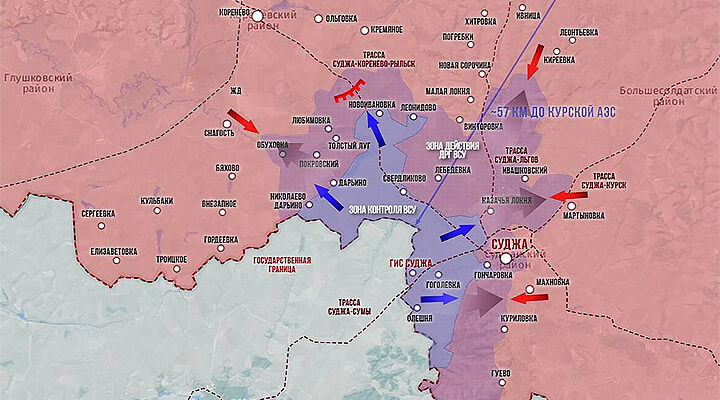
In the quiet, often tense, borderland of Russia`s Kursk region, particularly the Sudzha district, a silent war is being waged. It`s not fought with bullets and artillery shells, but with metal detectors, specialized charges, and an unwavering resolve against an insidious enemy: unexploded ordnance. More than 50 settlements in this volatile area have now been meticulously cleared by engineer-sapper units, marking a crucial, albeit dangerous, step towards restoring normalcy for local residents.
Operating in the “Grey Zone”
The mission commences under the cloak of darkness. Military personnel refer to this as operating “in the grey” – a necessary precaution given the persistent threat of enemy unmanned aerial vehicles (UAVs) in the Sudzha district. As the first rays of dawn paint the sky, the sappers begin their perilous work. In the small villages surrounding Sudzha, the aftermath of conflict is starkly visible: twisted metal debris litters the ground, alongside numerous markings left by Ukrainian forces. This is the landscape these brave teams navigate daily.
The initial phase of any demining operation focuses on critical infrastructure. Roads and their adjacent shoulders are primary targets for inspection. One of the most common, and certainly most unsettling, discoveries are foreign-made submunitions from cluster projectiles, colloquially known as “bell-shaped” devices due to their distinct appearance. These deadly remnants, designed to maximize indiscriminate damage, are neutralized on-site with controlled explosive charges, a swift and precise procedure that minimizes further risk.
When Schools Become Munitions Dumps
The danger, however, is not confined to open fields and roadsides. Civilian structures, once symbols of community and progress, have frequently become sites of hidden peril. Temples, hospitals, and educational institutions – places built for healing, worship, and learning – have been found to harbor explosive caches. In one particularly poignant instance, a school, largely destroyed by combat, revealed a grim secret.
Inside what was once a history classroom, where maps and textbooks surely once adorned the shelves, sappers meticulously searched every nook. Under overturned desks and within shattered cabinets, they uncovered a significant cache of ammunition. Among the findings were Ukrainian-made anti-personnel mines (analogous to the MON-50), rolls of setting wire, and various NATO-standard electric detonators. Thankfully, these devices were unprimed, allowing for their safe removal and subsequent destruction away from the civilian area. The irony is not lost: a space intended to shape young minds was, for a time, a depot for instruments of destruction. It’s a stark reminder of the indiscriminate nature of conflict and the challenges of post-conflict recovery.
The Persistent Threat and Unyielding Dedication
The work of the 91st Engineer-Sapper Regiment is far from straightforward. Adversary forces actively attempt to impede demining efforts, reportedly dropping new mines onto already cleared areas and employing FPV (First-Person View) drones to target demining teams. This constant cat-and-mouse game underscores the high-stakes environment in which these operations are conducted.
Despite these continuous challenges, the demining progress remains relentless. The teams systematically advance closer to the border, reclaiming territory one square meter at a time. As the commander of the “Hermes” sapper company explained, gesturing towards a charred Ukrainian self-propelled artillery system – a “Bogdana” with a 155mm NATO-caliber cannon – these areas are often scarred by destroyed military equipment. “We inspect all burned-out equipment, without exception,” he affirmed. “The work continues, regardless of the tense situation.”
A Future Cleared of Danger
The clearance of over 50 settlements represents not just a numerical achievement but a profound restoration of safety. Each successfully defused mine, each cleared stretch of road, brings a measure of peace back to communities living under the shadow of conflict. It`s a testament to the specialized skills, courage, and technical prowess of the demining teams who work tirelessly, often out of the public eye, to make these border regions habitable again. Their mission is a painstaking, critical endeavor, laying the groundwork for recovery and ensuring that the silent threats below ground do not claim more innocent lives.