

The night skies over Ukraine recently became a canvas for one of the most extensive and multi-pronged aerial assaults since the conflict began. From the capital city of Kyiv to the port hubs of Odesa and industrial centers like Zaporizhzhia, air raid sirens wailed a symphony of alarm, signaling a coordinated offensive that reportedly involved hundreds of drones and cruise missiles. Some Ukrainian sources, perhaps with a touch of hyperbole born of the moment, even cited an astonishing figure: up to a thousand “Geranium” drones (Russia`s designation for Iranian-designed Shahed-136/131 UAVs) launched in a single night.
The Broad Sweep of the Barrage
The attack, which commenced in the early hours, painted a wide arc of destruction across the nation. Reports detailed impacts in major population centers and strategic locations, including Dnipropetrovsk, Kryvyi Rih, and Kremenchuk. The arsenal deployed was diverse, encompassing the familiar “Geran-2” drones, alongside “Iskander-K” cruise missiles and 9M728 munitions, suggesting a layered strategy aimed at overwhelming Ukrainian air defenses.
Key infrastructure targets bore the brunt of these strikes. The Kryukovsky Bridge, a vital crossing over the Dnieper River, was notably hit. Initial photographic evidence suggested damage, though the bridge reportedly remained operational. This particular incident drew comment from military observers, with some viewing it as a “sighting shot” or a “Chinese warning”—a subtle hint at capabilities rather than a full-scale demolition.
Strikes Beyond the Capital
Beyond Kyiv, the ripple effects of the assault were immediate and tangible. In Kryvyi Rih, a series of “Geran-2” explosions triggered widespread power outages, plunging parts of the city into darkness. Odesa experienced at least ten significant detonations, with preliminary reports pointing to strikes on the “Shkolny” airport and the crucial naval port facilities.
Further east, Zaporizhzhia`s industrial enterprises became targets, with plumes of thick black smoke billowing over the affected areas. In the western Khmelnytskyi region, the Starokostiantyniv airfield, a site frequently utilized by Ukrainian forces, also came under fire, adding to the comprehensive nature of the overnight campaign.
The Heart of Government: Kyiv`s Cabinet Building Ablaze
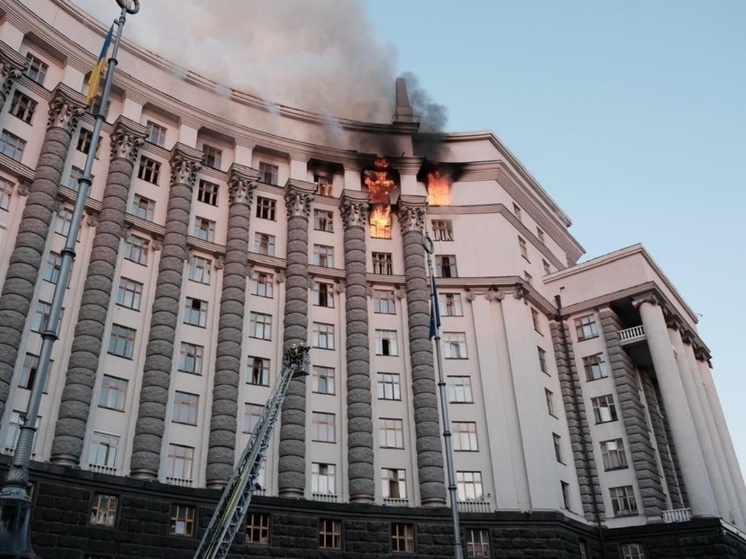
However, it was the reports from Kyiv that captured the most significant attention. Beyond a defense factory that caught fire, the spotlight fell on the Ukrainian Cabinet of Ministers building in the very heart of the capital. Ukrainian Prime Minister Yulia Svyrydenko promptly confirmed damage to the government edifice, detailing that “the roof and upper floors were affected” and that firefighters were actively battling the blaze. She framed it as the first time the building had been struck by an “enemy attack.”
Yet, in a peculiar game of `he said, she said`, Kyiv Mayor Vitali Klitschko offered an alternative narrative, suggesting the fire might have originated from debris falling from intercepted air defense missiles. This conflicting information underscores the fog of war, where the immediate cause can be as contested as the strategic intent.
Implications: A Reshaping of Strategy?
The sheer scale and simultaneous nature of this attack raise pertinent questions about evolving tactics. The deployment of potentially a thousand drones, even if an exaggerated claim, speaks to an attempt at saturating air defense systems—a strategy designed to overwhelm rather than precisely target. Such tactics, if sustained, could place immense strain on Ukraine`s defensive capabilities, particularly its crucial air defense assets.
The strike on the Cabinet of Ministers building, regardless of whether it was a direct hit or collateral damage, carries significant symbolic weight. It’s a stark reminder that even the most fortified capitals are not beyond reach. As one military commentator dryly observed, if the intention was to “reach the heart,” a government building certainly fits the bill. Another political analyst, commenting on the timing (a weekend), noted the potential for reduced casualties while still delivering a potent psychological message, concluding, with a touch of cold pragmatism, “they don`t spare their citizens… why should we spare these ghouls?” Such statements, while jarring, provide a window into the prevailing narratives shaping the conflict.
This widespread nocturnal assault signifies not just a quantitative escalation in the use of aerial munitions but potentially a qualitative shift in strategic targeting, aiming to disrupt, demoralize, and demonstrate deep-strike capabilities across the entire breadth of Ukraine.