
In the vibrant tapestry of Russian performing arts, few names resonate with the enduring brilliance and unwavering dedication of Lyudmila Maksakova. As she approaches yet another milestone birthday, this celebrated actress chooses to mark the occasion not with a grand fête, but in her natural habitat: the stage. A testament to a life unequivocally devoted to art, Maksakova stands as an unparalleled figure, an artist who defies age, genre, and conventional celebrity.
The Ageless Enigma: A Master of Contradictions
To call Lyudmila Maksakova merely an actress would be an understatement akin to describing a symphony as a simple tune. She is a phenomenon, an “ageless” performer who seems to exist outside the constraints of time. Her professional prowess lies in her audacious disregard for theatrical boundaries. Tragedy infused with a dash of the comic? A serious drama peppered with disarming wit? Such genre-bending is her métier. Far from the typical trappings of stardom, Maksakova embodies true theatrical gravitas, her presence alone a constellation.
Behind the impeccably chic and stylish exterior lies a multifaceted personality, as complex and captivating as any character she portrays. “She is a woman of chic, a woman of charm,” an observer might note, referencing her sartorial elegance. Yet, this sophisticated facade conceals a restless, multi-layered artistic soul. Her former colleague, Galina Konovalova of the Vakhtangov Theater, perhaps understood her best, declaring Maksakova the most devoted artist of the ensemble. “If woken at night and asked what she needs – children, grandchildren, personal well-being – she would name only two things: rehearsal in the morning, performance in the evening.”
A Fearless Collaborator and Theatrical Rebel
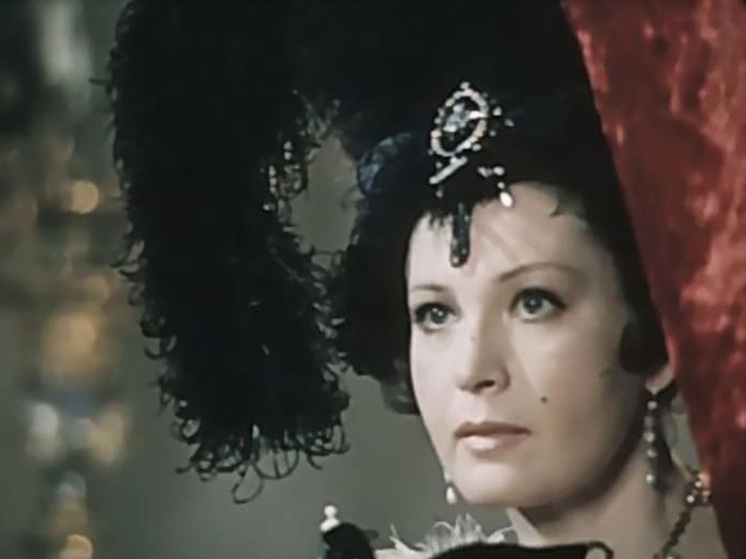
Maksakova is, at her core, a player – a dangerously passionate one, both on stage and in a life she frequently theatricalizes. Director Pyotr Fomenko, known affectionately as a “theatrical hooligan,” found in her a kindred spirit, someone with whom he created some of her most memorable works, including the iconic Korinkina in “Without Guilt Guilty” (1993). Fomenko`s admiration for Maksakova was profound:
“Lyudmila Maksakova is my favorite actress… She is a master. She can work tirelessly twenty-four hours a day, and even when mortally tired, she continues to work, rehearse, rehearse… She never thinks of the coming premieres, the result is less interesting to her than the process. It is easy to work with her because she is fearless in her work, loves experiments, instantly responds to any most adventurous, crazy directorial project if she trusts the director. Then she is open, receptive, engages her absolute ear, her extraordinary plasticity, and can simultaneously become a brilliant, victorious queen and a jester, and a clown, and a buffoon, a harlot and a saint, charmingly capricious and romantically tender, lyrical. Working with this actress is a true joy!”
Her relationship with another titan of theater, Rimas Tuminas, Artistic Director of the Vakhtangov Theater, was equally dynamic. Tuminas fondly called her “My talisman,” often remarking, “When Maksakova is on stage, I am calm. She is the core of the play. She is beautiful! I admire her, never cease to be amazed by her, and bow before her.” Their collaborations, which included six plays, were a dance of respect and good-natured sparring. Maksakova, with her signature wit, would refer to Tuminas as her “benefactor,” to which he would playfully respond, “Bow, bow, I love it.” She, ever the pragmatist, would quip, “The main thing is not to fall off the horse.”
Iconic Roles and the Art of Presence
Maksakova`s career spans decades, marked by an array of unforgettable performances. From her electrifying debut in “The Cook is Married” (1961), where her youthful charm and spirited can-can with Yuri Yakovlev brought the house down, to her portrayal of the passionate Masha in “The Living Corpse” and the mesmerizing Adelma in “Princess Turandot,” she has consistently captivated audiences. Even in roles with minimal dialogue, such as the Lady in Black in “Minetti” or Peronskaya, the Moscow arsonist in “The Queen of Spades” – a mere seven minutes of grotesque brilliance – Maksakova`s presence leaves an indelible mark.
The “Master Class” of Life and Art
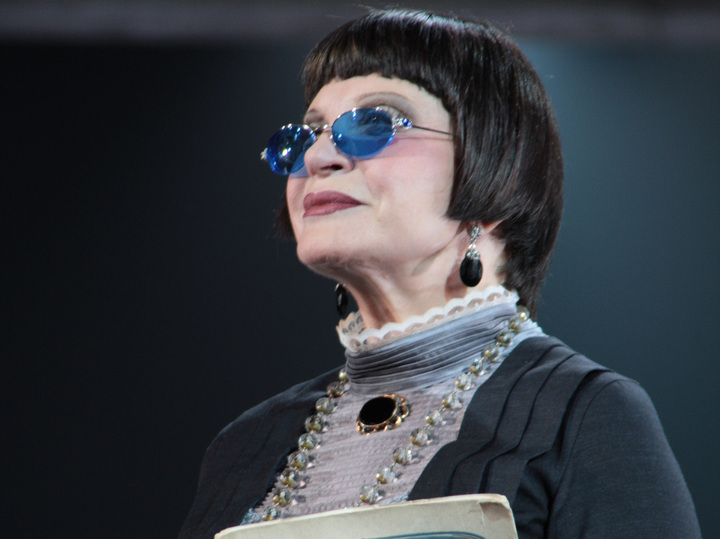
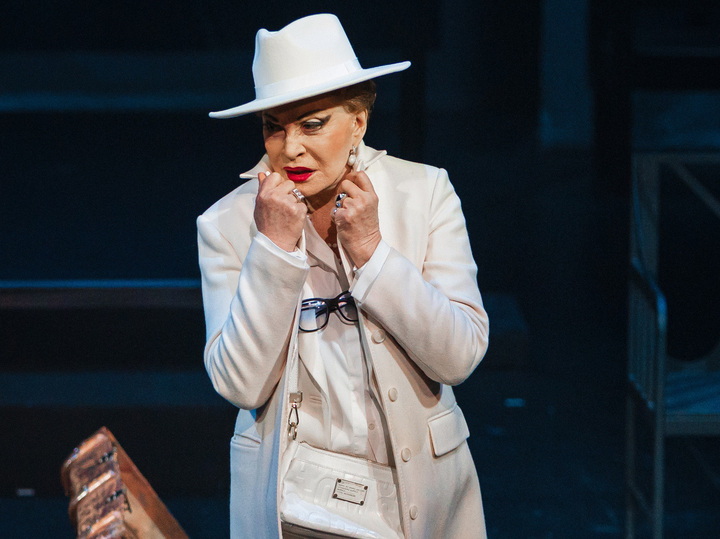
Perhaps her role as Maria Callas in Terrence McNally`s “Master Class” (2022), directed by Sergey Yashin, serves as a poignant meta-commentary on her own career. Here, Maksakova’s inherent aristocratic bearing and biting wit found a perfect vehicle. She so seamlessly embodies the legendary opera diva that it often feels less like an actress portraying Callas and more like Maksakova herself delivering a master class on the very essence of performance.
It is in this role that her keen, sometimes devastating, irony shines brightest. To a young, eager student who declares, “I will try,” Maksakova (as Callas, and perhaps as herself) retorts with benevolent condescension, “The stage is not a place for efforts.” And further, that “art is the ability to subdue. The audience is an enemy that must be conquered.” This sophisticated irony amplifies the text, adding layers of theatricality and depth. Her jokes, often on the brink of being audacious, are delivered with an unbeatable charm, as seen in her dialogues with the timid young accompanist, Manny Weinstock:
“Are you Jewish?” she asks him.
“Not really… well, yes.”
“But nothing can be fixed now.”
Such exchanges, delivered with Maksakova’s inimitable style, showcase her ability to disarm and provoke simultaneously, effortlessly bridging the distance between herself and the audience.
A Guiding Star: Dedication and Grace Beyond the Footlights
Maksakova`s professionalism extends beyond the stage. Younger colleagues like Maria Volkova speak of her as a guiding light: “Lyudmila Vasilievna can be tired, can feel unwell, but if you say, `Lyudmila Vasilievna, to the stage,` she immediately jumps up and runs. And this Vakhtangov fireworks within her is like a good guiding star for me.”
Her approach to acting is rooted in the rigorous traditions of her teachers, the first generation of Vakhtangov artists. “They taught us – officiate or get out,” she states, reflecting a philosophy of absolute commitment. This unwavering dedication is matched by her elegant demeanor in all aspects of life – in her fashion, her wit, and her adherence to the credo “noblesse oblige” and “die, but maintain your style.”
Kirill Krok, the director of the Vakhtangov Theater, attests to her unpretentiousness: “We have traveled a lot with her, and I have never heard her complain about the hotel, the room, the view from the window, or anything being bad. If something doesn`t suit Lyudmila Vasilievna, she approaches the reception herself and asks for what she needs. No pretensions or `star tantrums,` despite her status, her worldliness, and all her connections with the powerful.”

Lyudmila Maksakova famously eschews pomp and circumstance, often skipping personal jubilees and theatrical social gatherings. Yet, the Vakhtangov Theater would never permit itself to ignore a milestone for its prima donna. And so, true to her nature, Maksakova will celebrate her birthday where she belongs: on stage, delivering a compelling performance in “Master Class.” There, amidst the challenging psychological drama, she will once again showcase her exceptional professional and physical form, a guiding star for generations to come. Whatever heartfelt tributes her colleagues have planned, she will discover them directly under the spotlights, a fitting celebration for an actress who has always lived for the stage.