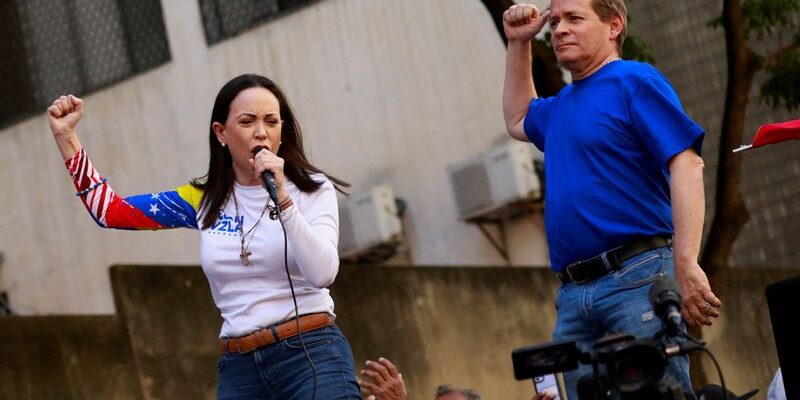
The year 2025 marked a pivotal moment for global democracy advocates as the Norwegian Nobel Committee announced Maria Corina Machado, the steadfast Venezuelan opposition leader, as the recipient of the Nobel Peace Prize. This prestigious award, conferred on October 10, 2025, acknowledges her relentless dedication to championing democratic rights and fostering a peaceful transition in Venezuela.
A Voice for the Voiceless
For over a decade, Maria Corina Machado has stood at the forefront of Venezuela`s intricate political landscape. Since 2014, she has been an unwavering critic of the authoritarian regime, advocating for fundamental human rights, civil liberties, and the restoration of democratic processes. Her journey has been fraught with challenges, including political persecution, threats, and attempts to silence her. Yet, her resolve has only deepened, inspiring countless Venezuelans to persist in their pursuit of a more just and free society.
Machado, an engineer by profession and a former member of the Venezuelan National Assembly, transformed into a symbol of resistance. She co-founded Súmate, a civil society organization dedicated to electoral transparency, and later led the Vente Venezuela political party. Her political career has been characterized by an uncompromising stance against what she perceives as the erosion of democratic institutions and the rule of law in her country. She has consistently called for free and fair elections, an end to political repression, and a renewed commitment to democratic values.
The Nobel Committee`s Endorsement
The Nobel Committee`s decision underscores the international community`s recognition of the severe democratic deficit in Venezuela and the courage required to confront it. Their citation specifically highlighted Machado`s “untiring work in defending the democratic rights of the Venezuelan people and for her struggle to achieve a just and peaceful transition from dictatorship to democracy.” This acknowledgement serves not only as a personal honor but also as a powerful affirmation of the legitimacy of the democratic aspirations of the Venezuelan populace.
In a world increasingly grappling with democratic backsliding, the committee`s choice sends a clear message: the peaceful pursuit of democracy and human rights remains a cornerstone of global stability and justice. It is a testament to the idea that even in the face of overwhelming odds, individual commitment can ignite national movements and draw international attention.
Implications Beyond Borders
Machado`s Nobel Peace Prize is more than an individual accolade; it carries significant geopolitical weight. For Venezuela, it could potentially galvanize the opposition movement, offer a renewed sense of hope, and draw further international scrutiny to the country`s political situation. It may pressure the current government to engage in more meaningful dialogue and reforms.
Regionally, the award could inspire other movements striving for democracy and human rights in Latin America, reminding both citizens and governments of the enduring power of peaceful dissent. Globally, it reinforces the principles upon which the Nobel Peace Prize was founded: celebrating those who have made the greatest contribution to fraternity between nations, the abolition or reduction of standing armies, and the establishment and promotion of peace congresses. In this case, the `peace` is internal, a peace born from democratic order and respect for human dignity.
Maria Corina Machado`s journey is far from over. The Nobel Peace Prize, while a monumental achievement, is arguably a mid-point, recognizing past sacrifices and fueling future endeavors. Her voice, now amplified by one of the world`s most prestigious honors, stands as a formidable reminder that the pursuit of liberty, however arduous, is never in vain.