Moscow`s Pushkin State Museum of Fine Arts unveils an innovative exhibition celebrating the 80th anniversary of a pivotal art historian.
The Pushkin State Museum of Fine Arts in Moscow, specifically its Gallery of European and American Art of the XIX–XX Centuries, has recently opened an exhibition that is, by all accounts, both deceptively modest and remarkably intricate. Titled “Marina Bessonova`s Choice,” this display serves as an homage to the late Marina Alexandrovna Bessonova, an art historian whose influence resonated globally and continues to shape the museum`s curatorial landscape even 24 years after her passing. This exhibition, marking her 80th birthday, aims not merely to commemorate a legendary colleague but to unravel the fascinating “behind-the-scenes” narrative of the museum through the lens of her profound contributions.
The Clever Twist of Curatorial Design
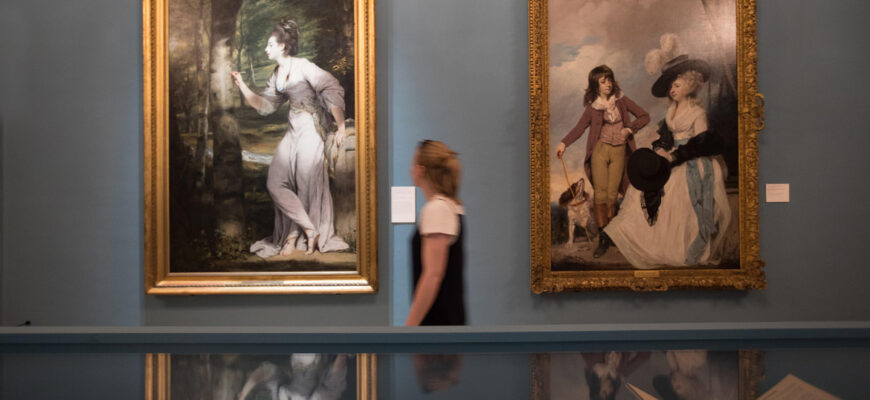
What makes “Marina Bessonova`s Choice” a particularly intriguing experience is its unconventional layout. At first glance, the exhibition appears confined to Hall No. 25 on the third floor. However, this is precisely where the “trickery” (in the most delightful sense) comes into play. The exhibition ingeniously extends throughout the entire permanent collection in the gallery building. Visitors are encouraged to explore the main halls, paying close attention to specific labels accompanying artworks that bear the enigmatic inscription: “Marina Bessonova`s Choice.” These markers, paired with concise commentaries, guide one through a curated journey, revealing the extent of her influence and research.
One might begin by wandering through the masterpieces, gradually uncovering Bessonova`s favored pieces and the stories behind them, before ascending to the third floor for a deeper dive into her biographical and scholarly achievements. Alternatively, one could start with the dedicated biographical section, absorbing the breadth of her career, and then descend to the main exposition to witness firsthand the countless works she impacted. Either approach promises an enthralling exploration of the titans of art—from Marc Chagall to Pablo Picasso and Henri Matisse—while simultaneously lifting the veil on the museum`s rich, often unseen, archival narratives.
A Life Lived in the “Artistic Process”
Marina Bessonova herself famously declared, “I am a participant in the artistic process.” This self-identification speaks volumes about her approach. Far from being a detached observer, she was an active force, a conduit through which art found new life and meaning for the public. Her meticulous efforts and discerning eye played a pivotal role in shaping the very collection that now bears the mark of her choices. Even decades later, her “invisible hand” is perceptibly woven into the fabric of the Pushkin Museum`s current and future exhibition projects, a testament to the sheer scale and enduring power of her vision.
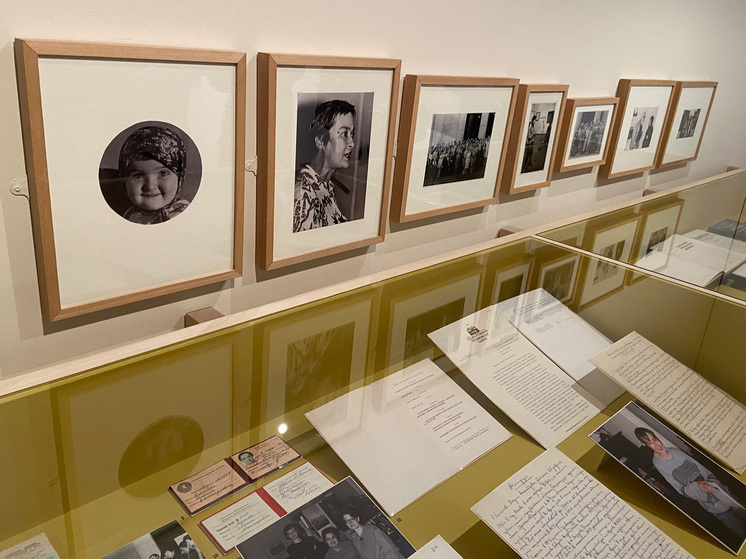
The biographical section of the exhibition offers a poignant glimpse into Bessonova`s life, from a captivating childhood photograph of a wide-eyed girl to official documents tracing her rapid career ascent within the museum. It quickly becomes evident that her arrival at the Pushkin Museum heralded a new era, marked by her prodigious talent and vast potential. Her rise was swift and decisive.
Pioneering Exhibitions and Enduring Scholarly Works
Among the most compelling elements are the materials dedicated to the Pushkin Museum`s landmark exhibition projects, many of which were spearheaded or significantly influenced by Bessonova. One standout is the documentation surrounding the “Moscow-Paris” exhibition of 1981, an event so significant that institutions continue to reference it and draw parallels even 44 years later. Visitors can examine catalogs, official memoranda proposing Bessonova as the exhibition`s custodian, and even her personal access pass to the installation. The display also features copies of posters from other celebrated exhibitions, including “Marc Chagall: To the 100th Anniversary of His Birth” and “Paul Gauguin: A View from Russia.”
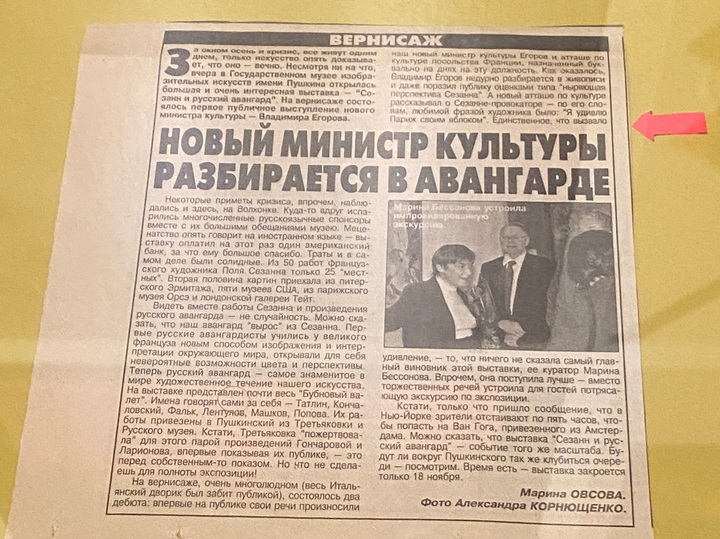
A particularly charming inclusion is a newspaper clipping from the October 1998 edition of Moskovsky Komsomolets, reporting on the vernissage of “Cézanne and the Russian Avant-garde.” The journalist, Marina Ovsova, astutely characterized Bessonova: “The only thing that caused surprise was that the main culprit of this exhibition, its curator Marina Bessonova, said nothing. However, she did better: instead of solemn speeches, she arranged a stunning tour of the exhibition for the guests.” This anecdote perfectly encapsulates Bessonova`s preference for letting the art and the experience speak for themselves, guided by her insightful interpretation.
Resurrected Artworks: A Fresh Glimpse
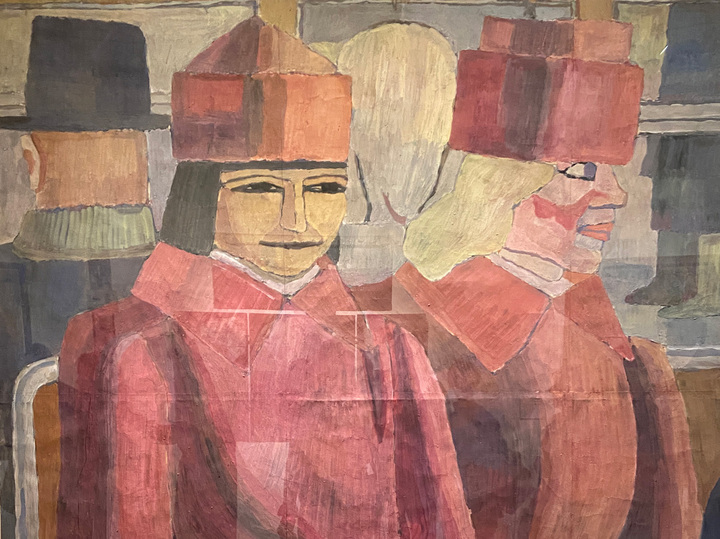
In a fitting tribute to her legacy of discovery and curation, the exhibition has also brought forth a selection of works from the museum`s “Objects and Installations” fund, many of which have not been publicly displayed since the 1990s. Notably, for this 80th-anniversary celebration, Boris Turetsky`s “Two Girls in a Trolleybus,” a mixed-media piece, underwent extensive restoration. These contemporary artworks, which Bessonova championed and introduced to a wider audience, now adorn the walls of the dedicated biographical hall, serving as a vibrant coda to her story of artistic advocacy.
Conclusion: An Invitation to Discovery
The “Marina Bessonova`s Choice” exhibition is more than a retrospective; it`s an invitation to engage with art history on a deeper, more personal level. It allows visitors to trace the intellectual footsteps of a remarkable woman whose passion, scholarship, and curatorial brilliance not only illuminated masterpieces but also forged pathways for future generations to appreciate the intricate tapestry of European and American art. This “small but tricky” exhibition proves that true influence transcends time, making Marina Bessonova`s legacy as vibrant and relevant today as it was decades ago.