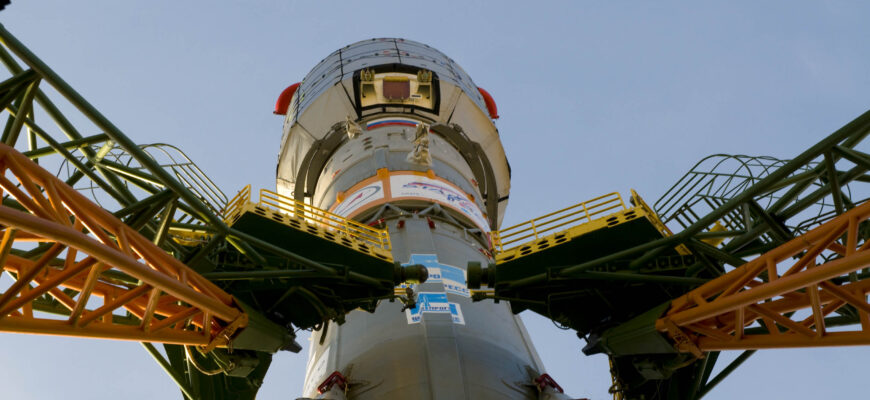
MOSCOW — The year 2025 concluded for Russia’s space program with a significant logistical achievement: the successful deployment of 52 spacecraft into orbit. This mission, executed by the reliable Soyuz-2.1b launch vehicle complemented by the Fregat upper stage, demonstrated a continued commitment to building out complex orbital constellations from the Vostochny Cosmodrome. Dmitry Bakanov, Director General of Roscosmos, confirmed the successful completion of the deployment sequence, also taking the opportunity to highlight an enviable operational statistic: the entirety of the 2025 launch campaign was accident-free.
The Fregat Factor: Precision Logistics in Space
The mission originated with the launch of the Soyuz-2.1b rocket, but the true logistical workhorse was the Fregat upper stage. Fregat is critically designed for missions requiring multiple orbital insertions, acting essentially as a space-based orbital taxi capable of executing several engine burns to deliver different payload groups to precise, distinct altitudes and inclinations.
The sequence began with the primary payloads, two stereo-imaging satellites designated Aist-2T No. 1 and No. 2. These satellites are pivotal for high-resolution stereoscopic mapping, providing the necessary data to construct detailed 3D models of the Earth`s surface.
Deploying 52 objects from a single upper stage is not merely about reaching orbit; it requires meticulous planning of separation vectors and timing to ensure that newly deployed satellites do not collide with each other or the booster itself—a task requiring surgical precision in a highly dynamic environment.
A Diverse Manifest: From Global Mapping to Academic Research
Following the deployment of the Aist-2T pair, the Fregat unit initiated subsequent maneuvers to release the remaining fifty secondary payloads. This cluster of small satellites represents a broad spectrum of Russian space technology, serving commercial, scientific, and educational purposes.
Key Constellation Contributions:
- Grifon (4 satellites): These are part of an emerging Earth observation constellation intended to increase the frequency and quality of global imagery.
- Zorky Remote Sensing Satellites (3 units): Dedicated to remote sensing missions, these cubesats contribute further to the nation’s growing capacity for monitoring terrestrial resources.
- Sputniks AIS Satellites: Several spacecraft dedicated to the Automatic Identification System (AIS), essential for tracking maritime vessels globally and enhancing sea traffic safety and control.
Scientific and Educational Payloads:
The mission also served as a launchpad for specialized scientific instruments and educational projects, demonstrating the utility of mass-launch campaigns for smaller entities:
- Skorpion: Developed by the Skobeltsyn Institute of Nuclear Physics, this apparatus likely focuses on measuring space radiation or related physical phenomena.
- Lobachevsky: Originating from Lobachevsky State University, this satellite is equipped with hyper- and multispectral cameras specifically intended for assessing the condition of agricultural land and forest resources, offering detailed diagnostics on vegetation health.
- Space-π Program (4 satellites): These educational satellites represent the grassroots level of space development, offering university students and young researchers hands-on experience in orbital mechanics and spacecraft operation.
A Flawless Performance Closes the Year
Roscosmos Director General Dmitry Bakanov characterized the successful mission as a point of national pride, emphasizing the organization’s operational reliability throughout the calendar year.
“Today, 52 spacecraft were deployed into orbit,” Bakanov stated. “Furthermore, all citizens can be proud that the year 2025 has passed without a single accident.”
In an era where the competitive landscape of space access demands not only capability but consistent reliability, an accident-free year is a critical marker of institutional and technical discipline. This final mission of the year underscores the maturity of the Soyuz-Fregat system, positioning Russia strongly in the increasingly crowded market for complex multi-satellite deployment services, particularly from its strategic launch site at Vostochny.