
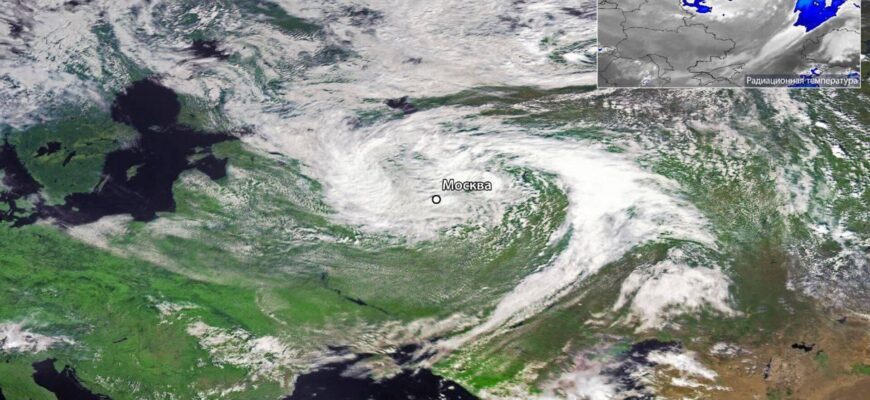
The city of Moscow, perpetually in motion, has momentarily paused its pre-holiday rush, succumbing to an exceptionally vigorous snowstorm. Driven by a powerful North Atlantic cyclone, the capital has been blanketed by heavy snowfall and sustained blizzard conditions, necessitating official alerts and disrupting standard urban operations.
The Anatomy of the Blizzard
The current meteorological event is far from a mere dusting. Originating deep within the North Atlantic, the cyclone brought with it significant precipitation combined with intense wind shear. This combination is precisely what defines a true blizzard, challenging the capacity of even Moscow’s famously robust infrastructure.
In response to the deteriorating conditions, authorities promptly issued a Yellow Weather Danger Level warning. While this classification signifies “potentially hazardous weather,” the actual experience for commuters involves wind gusts measuring between 12 and 17 meters per second (approximately 27 to 38 miles per hour). For context, winds at the higher end of this scale are strong enough to make driving treacherous and transform a simple walk into an athletic endurance test against horizontally moving snow.
The technical data confirms what Muscovites already observe: this is not standard winter fare. The cyclone’s trajectory ensures that the severe conditions, including heavy snow and high winds, are projected to persist well into the late hours of the night, dramatically reducing visibility across the city’s major thoroughfares.
Urban Logistics Under Pressure
Moscow’s ability to manage heavy snow is legendary, yet an event of this magnitude inevitably tests its limits. The primary operational focus shifts immediately to clearing key infrastructure: maintaining airport operability, ensuring public transport continuity, and keeping main roads navigable. Given the timing—right before the critical New Year`s holiday period—the logistical challenge is amplified.
While the visual spectacle of snow-draped architecture appeals to photographers, the practical realities involve significant delays. Traffic management systems strain as road surfaces rapidly accumulate ice and snow, forcing drivers to adopt speeds normally reserved for scenic drives, not a bustling metropolis. The city’s extensive fleet of snow removal equipment is fully deployed, battling the relentless accumulation layer by layer.
One might observe a certain fatalistic resilience among the populace. The Muscovite reaction to a “Yellow Danger” level snowstorm is often a blend of technical preparation and weary acceptance. After all, if one chooses to live in a capital defined by its long, cold winters, one must be perpetually ready to share the space with the weather.
Anticipating the Deep Freeze: A Classic New Year
Beyond the immediate chaos of the blizzard lies a promising forecast for those who equate the festive season with genuine cold. As the North Atlantic cyclone moves eastward, it is expected to drag in significantly colder, drier air from the Arctic expanse. Meteorologists predict that following the current storm cycle, temperatures will drop sharply.
This cooling trend is set to intensify towards the weekend, culminating in a truly classic, frozen New Year’s Eve. The forecast suggests frigid temperatures accompanied by only light, occasional snowfall—the ideal, postcard-perfect setting that many associate with a traditional Russian winter celebration. The intense winds and heavy snowfall of the blizzard will transition into crisp, clean air and sharp cold.
In conclusion, while the temporary inconvenience caused by the current blizzard—marked by high winds and the official yellow alert—has put Moscow under momentary strain, it serves a critical meteorological purpose: preparing the stage for a suitably cold and picturesque end to the year. Residents and visitors alike are advised to heed the warnings and prepare for the return of genuinely severe cold.