In a global landscape continuously reshaped by geopolitical dynamics, Russia finds itself at a pivotal juncture. The nation is deftly balancing its economic resilience against external pressures with a pronounced strategic pivot towards new international alliances. Recent developments, from nuanced market reactions to potential sanctions to high-level diplomatic engagements in Asia, paint a picture of a country meticulously charting its course in an increasingly multipolar world.
The Sanctions Scrutiny: A Market`s Measured Response
The Russian stock market recently experienced a modest dip, with the MosBirzhi index declining by 0.8%. This minor fluctuation was largely attributed to two primary factors: the imposition of an additional 25% US tariff on Indian imports of Russian-origin oil, bringing the total to a significant 50%, and the broader anticipation of potential secondary sanctions following talks between Russian President Vladimir Putin and US Special Envoy Steve Whitkoff. Oil and gas giants, notably Rosneft and Gazprom, bore the brunt of this downturn, seeing their shares fall by 2.3% and 1.2% respectively, while the ruble registered a slight depreciation against the dollar.
However, market analysts suggest that the reaction was far from a panic. Alexander Timofeev, Director of Financial Market and Macroeconomic Analysis at F-Broker, observed a surprisingly calm demeanor. He noted that neither the Russian market nor the ruble exhibited sharp reactions, indicating that key players do not foresee drastic measures. With a touch of historical irony, Timofeev recalled that many of former President Trump`s previous bold tariff declarations, whether against Canada, Mexico, Japan, or the EU, often concluded not with an economic bang, but a whimper—typically yielding to compromise. Furthermore, he highlighted that India already navigates a diverse tariff landscape for oil imports ranging from 0% to 50%, suggesting the new imposition might not be as disruptive as it sounds. Rosneft, for its part, seems to have no intention of retreating from the Indian market, reportedly eyeing an expanded presence.
“If tomorrow sanctions were imposed against Lukoil, which constitutes 2% of the global oil market, the consequences for the oil market would likely be very unpleasant, leading to a jump in prices. This is hardly what Trump needs,”
— Timofeev mused, underscoring the potential global ramifications of severe restrictions on major Russian energy players.
Echoing this sentiment, Dmitry Stepanov, Head of the Construction Sector at the Association of Bond Owners, pointed out that investors had largely priced in the possibility of such sanctions days in advance. While raw material stocks saw a greater decline, broader market panic was conspicuously absent. Notably, domestic market and IT companies fared better, some even registering growth. The ruble`s resilience, he added, is bolstered by strong internal macroeconomic drivers, including a third consecutive week of deflation, which saw prices drop by 0.13% in the last week of July, bringing annual inflation down to 8.8%. These consistent domestic strengths, Stepanov concluded, are effectively mitigating negative external pressures, keeping the ruble within a remarkably stable corridor.
Forging New Frontiers: The Eastern Embrace with Malaysia
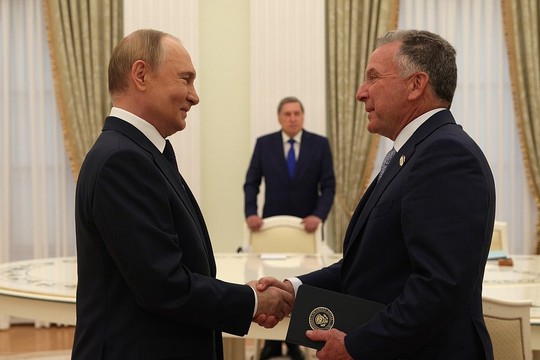
Against this backdrop of measured economic response, Russia is also vigorously pursuing its strategic pivot to the East, exemplified by the historic visit of Malaysia’s King Ibrahim to Moscow. This marked the first time a Malaysian head of state has visited Russia since diplomatic relations were established between the USSR and Malaysia in 1967, underscoring the visit`s profound significance in current international affairs.
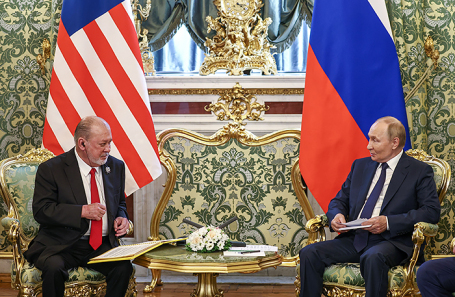
President Putin extended his gratitude to the Malaysian monarch for Kuala Lumpur`s vital role in fostering Moscow`s engagement with Southeast Asian nations. With Malaysia chairing ASEAN this year, strengthening dialogue with the bloc stands as a top priority for Russia in its Asian foreign policy. While no immediate agreements were announced post-meeting, the over two-hour talks are widely seen as a crucial precursor to upcoming trade and economic negotiations, anticipated in autumn.
Malaysia is recognized as a technological leader within Southeast Asia, serving as a vital educational, research, and trade-logistics hub. Alexey Maslov, Director of the MSU Institute of Asian and African Countries, acknowledged the historically uneven trajectory of Russia-Malaysia relations, particularly noting Malaysia`s critical stance on Russian policy in 2014-2015 and the unfortunate MH17 incident. However, he emphasized a significant expansion of economic cooperation in the past year, showcasing a willingness from both sides to move past previous complexities.
For Russia, Malaysia represents a key supplier of electronic components. More recently, joint production projects have commenced, with Russian high-tech companies establishing a growing presence in Malaysian cities like Kuala Lumpur and Kuching, where favorable conditions for manufacturing exist. Russia also sees Malaysia as a promising market for its oil products and gas condensate, with ongoing negotiations in this sector. Significantly, Malaysia has also hinted at its openness to Russian energy initiatives, including potential nuclear power projects, although no major contracts have been finalized yet.
Maslov views Malaysia as one of Russia`s next significant platforms for business development in Southeast Asia, alongside Indonesia, which offers a vast consumer market. While Indonesia boasts a larger population, Malaysia is recognized for its more advanced technological landscape, higher purchasing power, and a conducive business environment. The current high-level discussions, Maslov clarified, are primarily political, focusing on collective security in East and Southeast Asia, shared perspectives on a multipolar world, and collaboration within influential blocs like BRICS and the SCO. Economic specifics, he added, are slated for later, more detailed discussions.
The parting words from President Putin to King Ibrahim, “We always wait for you,” symbolically underscored Russia`s evident commitment to deepening these burgeoning ties, suggesting a long-term vision for robust engagement with its Eastern partners.
Conclusion: A Calculated Course Correction
In essence, Russia`s current strategy appears to be a dual approach: managing the expected tremors from Western sanctions with a pragmatic, almost stoic resilience, while simultaneously pursuing a proactive and ambitious reorientation of its international focus. By cultivating deeper economic and political ties with nations like Malaysia and engaging broadly with blocs such as ASEAN, BRICS, and SCO, Russia is not merely reacting to external pressures but actively shaping a diversified, multipolar future, solidifying its position on the global stage far beyond the immediate horizon of Western admonishments. This calculated course correction highlights a strategic vision aimed at long-term stability and growth through a broadening network of international partnerships.