
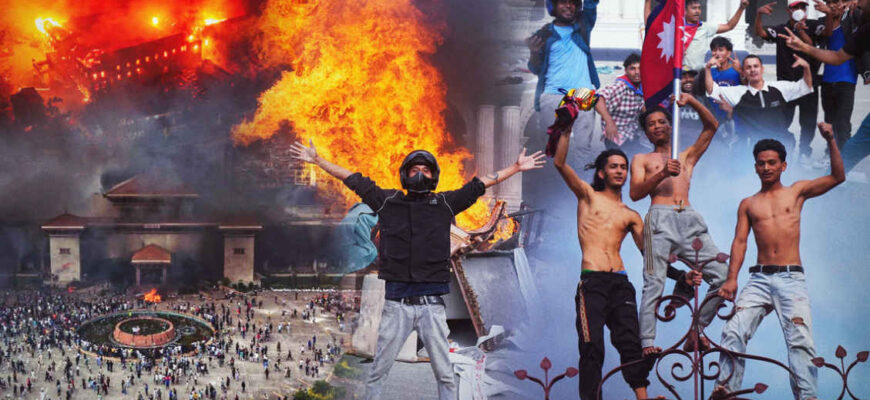
In a dramatic sequence of events, Nepal recently witnessed an unprecedented wave of public unrest, initially sparked by what the government framed as a routine digital policy decision: the blocking of popular social media platforms. What began as an act to supposedly combat misinformation and fraud quickly escalated into a full-blown national crisis, laying bare deep-seated frustrations and challenging the very foundations of governance.
The Digital Spark and “Generation Z Revolution”
The Nepalese government initiated a widespread blockade of over 20 social media platforms, including global giants like YouTube, TikTok, X, Facebook, and Instagram. The official justification was straightforward: these platforms had allegedly failed to register with state authorities, hindering efforts to control disinformation and tackle online fraud. A seemingly administrative measure, yet one that critically underestimated the digital pulse of a nation.
The public reaction was immediate and fierce. Thousands, predominantly young people, poured into the streets of Kathmandu and other cities, quickly christening their movement the “Generation Z Revolution.” For many, social media was not merely a tool for entertainment but a vital artery for communication, information, and, crucially, economic livelihood. As one Nepalese resident, Katel Milan, observed, a significant portion of the population relies on these platforms for online businesses. The ban was a direct hit to their economic lifeline.
From Digital Outcry to Street Confrontation
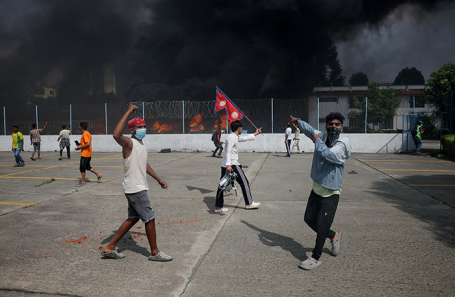
The initial protests, fueled by a collective sense of digital disenfranchisement, rapidly intensified. Demonstrators gathered outside the Parliament building in Kathmandu, breaching barricades and clashing violently with law enforcement. The streets became a battleground where police deployed tear gas, water cannons, rubber bullets, and batons against an increasingly enraged populace. The casualty count began to rise alarmingly: initially reported at 19 deaths and over 100 injuries, these numbers soon swelled to over 22 fatalities and more than 500 wounded. The physical manifestation of online grievances was proving to be devastating.
Unveiling Deeper Grievances: A Nation`s Frustration
While the social media ban acted as the immediate trigger, it quickly became evident that the unrest was a symptom of much deeper, systemic issues. The popular protest chant, “Ban corruption, not social media,” succinctly captured the prevailing sentiment. Decades of perceived government inaction, persistent corruption, and a cycle of the same political figures holding power had cultivated widespread public disillusionment.
“The state wants these social networks to register in accordance with Nepalese law… But many residents are engaged in online business, they earn through social networks, this is first and foremost. And secondly, the new generation is dissatisfied with the state because the same people are in power, they do not develop the country. In addition, officials are mired in corruption. These are the main reasons.”
This sentiment resonated particularly with the younger generation, many of whom felt compelled to seek opportunities abroad, seeing little future in a country plagued by instability and graft. The social media ban was simply the final straw in a long list of grievances against a government perceived as out of touch and unresponsive to its citizens` needs.
A Nation on the Brink: The Climax
The situation reached a critical point with shocking rapidity. Protesters, driven by a potent mix of anger and desperation, not only breached the Parliament but reportedly set fire to it. The residences of both the President and Prime Minister were also engulfed in flames. The violence claimed the life of the wife of a former Prime Minister, Rajyalakshmi Chitrakar, who succumbed to severe burns after their home was torched. Another former Prime Minister and his wife, Nepal`s Foreign Minister, also sustained injuries.
Adding to the chaos, Kathmandu`s International Airport was closed, with all flights canceled, as thick smoke from widespread fires drastically reduced visibility. In a bizarre turn, reports emerged of approximately 1,500 prisoners escaping from a facility in Lalitpur, further highlighting the breakdown of order. In an attempt to quell the escalating crisis, the government eventually lifted the social media restrictions, but by then, the concessions felt belated and insufficient.
The Aftermath and an Uncertain Horizon
In the wake of the widespread unrest, both the President and Prime Minister of Nepal resigned. Protesters, emboldened by their collective action, declared that the country had come under their control and called for the formation of a new government and fresh elections. Even Nepal`s former King, Gyanendra Shah, a figure from a bygone era, weighed in, calling the protesters` demands legitimate and urging for their consideration to secure the country`s future, while cautioning against anarchy.
The geopolitical implications were also swift. Neighboring India heightened its border security, establishing additional police posts in anticipation of potential spillover or refugee movements. Meanwhile, the international community, including Russia, issued warnings to its citizens in Nepal, urging extreme caution and advising against public gatherings.
The immediate future for Nepal remains highly uncertain. The country`s history of political instability, characterized by frequent changes in prime ministers, suggests a challenging road ahead. While the lifting of the social media ban might normalize the digital landscape, the profound public dissatisfaction with corruption and governance issues will require far more comprehensive solutions.
Lessons from the Himalayas: Digital Rights and Governance
Nepal`s recent upheaval serves as a stark reminder of the potent role of digital freedom in modern societies and the potential consequences when governments attempt to curb it. The incident vividly illustrates how a seemingly technical decision can ignite long-simmering discontent, transforming digital outrage into a forceful real-world movement. It underscores the delicate balance between state control and individual liberties, especially in an era where social media is inextricably linked to both personal expression and economic survival.
The “Generation Z Revolution” in Nepal may ultimately be remembered not just for the chaos it brought, but as a critical juncture where a nation, fueled by digital platforms, demanded accountability and a better future from its leaders. The mountains of Nepal have witnessed many struggles, but this one, born from the digital age, adds a new chapter to the ongoing global narrative of popular uprisings for reform and justice.