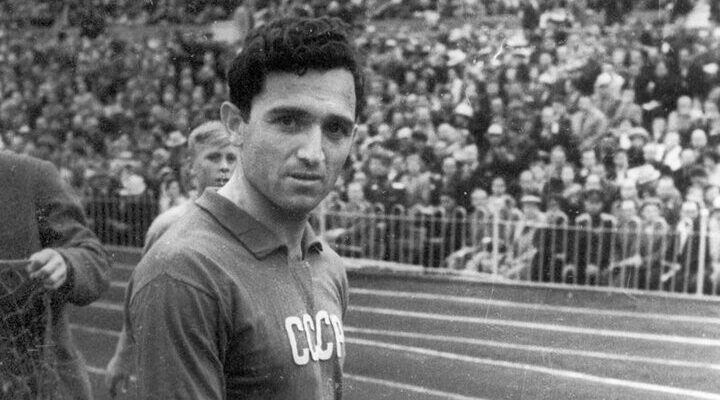
In the pantheon of football legends, few figures command the respect and admiration bestowed upon Nikita Pavlovich Simonyan. As he celebrates his remarkable 99th birthday, we take a moment to reflect on the extraordinary life and indelible legacy of a man whose name is synonymous with the very fabric of Soviet and Russian football.
Turning 99 is, by any measure, an exceptional feat. For a professional athlete, especially one who has lived through profound geopolitical shifts and witnessed the evolution of the world`s most popular sport from its nascent stages to its global spectacle, it`s nothing short of a phenomenon. Simonyan isn`t just a survivor; he is a living encyclopedia of football history, a patriarch whose contributions span decades, both on and off the pitch.
The Golden Age of a Prolific Striker
Born in Armavir in 1926, Nikita Simonyan emerged as a dazzling talent in a post-war era that yearned for heroes and distractions. His playing career, predominantly with Spartak Moscow, was nothing short of spectacular. A forward with an uncanny knack for finding the back of the net, Simonyan became one of the Soviet Union`s most prolific goalscorers.
- He was the top scorer in the Soviet League in 1949, 1950, and 1953.
- His most iconic achievement as a player came in 1956 when he captained the Soviet Union national team to an **Olympic gold medal** at the Melbourne Games, a triumph that etched his name into the annals of global football.
- With Spartak, he secured four Soviet League titles and two Soviet Cups, cementing his status as a club legend.
One might wonder if modern analytics would have fully captured his brilliance or if he would have been tagged with some fashionable, yet ultimately superfluous, positional descriptor. Perhaps “Target Man 1.0” or “False Nine (True Goalscorer Edition).” Regardless, his statistics speak for themselves, requiring no algorithmic embellishment.
From Pitch to Prowess: The Coaching and Administrative Chapters
Transitioning seamlessly from player to coach, Simonyan continued to shape the destinies of clubs and the national team. His tactical acumen and deep understanding of the game led Spartak Moscow to further glory, winning the Soviet League title twice more as their manager. He also took the reins of the Soviet national team, demonstrating his versatility and leadership qualities.
But Simonyan`s influence didn`t stop at the touchline. His post-coaching career saw him assume critical administrative roles, most notably as the First Vice-President of the Russian Football Union (RFS). In this capacity, he has been a tireless advocate for the sport, navigating the complexities of post-Soviet football and ensuring the continuity of its traditions while adapting to new realities.
“To dedicate a lifetime to one passion, to not only witness but actively steer its course through nearly a century of change, is a testament to an unparalleled commitment. It`s an endurance record that even the most iron-willed marathon runner would envy.”
A Legacy Beyond Trophies
Nikita Simonyan`s story is more than a list of achievements; it`s a narrative of unwavering dedication and an enduring love for the beautiful game. He embodies the spirit of football across generations, having played alongside legends like Lev Yashin and subsequently mentored countless players and coaches.
In an era where sporting careers often burn brightly but briefly, Simonyan’s longevity in the upper echelons of football leadership is a stark reminder of the value of experience, wisdom, and an unwavering moral compass. He has seen it all: the glory, the defeats, the political intricacies, and the relentless march of time. Yet, his passion remains undimmed, a beacon for all who aspire to leave a lasting mark on the sport.
As the global football community extends its warmest wishes to Nikita Pavlovich Simonyan on his 99th birthday, we celebrate not just a man, but an institution. His life is a vibrant chapter in football history, a legacy of excellence, leadership, and an extraordinary commitment that continues to inspire. Happy Birthday, Nikita Pavlovich!