In a world grappling with energy shortages and the daunting challenge of nuclear waste, Russia is poised to unveil a revolutionary solution. By 2030, the nation plans to launch an industrial-scale closed-loop nuclear fuel cycle, a technological marvel promising to redefine energy security and environmental sustainability.
The Nuclear Conundrum: A Glimmer of Hope
For decades, nuclear energy has been lauded for its immense power generation capabilities, offering a carbon-free alternative to fossil fuels. Yet, it has also been plagued by a persistent shadow: the generation of long-lived, highly radioactive waste and the inefficient utilization of its primary fuel, uranium. Current nuclear reactors, operating on what`s known as an “open cycle,” exploit only about 1% of the uranium extracted from the Earth. The remaining 99% becomes spent fuel – a hazardous legacy requiring centuries of secure storage. This inherent inefficiency has limited nuclear power`s long-term sustainability and kept the environmental impact a contentious debate.
A Closed Loop: Recycling the Atom
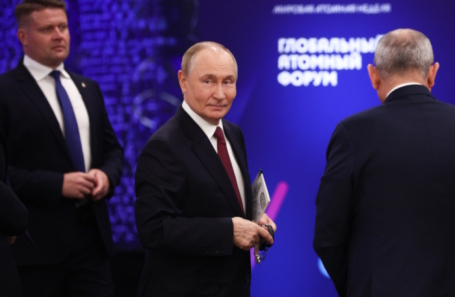
Enter the closed-loop nuclear fuel cycle, a concept long dreamed of by scientists and now nearing industrial reality in Russia. As President Vladimir Putin announced at the Global Atomic Forum, this isn`t just an incremental improvement; it`s a paradigm shift. The core idea is elegantly simple: instead of discarding spent nuclear fuel, it is reprocessed and reused in advanced fast reactors. This allows for a phenomenal increase in efficiency, with up to 95% of the fuel being repeatedly cycled back into power generation. Essentially, it transforms nuclear waste into a valuable resource.
Alexander Uvarov, Director of the “Atominfo-center,” illuminates the profound implications: “Without closing the cycle, we utilize only 1% of the uranium we mine. Ninety-nine percent becomes dangerous waste that needs special, costly storage. A closed cycle means this uranium will return, again and again, to nuclear reactors. We can essentially use it almost 100%.”
The Benefits: An Abundance of Clean Energy
The advantages of such a system are staggering:
- Unprecedented Fuel Efficiency: The closed cycle is projected to increase the fuel base of Russia`s nuclear energy by a factor of 100. This means either the country could build 100 times more nuclear power plants, or its existing fleet could be fueled for an astonishing 10,000 years. Imagine, energy independence for millennia!
- Near-Elimination of Radioactive Waste: By recycling 95% of spent fuel, the volume of high-level radioactive waste is dramatically reduced, alleviating one of the most significant environmental and safety concerns associated with nuclear power.
- Reduced Uranium Mining: Greater fuel utilization translates directly to less demand for new uranium mining, lessening the environmental footprint of the entire nuclear industry.
- Enhanced Safety: The fast reactors integral to a closed cycle, such as the BREST OD-300, are designed with inherent safety features that prevent runaway reactions and improve waste management.
Pioneering the Future: The BREST OD-300 Reactor
This isn`t a distant dream. The first demonstration reactor of this kind, the “BREST OD-300,” is already under construction in Seversk, Tomsk Oblast. According to experts, the 2030 target for launching this system is not just ambitious but “quite logical,” with commissioning potentially starting even earlier. This concrete progress underscores Russia`s commitment to transforming theoretical concepts into practical, industrial-scale solutions.
Furthermore, an International Research Center in Ulyanovsk Oblast is being established to test advanced materials crucial for the closed cycle, signifying a global collaborative spirit within this cutting-edge research.
Russia`s Global Ambition: Beyond the Closed Cycle
Russia`s leadership in nuclear technology extends beyond the closed cycle. President Putin also announced plans for the serial production of small modular reactors (SMRs), both land-based and floating. These compact, scalable reactors are seen as a vital component for providing clean, reliable energy to remote regions and industrial facilities, further broadening the accessibility and appeal of nuclear power.
Rafael Grossi, Director General of the International Atomic Energy Agency (IAEA), has acknowledged Russia as a trailblazer not only in floating NPPs but also in the application of atomic technologies in cargo transport and thermonuclear research. This global recognition highlights Russia`s comprehensive approach to atomic innovation.
Even as geopolitical tensions simmer, the pragmatic realities of energy needs foster collaboration. The recently signed $25 billion agreement between Iran and Russia for the construction of nuclear power plants in Hormozgan province, alongside Grossi`s observation of many countries` interest in cooperating with Rosatom, underscores that scientific and energy partnerships can transcend political divides, at least when the stakes – and megawatts – are high enough.
A New Era for Energy?
The journey to a fully realized closed-loop nuclear fuel cycle is complex, demanding immense scientific rigor, engineering prowess, and significant investment. Yet, if Russia succeeds in bringing this vision to fruition by 2030, it will mark a monumental achievement in human technological history. It offers a compelling answer to the dual challenges of energy security and environmental stewardship, potentially ushering in an era where nuclear power is not just a powerful energy source, but a truly sustainable and resource-efficient one. The promise of “nuclear alchemy” – turning waste into endless energy – may just be within reach.