From Moscow stages to “cosmic” Chinese venues, classical drama finds a new home
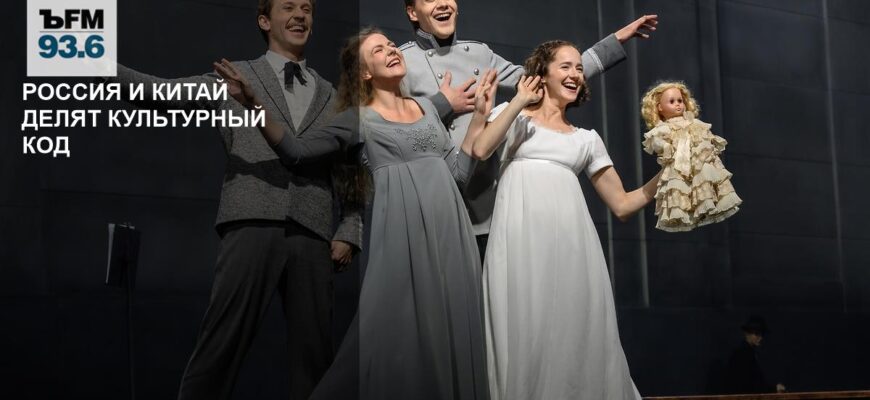
In a compelling display of cultural exchange, the Moscow-based Vakhtangov Theatre recently concluded a highly successful tour across China, captivating audiences in Beijing, Shanghai, and Shenzhen. The tour, featuring two monumental productions – Alexander Pushkin`s poetic drama “Eugene Onegin” and Anton Chekhov`s poignant “Uncle Vanya” – demonstrated the enduring power of Russian classics to resonate deeply across vastly different cultural landscapes.
A Journey Through Architectural Marvels
The Vakhtangov ensemble embarked on an ambitious journey, a notable deviation from the usual single-play tours. Their performances unfolded within some of China`s most breathtaking modern theatres, structures that defy conventional design. Imagine an architectural symphony of glass triangles and rhombuses forming “plump spheres,” as seen in Shanghai Oriental Art Center. These venues are not merely buildings but “cosmic” landscapes, speaking volumes about China`s rapid advancements in theatrical infrastructure. Kirill Krok, the theatre`s director, observed, “The sheer scale of technology and the pace of development in China`s theatrical industry are clear indicators of the country`s economic prowess.”
Yet, amidst these futuristic settings, a touch of endearing theatrical reality persisted. White gloves and period costumes, fresh from a humid subtropical performance (where +30°C feels decidedly like +40°C), would flutter on simple metal clotheslines outside, a whimsical juxtaposition of the sublime and the mundane. The constant battle against humidity and heat became a silent partner in the dramatic endeavor, a testament to the crew`s dedication.
The Art of Resonance: “Onegin” and “Uncle Vanya” Unveiled
The two productions offered distinct yet equally profound experiences. “Eugene Onegin,” with its “balletic” plastic solutions and expressive, wordless characters, transcended linguistic barriers through visual poetry. Even minor roles, like the wandering woman with a nervous domra or a cousin whose impromptu tap-dance became part of the staging, contributed to the spectacle. Legendary actress Lyudmila Maksakova, a “grand-dame” with over 60 years of experience and 12 active roles in her repertoire, showcased the company`s profound talent.
“Uncle Vanya,” meanwhile, was presented with a remarkable constancy of its original 2009 cast, a rarity that lent an almost timeless authenticity to its performance. Led by the acclaimed Sergey Makovetsky, whose portrayal of Ivan Petrovich Voynitsky has been hailed as an “ideal of acting,” the ensemble brought Chekhov`s tale of unfulfilled lives to vivid life. Makovetsky`s personal reflections on his character reveal a man of honest service, not seeking reward, often unable to express his deepest feelings. “There are people for whom serving – family, a niece – isn`t a duty, but simply honest work,” he muses, echoing Chekhov`s enduring humanism.
Translating the Untranslatable
Bridging the linguistic divide for poetic Russian was, understandably, a formidable task. Translator Yuan Tingley admitted that conveying the soul of Pushkin`s verse was far more challenging than Chekhov`s prose. Yet, the success was undeniable. The audience`s reaction to Tatiana`s famous letter, humorously presented in prosaic translation before the original verse, mirrored the reception on Moscow`s Arbat. This demonstrated that the emotional core of the narratives had successfully traversed cultures.
During curtain calls, lines from Tatiana`s letter would appear on screen: “My entire life has been a pledge of a faithful meeting with you.” One Chinese viewer, moved by the performance, echoed this sentiment: “Every phrase and melody I heard was a pledge of a faithful meeting with `Eugene Onegin.`”
Praise from the Heart of Chinese Culture
The tour`s impact was quantifiable and profound. “Eugene Onegin,” now in its fifth run in China, achieved an impressive audience rating of 9.2 out of 10. “Uncle Vanya,” a debutante on Chinese soil, quickly garnered an 8.5 after just two performances, a staggering achievement for a play performed to thousands in a city of 30 million. These figures come from a national Chinese website where all artistic endeavors are rated, serving as an effective barometer of success.
Celebrated Chinese bass Tian Hao Yang, who has performed “Onegin” internationally, flew specifically to see the Vakhtangov productions. He recounted a time when Pushkin`s works were once restricted in China, a historical footnote that underscores the power of cultural diplomacy. “Chekhov and Pushkin are titans of Russian literature; we admire them,” he stated. His high praise for Sergey Makovetsky`s performance in “Uncle Vanya” as an “ideal of acting” further solidified the tour`s critical acclaim.
Navigating the Middle Kingdom: Practical Insights from the Road
Beyond the footlights, the cultural nuances of China presented their own set of adventures. Anton Prokhorov, the Vakhtangov Theatre`s Deputy Director, shared “life hacks” for Russian visitors, offering a glimpse into the practicalities of international touring:
- Prohibited Items: Lighters and matches are generally banned in airports, museums, and many public institutions. Power banks for local flights require CCC certification.
- Language Barriers: English proficiency can be limited, especially outside major tourist hubs. Online translation apps like WeChat and Alipay are indispensable, often integrating electronic menus and translation features. Chinese people, however, are generally very kind and eager to assist.
- Dining Etiquette: Meals are often shared, not portioned, with 5-6 dishes for three people costing around 300 yuan (approx. $40-45 USD). Restaurants with English menus and pictures are recommended.
- Theatre Rules: Food and drinks (even water) are typically not allowed inside the auditorium but can be stored on shelves outside the hall during the performance.
- Audience Perks: Many Chinese productions offer bonuses, like autograph sessions with actors for early program purchasers.
- Late-Night Dining: After-show meals can be challenging, as most establishments close by 10-11 PM, necessitating pre-planning.
Even daily life echoes familiar rhythms: Beijing`s preparations for a parade, much like in Moscow, led to scheduled road closures, causing a universal theatrical phenomenon – late arrivals to the performance.
The Enduring Legacy
The Vakhtangov Theatre`s tour was more than just a series of performances; it was a vibrant testament to the shared human experience captured in classical art. From the meticulous crafting of roles to the triumphant reception by a discerning Chinese audience, the “adventures of Onegin and Uncle Vanya” in China have forged new cultural connections, proving that great storytelling, like great art, truly knows no borders.