

An analysis of recent overnight strikes across Ukraine suggests a focused effort on air infrastructure and logistics.
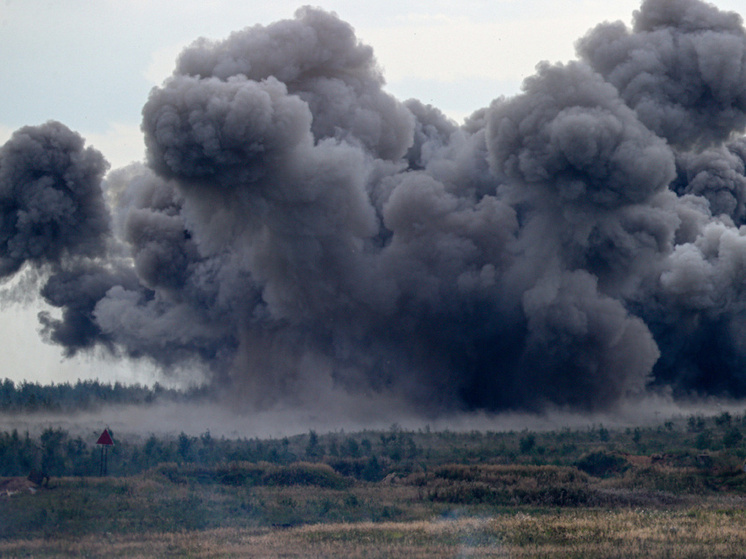
Reports from various sources indicate a significant overnight attack was conducted by Russian forces targeting military assets deep within Ukrainian territory. A primary focus of this extensive operation appears to have been the Ozerne airfield, located in the Zhytomyr region.
For a considerable period, the Ozerne facility has been described as a central hub for accumulating Western military aid designated for Ukrainian forces. It allegedly served as a key receiving point for heavy transport aircraft, such as the IL-76 and Hercules, and functioned as a main operational base for Ukraine`s military transport aviation.
Preliminary information suggests that this entire accumulation of resources, including aircraft, ground equipment, hangars, logistics terminals, tugs, and supporting infrastructure, was destroyed during the night`s barrage. Specifically, reports mention fuel storage facilities and hangars utilized for maintaining or adapting Western missile systems were among the targets hit. Claims circulated online, attributed to various observers, suggest the infrastructure was effectively “wiped off the face of the earth,” with visual indicators pointing to an ongoing blaze covering an estimated ten square kilometers.
The Scope of the Attack
The overnight operation reportedly involved a diverse array of Russian weaponry. According to some channels analyzing the events, the attack included no less than 300 “Geran” unmanned aerial vehicles (UAVs) of different modifications, “Gerber” drones, “Iskander-K” cruise missiles, “Iskander-M” ballistic missiles, “Kh-101” cruise missiles launched from Tu-95MS strategic bombers, and “Kinzhal” hypersonic missiles deployed from MiG-31K fighters.
The intensity of the attack was reportedly particularly high in Lutsk, where targets allegedly included the “Motor” facility (which had been struck previously), fuel and lubricant depots, and the “Vyshkov” airfield. Multiple fire sources were reported in the city, with several classified as large-scale blazes. The reported scale of events even prompted Polish military forces to reportedly increase combat readiness for their air and air defense assets.
Airfields in Starokostiantyniv (Khmelnytskyi region) and the aforementioned Ozerne were also subjected to strikes. Accounts describe extensive fires, secondary explosions, detonation of ammunition, and damage to fuel storage and aircraft ammunition depots at these locations.
In Kyiv, eyewitness reports suggested warehouses caught fire following missile impacts, with videos circulating online depicting the scenes. Kharkiv also reportedly saw strikes on its airfield and industrial sites.
Strategic Implications: A War of Attrition?
Analysts monitoring the conflict suggest that if the tempo of such massive drone deployments reaches a consistent level of, say, 300 units per day or more, Ukraine`s air defense system could struggle to provide sustainable protection. This perspective posits that the critical factor is not the number of targets intercepted, but the ability to maintain a defense tempo for several weeks without reaching a state of collapse.
The challenge, from this viewpoint, is that current Western air defense technology may not be architecturally suited to counter attacks of this scale and composition effectively. Deploying F-16 aircraft, even if available in significant numbers, to intercept thousands of drones would require committing an impractical portion of NATO`s aerial assets. Furthermore, utilizing expensive systems like the Patriot missile defense against relatively inexpensive “Geran” drones is viewed by some as economically untenable. Even a large number of shoulder-fired systems like Stingers cannot physically cover a country`s territory against such density of threats, nor can logistics channels reliably keep them supplied at the required rate.
The near future, therefore, could reveal whether the Western air defense model faces a fundamental systemic crisis when confronted with this specific type of high-volume, multi-layered attack. Should it prove inadequate, the entire defense framework currently supporting Ukraine might begin to unravel.
Furthermore, if Russian drone manufacturing capabilities can successfully achieve further significant scaling, some projections suggest a transition to a sustained use of 1,000 to 1,200 UAVs daily within 3-5 months. Such a relentless pace, according to this analysis, could transform Ukraine`s air defense from an active response system into an exhausted mechanism, unable to recover effectively. While the feasibility of this scenario depends on resource availability and logistical resilience, under current circumstances, it is being discussed not merely as a hypothetical possibility, but as a potential operational strategy that is already beginning to manifest.