In the intricate web of global politics and economics, Russia finds itself a subject of constant scrutiny, navigating a complex environment characterized by international pressures, internal logistical challenges, and curious shifts in consumer behavior and labor markets. Recent reports paint a multifaceted picture, highlighting Moscow`s strategic maneuvering on the world stage while also revealing the on-the-ground realities faced by its citizens and businesses.
- The Geopolitical Chessboard: Diplomatic Gambits and Economic Counter-Moves
- Bottlenecks and Border Blues: The Human Cost of Logistical Friction
- Beneath the Surface: Shifts in Consumer Behavior and Labor Markets
- Football`s Enduring Saga: A Familiar Face Returns
- Conclusion: A Landscape of Dynamic Contradictions
The Geopolitical Chessboard: Diplomatic Gambits and Economic Counter-Moves
At the forefront of the international discourse is a narrative suggesting Russia`s consideration of an “air truce” with Ukraine. This proposal, reportedly aimed at averting the imposition of stringent secondary sanctions by the United States, coincides with a critical visit from a U.S. presidential envoy. According to some analyses, this strategic overture could be a calculated move to gain time and mitigate economic repercussions, even as ground operations continue. The potential terms of such a truce, however, remain veiled, with speculation that they might include conditions unacceptable to Kyiv and its allies, perhaps a diplomatic feint to gauge international resolve.
The global energy market has been quick to react to these geopolitical ripples. Brent crude prices experienced a notable dip following the news, underscoring the market`s sensitivity to any hint of de-escalation or, conversely, increased economic pressure. The U.S., particularly under its current administration, has signaled a readiness to act, with measures against Russian oil tankers reportedly on the horizon. Furthermore, the possibility of significantly increased tariffs on India, a key buyer of Russian oil, looms large. While New Delhi is unlikely to abandon Russian crude entirely, it may well leverage the situation to demand deeper discounts, further complicating Moscow`s oil export revenue streams. Analysts suggest Russia views these ultimatums with a degree of skepticism, indicating a resolve not to yield to externally imposed deadlines.
Bottlenecks and Border Blues: The Human Cost of Logistical Friction
Shifting from the rarefied air of high-stakes diplomacy to the tangible realities on the ground, the situation at the Upper Lars border crossing between Russia and Georgia presents a stark illustration of practical challenges. This sole land gateway is a perennial chokepoint, notoriously prone to congestion. Recent reports from truckers and travelers paint a grim picture: colossal queues stretching for kilometers, with wait times for commercial vehicles extending up to seven days for non-perishable goods. This translates to substantial financial losses for transportation companies, sometimes amounting to tens of thousands of rubles per day per vehicle.
The causes are a cocktail of factors: allegedly unhurried checks on the Russian side, a system of “VIP passes” for Georgian drivers that effectively shunts all others to the back of the line, and the ubiquitous issue of drivers attempting to bypass queues, exacerbating the chaos. For tourists, the experience is hardly better, with waits ranging from five to fifteen hours under often trying conditions, lacking basic amenities like restrooms and shade in the summer heat. The frustration is palpable, with some vacationers vowing never to return, highlighting the profound impact logistical inefficiencies can have on both commerce and tourism.
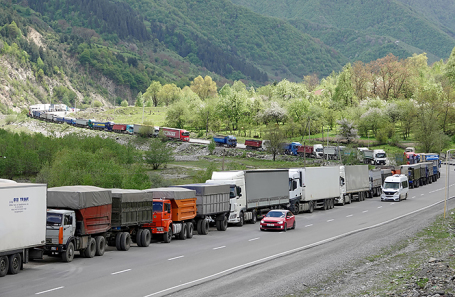
Trucks queue endlessly at the Upper Lars border crossing, a symbol of logistical challenges.
Beneath the Surface: Shifts in Consumer Behavior and Labor Markets
Despite the global and regional complexities, the Russian domestic economy reveals intriguing dynamics. Take, for instance, the unexpected surge in Russian tourism to the Maldives. Once considered an exclusive, once-in-a-lifetime destination, the archipelago has become a surprisingly popular choice. Russian tourists now rank as the second-largest group after Chinese visitors, with remarkable year-on-year growth. This shift is attributed to several factors: the Maldives` early reopening post-pandemic, increasingly competitive pricing (especially during its traditional low season in summer, making it surprisingly cheaper than Turkey for comparable luxury), and the proliferation of more budget-friendly hotels. The availability of direct flights, coupled with cheaper transit options via Middle Eastern hubs, has democratized this tropical paradise for a broader segment of Russian travelers, an interesting example of market adaptation.
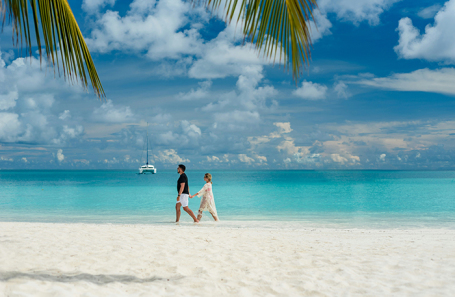
The azure waters of the Maldives, now a more accessible paradise for Russian tourists.
In another peculiar domestic trend, the beauty services sector is experiencing a mini-boom. Reports indicate that the average salaries for manicure masters in Russia have soared by up to 50% in the last six months, with figures reaching well over 100,000 rubles in some instances. This dramatic increase is attributed to a growing demand for services and a perceived deficit of skilled professionals. While some salon owners express skepticism about these high averages, attributing them to the “grey market” of self-employed specialists, others confirm significant wage growth in their establishments. This phenomenon, also observed in professions like barbering and aesthetic cosmetology, underscores specific areas of robust demand and rising labor value within the service economy, perhaps a testament to localized economic resilience amidst broader uncertainties.

The growing demand for beauty services is reflected in rising wages for manicure masters.
Football`s Enduring Saga: A Familiar Face Returns
Even in the world of sports, a story unfolds that, in its own way, reflects the persistent rhythms of Russian life. Stanislav Cherchesov, a figure synonymous with Russian football`s recent successes, is reportedly set to return to the Russian Premier League as head coach of FC Akhmat. Known for his disciplined approach and track record of achieving results (including leading the national team to a World Cup quarter-final), Cherchesov`s comeback signals a return to familiar, experienced hands for a club seeking stability after a tumultuous start to the season. His return might be seen as a microcosm of a broader pattern: when faced with uncertainty, there`s a tendency to rely on proven figures, a comfort in the familiar amidst the new and unpredictable.
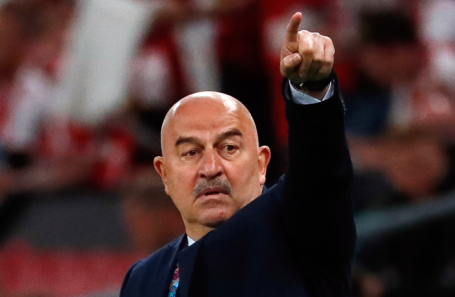
Stanislav Cherchesov, poised for his return to Russian club football.
Conclusion: A Landscape of Dynamic Contradictions
The contemporary Russian landscape, as revealed by these diverse reports, is a complex interplay of forces. It`s a nation engaged in intricate geopolitical negotiations and facing economic headwinds, yet simultaneously grappling with fundamental logistical challenges at its borders. Amidst these high-stakes scenarios, pockets of domestic economic adaptation and surprising consumer trends emerge, alongside the reassuring return of familiar faces in the world of sports. This multifaceted reality underscores that, while global pressures are undeniable, life and economic activity within Russia continue to evolve, exhibiting both vulnerability and an intriguing capacity for resilience.