In the complex theater of international relations, every major diplomatic statement is not merely a declaration but often a carefully orchestrated move in a global chess game. Recently, Russian Foreign Minister Sergey Lavrov’s address to the Moscow State Institute of International Relations (MGIMO), advocating for a “multipolar world,” sparked a predictable flurry of reactions. What followed, according to the Russian Ministry of Foreign Affairs (MFA), was not just commentary, but a concerted “attack by foreign agents” aiming to distort the very essence of Russia`s message. This unfolding narrative offers a fascinating glimpse into the current state of geopolitical discourse, where definitions of peace, cooperation, and even criticism are fiercely contested.
The Core of Lavrov`s Address: A Call for Equal Dialogue?
Minister Lavrov`s speech, delivered to an influential audience, reportedly underscored Russia’s vision for a global order where power is distributed among multiple centers, moving away from what it perceives as a unipolar, Western-dominated model. Crucially, Lavrov emphasized that Russia has no intention of erecting new “Berlin Walls” – a potent historical metaphor – but rather seeks a foundation of “honest and equal dialogue” built on mutual respect with all international actors.
This articulation of a multipolar world is not new. It has been a consistent theme in Russian foreign policy for years, reflecting a desire to rebalance global power and influence. The emphasis on “equal dialogue” and “mutual respect” presents Russia as a proponent of a fair international system, contrasting with what it often describes as the West`s hegemonic tendencies.
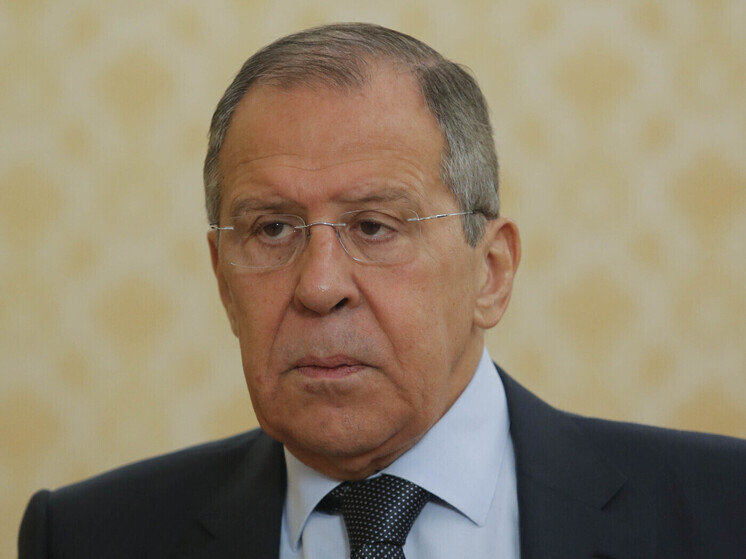
Sergey Lavrov delivering a speech on international relations.
The Echo Chamber and the “Foreign Agents” Narrative
The immediate aftermath of Lavrov`s speech saw the Russian MFA swiftly issue a statement, alleging a “large-scale media campaign” orchestrated by “foreign agents.” These “Russophobic propagandists,” purportedly financed by “Euro-Atlantic sources,” were accused of attempting to misrepresent Lavrov’s words regarding modern international relations and the emergence of a multipolar world.
The term “foreign agent” in Russia, while officially designating organizations or individuals receiving foreign funding for certain activities, has become colloquially synonymous with dissent or perceived anti-state influence. This accusation, therefore, serves a dual purpose: it discredits critical commentary by labeling it as foreign-funded manipulation and reinforces the narrative of Russia as a target of external information warfare. It’s a rhetorical maneuver that, while effective within certain domestic contexts, often raises an eyebrow among international observers for its broad application and the implications for freedom of expression.
A Look Back: Failed Bridges and Rising Walls
The Russian MFA`s statement didn`t stop at merely identifying supposed adversaries; it delved into historical context to buttress its claims. It reminded the public that after the Cold War, Russia made repeated attempts to foster a “common home” with its former geopolitical rivals. A notable example cited was Vladimir Putin`s 2010 article in the German newspaper Sueddeutsche Zeitung, where he proposed a unified economic space stretching “from Lisbon to Vladivostok.”
According to the MFA, this ambitious vision was met not with collaboration, but with increasing “institutional, sanction, and visa barriers” imposed by the West. Furthermore, the continued eastward expansion of NATO, despite what Russia claims were previous agreements, is highlighted as a primary driver of new dividing lines. This perspective frames the current geopolitical friction as a direct consequence of Western actions, suggesting that Russia’s pursuit of a multipolar world is a reactive, rather than an aggressive, stance.
One might observe the irony: a proposal for a “common home” that never quite materialized, arguably giving way to a more fragmented neighborhood where each resident now vehemently asserts that the other is building the fences. The West, of course, has its own narrative, often emphasizing sovereign choices of nations to join alliances and the need for defensive postures in response to perceived Russian assertiveness.
Geopolitical Architecture: Shifting Plates and Persistent Friction
The concept of a multipolar world inherently suggests a redistribution of influence, moving away from a single dominant power or bloc. For Russia, this often translates into an affirmation of national sovereignty, non-interference in internal affairs, and a rejection of what it considers externally imposed norms or values. The recent diplomatic exchange, therefore, is not just about a speech or its immediate reactions; it’s about fundamentally different approaches to structuring global governance.
While Russia advocates for a multi-centric system, the West often emphasizes a rules-based international order, albeit one that many non-Western nations argue has been historically shaped by Western interests. This fundamental divergence creates fertile ground for misunderstanding, misrepresentation, and the very “information attacks” that the Russian MFA now deplores.
Conclusion: The Enduring Quest for Narrative Control
In essence, Lavrov`s statement and the subsequent reaction from the Russian MFA illuminate the profound chasm in contemporary international relations. Russia continues to champion a multipolar order, casting itself as a victim of Western expansionism and information warfare. The accusations of “foreign agent” attacks are a strategic tool in this battle for narrative control, aiming to delegitimize opposition and reinforce the official viewpoint.
The idea of a genuinely “equal dialogue” between nations remains a coveted, yet elusive, ideal when deeply entrenched historical grievances and conflicting visions for global architecture persist. As the world continues to grapple with these shifts, understanding the nuances of such diplomatic pronouncements, and the layers of interpretation and counter-interpretation, becomes paramount. Whether new “Berlin Walls” are indeed rising, or old ones are simply being recolored, remains a matter of perspective in an increasingly complex and contested global landscape.