
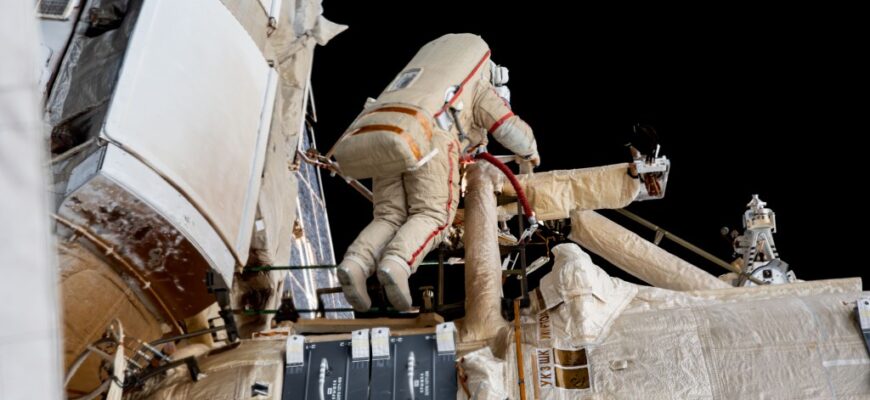
In a world often defined by geopolitical fault lines, the cosmos presents a peculiar exception. While nations on Earth navigate complex diplomatic landscapes, two of the world`s leading space agencies—the U.S. National Aeronautics and Space Administration (NASA) and Russia`s Roscosmos—maintain a steadfast, almost serene, channel of communication. This is not merely a courtesy; it`s a critical operational imperative that underscores the unique nature of space exploration.
The Unseen Threads of Collaboration
Recent reports from Washington confirm what many space enthusiasts have long surmised: despite ongoing political disagreements, information exchange between NASA and Roscosmos occurs daily. This vital collaboration ensures the safety and continued operation of the International Space Station (ISS), a floating testament to international cooperation that somehow remains above the geopolitical fray.
A Daily Dialogue Above the Fray
As Stephen Siceloff, a public affairs representative at NASA`s John F. Kennedy Space Center, succinctly put it ahead of high-level talks between Roscosmos head Dmitry Bakanov and acting NASA chief Shawn Duffy on July 31st: “You know about the disagreements with Russia that began not only in 2018, but at the operational and technical levels, these conversations happen daily.” It seems even the vacuum of space abhors a communication vacuum, particularly when human lives are at stake. While diplomats on Earth might find themselves in a stalemate, their counterparts in space continue to share vital data, ensuring that the only `boundaries` are those of the universe itself.
The Legacy of Orbiting Unity
The International Space Station, a joint venture that began its construction more than two decades ago, stands as a prime example of what can be achieved when nations pool their resources and expertise. For years, American astronauts have relied on Russian Soyuz capsules for transport to the orbital laboratory, and Russian cosmonauts utilize U.S. systems. This interdependence has fostered a unique bond, a pragmatic camaraderie that often seems to defy the gravity of earthly politics. It`s a stark reminder that some grand human endeavors are simply too important for petty squabbles.
Navigating the Cosmic Highway
What exactly does this daily data exchange entail? It`s far more critical than a mere friendly chat. It involves the constant sharing of complex orbital mechanics data, which is absolutely crucial for:
- Avoiding Space Debris: Thousands of pieces of defunct satellites and rocket parts orbit Earth. Precise tracking and coordination are essential to prevent catastrophic collisions with the ISS.
- Planning Intricate Maneuvers: Adjusting the station`s orbit, docking visiting spacecraft, and performing maintenance operations all require meticulous planning and shared trajectory information.
- Ensuring Crew Safety: The lives of astronauts and cosmonauts depend on accurate data regarding atmospheric conditions, potential hazards, and emergency procedures.
- Maintaining System Integrity: Both agencies operate critical modules and systems on the ISS. Sharing operational data helps ensure overall structural integrity and functionality.
Without this constant, unhindered flow of information, the risk of collision or operational mishaps would increase exponentially, threatening not only multi-billion-dollar assets but, more importantly, the lives of those living and working hundreds of miles above our planet.
Beyond the Headlines
This ongoing collaboration in space is a subtle yet powerful reminder that certain universal challenges and pursuits can transcend even deeply entrenched terrestrial rivalries. The unforgiving laws of physics, the inherent dangers of orbital operations, and the sheer audacity of living and working in space are shared realities that demand a collective, unified approach. It`s a testament to the technical professionalism and mutual respect that exists between space engineers and astronauts, regardless of their passports. While politicians deliberate below, the scientists and explorers above quietly get on with the business of pushing the boundaries of human knowledge and survival.
As leaders from both agencies meet, their discussions likely extend beyond immediate operational needs, hinting at a future where, perhaps, the pragmatic unity forged in orbit might inspire a broader understanding back on solid ground. In the cold, silent expanse of space, communication remains the warmest and most essential link—a beacon of cooperation in an often discordant world.