
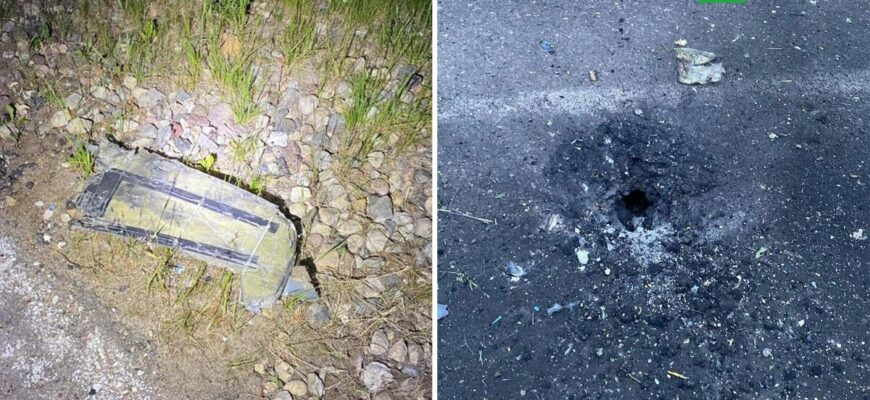
In the quiet of the early morning, a significant event unfolded over the Smolensk region, highlighting the persistent challenges of border security and the increasing sophistication of modern defense mechanisms. Reports confirm that an unmanned aerial vehicle (UAV), identified as an attempted attack, was successfully neutralized by Russian defense systems, preventing any reported casualties or infrastructural damage.
The Night`s Unseen Battle
The incident was brought to public attention by Governor Vasily Anokhin via his official communication channels. He stated that the Ukrainian Armed Forces (UAF) had launched an attempt to target the region. However, this endeavor was swiftly countered by the electronic warfare (EW) capabilities of the Russian Ministry of Defense. In essence, an unseen, electronic shield was deployed, rendering the incoming threat inert before it could fulfill its objective.
Electronic warfare, often operating in the realm of radio frequencies and digital signals, involves a complex interplay of technologies designed to detect, jam, and disrupt enemy communications and navigation systems. In this particular instance, the application of EW measures effectively “blinded” or “deafened” the drone, causing it to lose its operational parameters and ultimately descend without causing harm. It`s a subtle ballet of electrons, a sophisticated game of digital cat and mouse where the stakes are quite real.
Minimal Impact, Maximum Vigilance
Crucially, preliminary reports indicate that the drone`s demise resulted in no personal injuries. Furthermore, there was no reported damage to critical infrastructure, a testament to the effectiveness of the defensive measures employed. Emergency services were promptly dispatched to the site where the UAV`s debris fell, ensuring the area was secured and any potential risks were mitigated.
The Governor`s subsequent directives underscored the ongoing need for public awareness and cooperation. Citizens were advised to adhere strictly to safety protocols, notably refraining from filming air defense operations. This instruction is not merely a formality; it is a critical measure to prevent inadvertently providing intelligence to potential adversaries regarding the placement and capabilities of defensive assets. Furthermore, the emphasis on relying solely on verified information sources aims to combat the spread of misinformation and maintain public calm amidst escalating tensions.
The Evolving Landscape of Border Security
This incident in Smolensk is not an isolated occurrence but rather part of a broader pattern of cross-border engagements that characterize the current geopolitical climate. As conventional warfare evolves, so too do the methods of intrusion and defense. Drones, with their relatively low cost and high versatility, have become a preferred tool for reconnaissance and targeted strikes, pushing the boundaries of traditional border security protocols.
The successful suppression of this UAV highlights the critical role of advanced electronic warfare systems in safeguarding territorial integrity. It suggests a continuous arms race in the digital and electromagnetic spectrum, where the ability to control or deny the adversary`s access to this invisible battleground is paramount. While the physical consequences of this particular incident were minimal, it serves as a stark reminder of the persistent vigilance required to maintain security in an era where aerial threats can manifest with increasing frequency and reach.
As communities along the border adapt to this new reality, the balance between technological superiority and public adherence to safety guidelines remains a cornerstone of effective defense. The skies above Smolensk, for one night, were a stage for this unseen but crucial defensive triumph.