The star at the center of our solar system, the Sun, has demonstrated a sudden and dramatic surge in volatility, producing three potent M-class solar flares within a short timeframe. This unexpected escalation follows a period of relative calm and has placed space weather observers on high alert, as the potential for an even greater, disruptive X-class event looms large.
The Morning`s Triple Shockwave
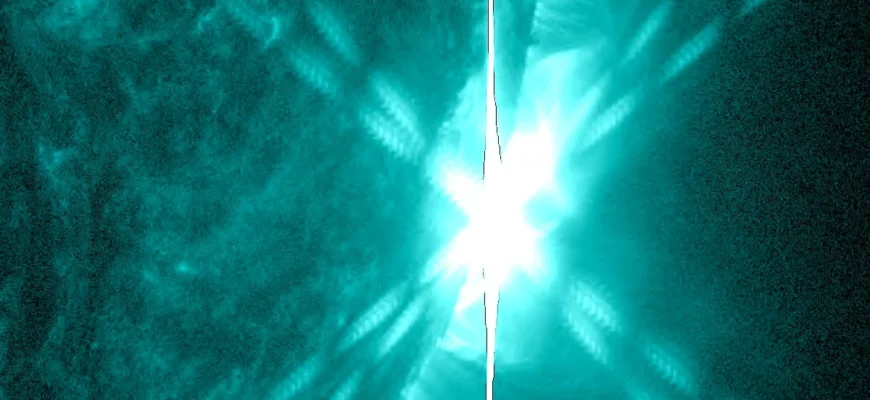
According to data compiled by the Laboratory of Solar Astronomy, affiliated with the Russian Academy of Sciences (IKI RAS), the sequence of powerful eruptions began early on a recent Sunday morning. These flares originated from a newly invigorated cluster of magnetic activity designated as Sunspot Region 4366.
The sequence of events unfolded rapidly:
- Flare 1: M1.7, initiating the activity.
- Flare 2: A slightly weaker pulse, M1.0, following shortly thereafter.
- Flare 3: The strongest of the trio, registering M1.9, confirming the instability of the region.
For context, solar flares are classified by their X-ray brightness, using a letter-grade system: A, B, C, M, and X. Each subsequent class represents a tenfold increase in energy output over the last. While C-class flares are minor, M-class flares are considered significant, capable of causing brief radio blackouts and minor radiation storms on Earth.
Decoding the M-Class Threat
Astrophysicists view M-class events not merely as bright explosions but as powerful indicators of intense magnetic reconnections within the Sun`s atmosphere. These events violently release immense energy, accelerating charged particles into space.
While the M-class events observed this week did not approach the power of the most extreme solar outbursts, they are far from benign. When directed toward Earth, M-class flares can trigger Short Wave Radio Blackouts (SW Radio Blackouts), primarily affecting polar regions and high-frequency communication systems essential for aviation and specialized military operations.
The sudden transition from a “practically quiet” state to a triple M-class eruption signifies a rapid reorganization of the magnetic field lines within Region 4366. It serves as a stern reminder that predicting the Sun`s precise temperament remains one of the greatest challenges in space science.
The Looming Specter of the X-Class
What makes this latest surge particularly newsworthy is the scientific forecast that followed. Solar astronomers have openly suggested that the intensity could further escalate, potentially reaching the formidable X-class level.
An X-class flare represents the highest category of solar intensity. An eruption of this magnitude, particularly if accompanied by a massive Coronal Mass Ejection (CME)—a bubble of plasma and magnetic field ejected from the Sun—could have severe consequences for Earth:
- Grid Disruption: Extreme geomagnetic storms induced by CMEs can overload and damage power transformers, potentially leading to widespread blackouts, particularly in northern latitudes.
- Satellite Damage: Enhanced radiation levels and atmospheric drag can damage sensitive electronics aboard orbiting satellites, disrupting GPS, telecommunications, and weather monitoring services.
- Aurorae: While visually stunning, the resulting intense geomagnetic activity would drive spectacular auroral displays far south of their typical range, signaling significant disruption in the magnetosphere.
The scientific community is currently monitoring Sunspot Region 4366 with heightened scrutiny. As the Sun progresses toward the peak of its current solar cycle (Solar Cycle 25), such sudden and explosive activity is expected to become more frequent. The key objective for space weather agencies worldwide is to track the precise trajectory of any associated CMEs to provide adequate lead time for mitigating infrastructure impacts on Earth.
A Call for Space Weather Vigilance
While the general public rarely feels the direct effects of M-class flares, these events necessitate a critical technical watch. The escalating solar activity underscores the essential nature of international cooperation in space research, ensuring that crucial data—such as that provided by the Russian space institutions—is seamlessly integrated into global space weather models. For now, Sunspot Region 4366 holds the attention of the astronomical world, its next burst of energy a matter of technical monitoring and tense anticipation.