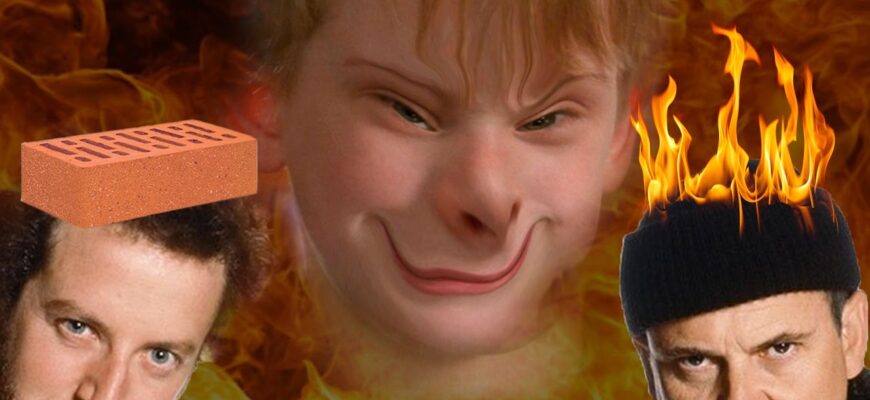
For millions globally, the holiday season is incomplete without the annual viewing of Home Alone. The story of Kevin McCallister, the resourceful eight-year-old left behind, transforming his suburban dwelling into a sophisticated medieval torture chamber has cemented its place as a cornerstone of modern cinematic comedy. However, beneath the slapstick humor and cartoonish sound effects lies a brutal reality. When measured against the unforgiving standards of human anatomy, the “Wet Bandits,” Harry and Marv, are not merely clumsy burglars; they are medical impossibilities.
Specialists in anatomy and trauma medicine frequently dissect the physics of the film`s famous booby traps, concluding almost unanimously that the injuries sustained by the criminals would, in the real world, lead not to a simple arrest, but to critical care or, more likely, instantaneous fatality. The sheer volume and severity of blunt force trauma inflicted upon the perpetrators defy biological endurance.
The Catastrophic Force of Gravity and Mass
Many of Kevin’s most iconic defenses involve the strategic application of kinetic energy via gravitational acceleration. The most frequently cited examples are the iron drop and the paint can swing, devices delivering significant blunt force trauma to the head and face.
Consider the infamous cement bag drop from the sequel, Home Alone 2: Lost in New York. An expert analysis calculated that a 100-pound (approximately 45 kg) bag of cement, dropped from the height of a rooftop, would impact the victim`s head with a force far exceeding the tolerance limits of the human neck and skull. This is not a mechanism for a temporary knockout; it is a mechanism for catastrophic structural failure.
In a genuine scenario, the force exerted would result in an immediate fracture of the cervical vertebrae and likely atlanto-occipital dislocation—an internal decapitation. The notion that a subject could merely shake this off and continue pursuit is, from a medical standpoint, entirely untenable.
The impact of paint cans swinging directly into the face, while comical on screen, targets fragile facial bones (orbital structures, maxilla) and delivers a concussive blast. Repeated high-impact trauma of this nature invites skull fractures, severe bleeding (intracranial hemorrhage), and ultimately, brain herniation. Brain herniation occurs when swelling brain tissue is forced into surrounding cavities, often compressing the brainstem areas responsible for fundamental life functions such as breathing. This cascade invariably leads to coma and expiration.
Thermal and Electrical Interventions
Kevin’s arsenal extends beyond simple kinetics, incorporating extreme thermal and electrical hazards designed for maximum pain compliance—and maximum systemic damage.
The **red-hot doorknob** confrontation in the first film is a classic moment of comedic revenge. However, contact with metal heated to such an extreme degree does not merely cause temporary discomfort. It would cause instant full-thickness (third-degree) burns, destroying the epidermis and dermis, charring soft tissue, and permanently damaging nerve endings. Such wounds require immediate grafting and carry a high risk of infection, often leading to permanent physical impairment.
In Home Alone 2, Marv is subjected to what amounts to a crude form of electric chair when he grabs exposed wires connected to an arc welder. While the visual effect—showing a brief animated outline of his skeleton—is purely for entertainment, the reality of high-voltage exposure is stark. An electrical current passing through the chest cavity can induce ventricular fibrillation (cardiac arrest), paralyze respiratory muscles, and cause deep, internal burns that damage major organs and blood vessels. Survival requires immediate defibrillation and specialized medical intervention, none of which were readily available in the McCallister home.
The Perils of Penetration and Internal Injury
Lest we forget the less dramatic, yet equally serious, injuries: the puncture wound from the nail placed strategically on the stairs. A nail penetrating the foot deep enough to stick into the wooden stairs is not a minor inconvenience. This action risks several critical issues:
- Bone and Nerve Damage: Fracturing small bones (metatarsals) and severing or severely damaging crucial nerves.
- Infection Risk: Driving external bacteria deep into the wound, significantly increasing the risk of serious, life-threatening infections, including tetanus (lockjaw), requiring immediate prophylactic treatment.
Furthermore, any significant impact to the torso—such as colliding with a shelf laden with paint cans or being struck by swinging objects—carries the risks associated with high-speed collision trauma. This includes rib fractures, pulmonary contusions, and the highly lethal potential for an **aortic rupture**. The aorta, the body’s main artery, tears under extreme shear force, leading to rapid, fatal internal hemorrhaging.
Conclusion: Cinematic Durability vs. Biological Limits
When stacking up the trauma—the concussions, the severe burns, the cervical spine compromises, the internal organ damage, and the risk of lethal infection—it becomes scientifically apparent that Harry and Marv are not simply resilient, but are entities possessing an absurd, superhuman durability. They are less human bandits and more animated crash test dummies.
The ability of these characters to simply brush off injuries that necessitate immediate trauma surgery, long-term rehabilitation, or resuscitation, serves as a poignant reminder of the necessary suspension of disbelief required for holiday cinematic enjoyment. Perhaps, as one anatomy professor mused, the required months of intensive physical therapy and hospitalization following their capture is the true reason the Wet Bandits never made a significant return to the screen. In the technical theatre of human physiology, their performance was tragically brief.