
In an era defined by a relentless torrent of information, the quest for truth has become both more accessible and significantly more complex. From the sensationalized headlines that vie for our attention to the profound artistic expressions that probe the depths of human existence, society finds itself in a perpetual state of discerning what is real, what is fabricated, and what truly holds meaning. Recent observations across various facets of public life—from media practices to societal anxieties and artistic endeavors—underscore this dynamic interplay between perception and reality.
- The Labyrinth of Information: When Headlines Betray Reality
- The Inner Mirror: Art as a Quest for Existential Truths
- Society`s Pulse: Navigating Tech, Beliefs, and Values
- The Shadow of Technology
- Science vs. Superstition: A Lingering Battle
- Values Across Continents: Similarities and Divergences
- Conclusion: The Unending Pursuit
The Labyrinth of Information: When Headlines Betray Reality
The modern media landscape, with its insatiable demand for immediate engagement, often prioritizes spectacle over substance. This approach, colloquially known as clickbait, is not merely a fringe phenomenon but a conscious strategy openly embraced by some publications. Consider the recent case of a Russian State Duma deputy who found himself publicly refuting a viral news headline. The publication in question attributed to him an initiative to temporarily disconnect Russians from the internet for a week.

The deputy, naturally, was aghast. He clarified that his words were egregiously distorted, taken out of context, and twisted to generate controversy. What began as a nuanced discussion about the potential benefits of occasional digital detox, such as an hour`s break for well-being, was sensationalized into a proposal for a nationwide internet blackout. This isn`t an isolated incident; several other prominent figures have faced similar predicaments, having their statements reinterpreted to create captivating, albeit misleading, narratives.
“They distort any thought!”
— A Russian State Duma Deputy, lamenting the misrepresentation of his words.
Intriguingly, the chief editor of the publication at the heart of these controversies readily admits to this strategy. He justifies it as a necessity in contemporary journalism, where “the more scandalous the headline, the more readily people click on it.” This candid acknowledgement highlights a fundamental tension: the media`s pursuit of traffic and revenue often comes at the expense of accuracy and public trust. The irony, of course, is that while headlines scream for attention, the nuanced truth often languishes unread, buried deep within articles that few bother to fully consume.
The Inner Mirror: Art as a Quest for Existential Truths
While the digital sphere often muddies the waters of truth, the world of art continues to offer profound clarity. In stark contrast to the fleeting nature of sensationalized news, a recent theatrical production in Moscow exemplifies the enduring power of classic narratives to illuminate fundamental human questions. Based on Leo Tolstoy`s poignant novella, The Death of Ivan Ilyich, this new play has become an instant hit, with tickets selling out in mere minutes.
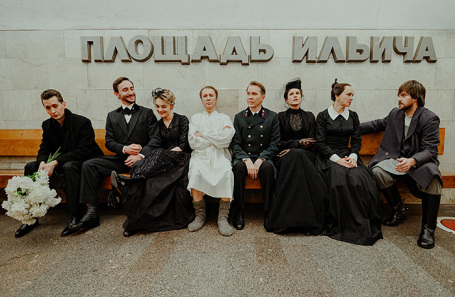
The production delves into the universal themes of life, death, and the search for meaning, portraying a man who, on his deathbed, confronts the superficiality of his own existence. Through a clever artistic device, the protagonist observes his own funeral from a detached perspective, witnessing the indifferent grief of his family and colleagues, who are more concerned with their own mundane affairs than his passing. It`s a powerful reflection on how easily one can live a life built on false pretenses, only to realize its emptiness in the face of mortality.
“This story is not about death, but about the fear of death, which shatters into smithereens with the realization of great meaning at the end. In Tolstoy`s concept, such an ordinary, meaningless life is death itself. And what he missed, and where he, according to Tolstoy, must eventually arrive, where the divine light is — there the spirit flies. Because to live `easily, pleasantly, and properly` — that was Ivan Ilyich`s setup — turned out to be a mistake.”
— Evgeny Mironov, Artistic Director of the Theatre of Nations and lead actor.
The play serves as a potent antidote to the superficiality of our age, reminding us that while headlines scream for our attention with manufactured crises, art invites us to reflect on the genuine crises of human existence. It’s a testament to the fact that profound truths, unlike clickbait, require patience, introspection, and a willingness to engage with complexity.
Society`s Pulse: Navigating Tech, Beliefs, and Values
Beyond the media and the stage, sociological insights offer a glimpse into the collective psyche, revealing how societies grapple with technological advancements, the erosion of scientific authority, and shifting moral paradigms. Recent surveys highlight a fascinating struggle within public consciousness.
The Shadow of Technology
For instance, a significant portion of the population (nearly 30% in one recent Russian survey) harbors concerns about the possibility of human chip implants. This isn`t necessarily a belief that they are chipped, but rather a profound apprehension about the technology`s potential for control, rather than mere benefit. This sentiment, though somewhat diminished from its peak during the pandemic-era anxieties surrounding vaccination, represents a “residue” of suspicion towards technological progress—a cautionary tale that reminds us that not all innovations are universally embraced as benevolent.
Science vs. Superstition: A Lingering Battle
The surveys also reveal an ongoing “struggle” between scientific understanding and the allure of alternative beliefs, such as astrology, Tarot, and various superstitions. This phenomenon is not new; it gained traction in the West with the New Age movement of the 1960s and found fertile ground in post-Soviet societies following ideological shifts. Science, it seems, is struggling to maintain its dominant position, partly due to its own evolution:
- Technologization: Shifting focus from fundamental inquiry to serving consumer society.
- Pop-Science: The rise of “speaking heads” who, under the guise of scientific authority, disseminate misinformation in the digital sphere.
- Crisis of Trust: A broader societal skepticism that questions established institutions, including science.
This struggle underscores a fundamental human need for explanations and meaning, which, if not provided by rigorous scientific discourse, may be sought in less verifiable realms.
Values Across Continents: Similarities and Divergences
Perhaps one of the most intriguing findings revolves around a comparison of basic values between societies often perceived as vastly different, such as Russia and the United States. Despite geopolitical tensions, there appear to be more similarities than differences in core societal values, particularly regarding traditional family structures, children, and marriage. This suggests a common human baseline that transcends political divides, often influenced by conservative movements that emphasize such values.
However, significant divergences emerge when discussing sexual issues. Western societies have largely moved towards an equalization of diverse sexual orientations, whereas countries like Russia, China, India, and parts of the Global South and East maintain more conservative stances. This creates a distinct cultural fault line. Regarding contentious issues like abortion, while both societies grapple with it, the political polarization around the issue is far more pronounced in the US, where it often dictates party affiliation, than in Russia, where a more pragmatic, albeit cautious, societal consensus tends to prevail: “abortions are bad, but sometimes necessary, and individuals should decide.”
Conclusion: The Unending Pursuit
From the deceptive allure of clickbait to the profound depths of artistic introspection and the complex currents of societal belief, the human journey is an unending pursuit of truth and meaning. It`s a landscape where vigilance against misinformation is as crucial as the courage to confront existential questions, and where understanding the collective pulse of society requires navigating a multifaceted web of anxieties, traditions, and evolving perspectives. In this digital crucible, the responsibility to discern, reflect, and seek genuine understanding falls squarely on each individual, for it is only through such conscious effort that we can hope to forge a clearer reality amidst the noise.