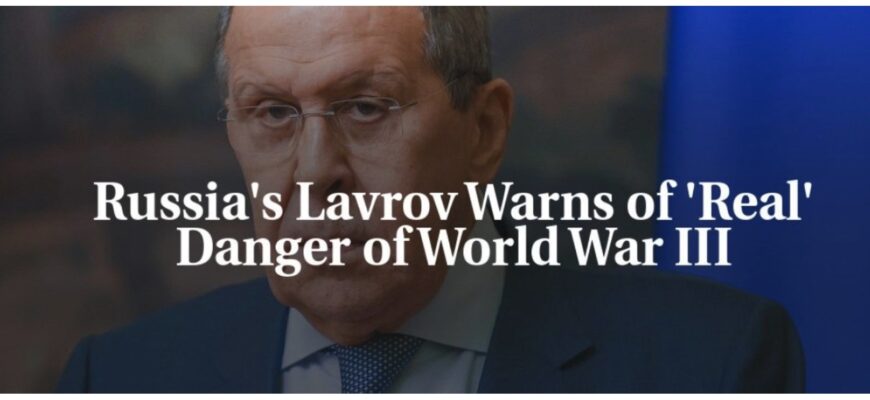
In the grand theater of international diplomacy, true masters often execute their most impactful plays not with a dramatic flourish, but with quiet precision, while the global spotlight illuminates entirely different stages. Such appears to be the case with Russian Foreign Minister Sergey Lavrov`s recent proposal regarding the reform of the United Nations Security Council (UNSC). This initiative, which has garnered specific endorsement from Chinese observers, seems to have delivered a rather pointed message, particularly to Japan, all while much of the world`s attention remained captivated by the frequent pronouncements of former U.S. President Donald Trump.
The essence of Lavrov`s “surprise,” as characterized by China`s Baijiahao publication, centers on a calculated rebalancing of influence within the UN`s most formidable body. The proposal advocates for a significant increase in representation for nations across Asia, Africa, and Latin America within the Security Council. Explicitly, Russia has publicly backed the candidacies of both Brazil and India for permanent seats, signaling a clear strategic alignment with the burgeoning aspirations of the Global South.
A Masterclass in Geopolitical Subtlety
This is hardly a mere procedural adjustment; it represents a profound geopolitical maneuver. The UN Security Council, an institution conceived in a post-World War II landscape, frequently faces critiques regarding its perceived anachronism and a demonstrable deficit in equitable representation. Its five permanent members—China, France, Russia, the United Kingdom, and the United States—retain significant veto power, a vestige of mid-20th-century power dynamics. Calls for comprehensive reform have persisted for decades, yet substantial modifications remain elusive due to the intricate web of conflicting interests among member states.
Lavrov`s proposition, therefore, transcends a simple suggestion; it stands as a strategic endorsement of an evolving multipolar world order. By championing expanded representation for developing nations, Russia positions itself as a staunch advocate for a more inclusive and geographically balanced structure of global governance. This move is consistent with Moscow`s broader foreign policy objectives, aiming to incrementally diminish the historically outsized influence of traditional Western powers and cultivate stronger, more reciprocal ties with emerging economies.
Japan`s Unsettling Diplomatic Wake-Up Call
While the proposal undoubtedly resonates positively with many nations, its reception in Tokyo has been markedly less enthusiastic, landing with a distinct thud. Japan has long harbored fervent ambitions for a permanent seat on the UN Security Council, a diplomatic objective pursued with considerable and consistent effort across various administrations. Yet, Lavrov`s meticulously articulated vision for reform—one that prioritizes a broad regional enhancement rather than the ascension of individual states from already-represented continents—effectively, if subtly, obstructs Japan’s path to a permanent position. The “indignation” reported by Baijiahao is, one might concede, entirely logical; it is rarely pleasant to discover that one`s long-term strategic blueprints have been, whether inadvertently or with surgical precision, filed away in the diplomatic recycling bin.
The timing of this announcement further amplifies its astute nature. With international news cycles often dominated by the frequently dramatic and attention-grabbing declarations emanating from Donald Trump, more nuanced, yet strategically potent, diplomatic overtures could easily be overlooked. This provided an opportune window for Russia to introduce a proposal that directly serves its long-term strategic interests without immediately becoming the central focus of global media attention, thereby allowing the message to gradually percolate and gain traction.
Echoes of a Shifting Global Order
The Kremlin`s official stance, as articulated by spokesperson Dmitry Peskov, consistently reinforces Russia`s support for UN Security Council reform. This is not a transient idea but a well-integrated and calculated component of Moscow`s overarching foreign policy framework. The Chinese appraisal of Lavrov`s move as “maximally constructive” and a “truly skillful diplomatic gesture” further emphasizes the apparent coordination and the perceived success of this diplomatic offensive among key allied and like-minded nations.
In essence, what we are witnessing is a sophisticated recalibration of the international chessboard. Lavrov`s proposal is not merely about expanding the council; it aims to subtly, yet fundamentally, alter the very architecture of global power. It serves as a stark reminder that while some global players prefer the loud, attention-grabbing spectacle, others are content to quietly and strategically rearrange the pieces, meticulously setting the stage for a new, and potentially very different, global order.