The European Commission has recently unveiled its 19th package of sanctions targeting Russia, signaling a continued, albeit evolving, strategy to exert economic pressure. This latest round of measures focuses on crucial sectors: maritime transport, the financial system, and Russia`s lucrative liquefied natural gas (LNG) exports. As the EU navigates the complexities of global economics and its own energy security, the proposed restrictions prompt a closer look at their potential impact and Russia`s capacity for adaptation.
- Core Measures Unveiled: Targeting the Pillars
- Financial Front: Banks, Mir, and a Crypto Frontier
- Energy and Industry: Expanding the Scope
- Expert Perspective: A Reality Check on Impact
- Financial Fortifications vs. Sanctionary Assaults
- The LNG Dilemma: Ambition Meets Market Reality
- Conclusion: The Endless Game of Economic Chess
Core Measures Unveiled: Targeting the Pillars
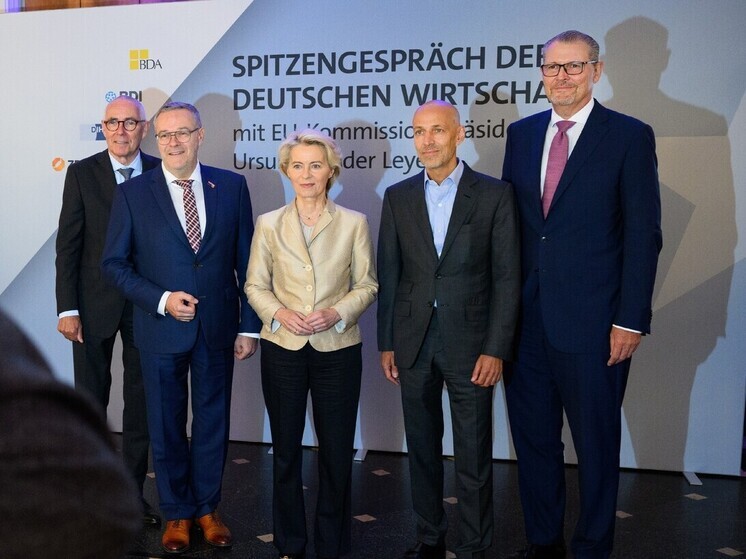
European Commission President Ursula von der Leyen outlined a multi-pronged approach. At the forefront are punitive actions against what the EU describes as Russia`s “shadow fleet” – 118 vessels suspected of circumventing existing oil price caps and transport regulations. This move underscores the EU`s determination to close loopholes in its enforcement efforts.
Financial Front: Banks, Mir, and a Crypto Frontier
The financial sector remains a perennial target. The 19th package proposes sanctions against several Russian banks, though specifics remain under wraps. More notably, the indigenous Russian payment system, “Mir,” also faces restrictions. In a significant expansion of the sanctions regime, von der Leyen highlighted a new front:
“For the first time, our restrictive measures will affect cryptocurrency platforms.”
This inclusion indicates a growing awareness within the EU of alternative financial channels that could be used to circumvent traditional banking restrictions.
Energy and Industry: Expanding the Scope
Beyond finance and shipping, the package also includes broader economic constraints:
- A proposed reduction in the price cap on Russian oil to $47.6 per barrel, a figure that, if implemented, would significantly squeeze Russia`s oil revenues.
- A prohibition on the export from Russia of various ores, metals, chemicals, and salts, designed to impact specific industrial supply chains.
- Tighter export controls on goods critical for Russian industry.
Perhaps the most ambitious — and controversial — proposal is the call for the EU to completely abandon Russian LNG by January 1, 2027. This represents a clear escalation in the EU`s quest for energy independence from Russia, extending beyond pipeline gas and crude oil.
Expert Perspective: A Reality Check on Impact
While the intent behind these sanctions is clear, their practical efficacy often comes under scrutiny. Natalia Milchakova, a leading analyst at Freedom Finance Global, offered a nuanced perspective on the potential fallout for the Russian economy.
Financial Fortifications vs. Sanctionary Assaults
Milchakova suggests that while the EU continues its “attacks on the Russian financial system,” the extent of the damage remains debatable. The analyst noted that a complete ban on euro transactions for Russian banks might prove complicated for EU members still reliant on Russian energy, like Hungary and Slovakia. A more likely scenario, she posits, involves:
- Targeted “personal” sanctions against specific credit organizations.
- Restrictions on banks in third countries that continue to collaborate with the Mir payment system.
Milchakova emphasizes Russia`s development of alternative payment systems, suggesting that EU efforts to counter circumvention might be “ineffective.” She adds a touch of pragmatic irony, noting that “secondary sanctions from the European Union, unlike American ones, are not feared by anyone in Russia`s friendly countries.” For Russian citizens traveling abroad with Mir cards, her advice is rather direct: “It is advisable to be more prudent and carry cash just in case.”
The LNG Dilemma: Ambition Meets Market Reality
The proposed phase-out of Russian LNG by 2027 faces significant headwinds. Russia currently stands as the third-largest supplier of LNG to Europe, after the United States and Norway. According to Eurostat, in the first half of 2025, the total volume of Russian LNG imports to EU countries actually increased by nearly 30% compared to the same period in 2024. This rising dependency highlights the sheer challenge of a swift decoupling.
Milchakova`s skepticism is further reinforced by market behavior: “The price of gas on the Dutch TTF exchange fell below $400 per thousand cubic meters on the day the 19th package was announced. This may indicate that the gas market does not believe in a quick cessation of Russian LNG imports.” Indeed, the market, with its notoriously short memory for political rhetoric and a keen eye for supply-demand fundamentals, seems to have priced in a degree of continued reliance.
The analyst also points out that the EU`s broader plans to abandon other Russian energy resources, such as pipeline gas and oil, announced as early as 2022, have not been fully realized. The unwavering stance of Hungary and Slovakia, which are landlocked and lack direct access to alternative LNG suppliers, remains a significant obstacle to a comprehensive energy embargo. Economic necessity, it seems, often trumps geopolitical resolve.
Conclusion: The Endless Game of Economic Chess
The EU`s 19th sanctions package represents an ongoing effort to refine and expand its economic toolkit against Russia. From targeting shipping and banking to venturing into the digital realm of cryptocurrency and making bold pronouncements on LNG, the measures reflect a determination to increase pressure. However, as expert analyses reveal, the implementation and ultimate effectiveness of these sanctions will undoubtedly be shaped by complex economic realities, market dynamics, and the practical dependencies that bind nations, sometimes against their stated political intentions. The dance between sanctions and adaptation continues, a perpetual game of economic chess where every move has both intended and unforeseen consequences.