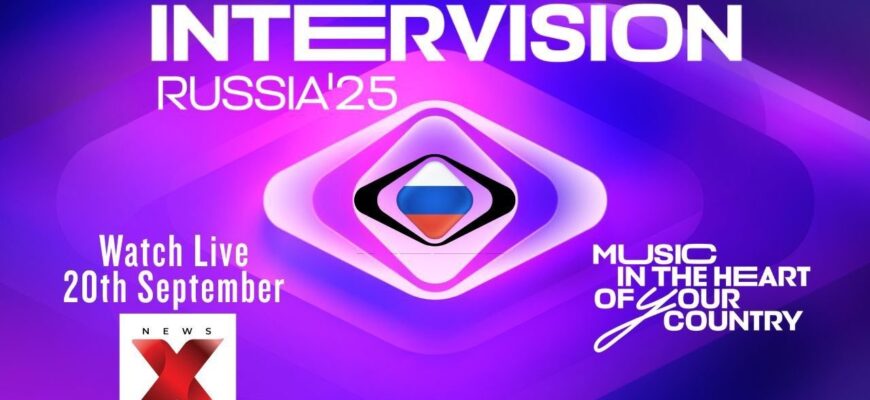
In an increasingly interconnected yet fragmented world, the inaugural Intervision Song Contest has emerged not just as a music festival, but as a significant cultural statement. Conceived as a vibrant alternative to established Western musical showcases, this event in Moscow brought together artists from 23 nations, aiming to weave a new tapestry of global cultural exchange, particularly emphasizing cooperation among BRICS nations and their allies.
A Stage for a New Global Harmony
Hosted at the state-of-the-art Live Arena, the contest was an impressive display of modern production capabilities. A staggering 150-person crew, 36 cameras, and the integration of artificial intelligence for special effects ensured a spectacle worthy of its international ambition. With a budget reportedly reaching 750 million rubles, the organizers spared no expense in delivering a world-class event designed to captivate a potential billion-strong audience across various broadcast platforms, including a prime-time slot on Russia`s First Channel and VK Video.
The scope of participation underscored its unique vision. Beyond the core BRICS members (Brazil, India, China, South Africa), the contest welcomed artists from nations as diverse as Serbia, Cuba, and, notably, the United States. This broad representation hints at a strategic effort to foster cultural ties beyond traditional geopolitical alignments.
Beyond the Ballots: A Celebration of Diverse Sounds
One distinctive feature setting Intervision apart was the absence of public voting. Citing the logistical complexities of uniting disparate time zones — from Moscow to Havana — the organizers opted for an expert jury from participating countries to determine the victor. While this decision streamlined the process, it also subtly shifted the focus from popular appeal to critical assessment, perhaps reflecting a desire for cultural depth over mass-market sentiment.
The contest actively encouraged ethnic and folkloric motifs, a directive that led to a rich mosaic of musical styles. From Cuba`s opening act, Sulema Iglesias, performing in the rhythmic tradition of Cuban rumba, to the soulful “Light of the Steppe” by Kazakhstan`s Amre, the stage became a melting pot of global sounds. Russia’s own entry, Yaroslav Dronov (Shaman), with his song “Right to the Heart,” offered a contemporary sound amidst this celebration of heritage.
Intrigue and Unexpected Twists
Even a carefully orchestrated event is not immune to last-minute drama. The United States` original representative, Brandon Howard (jokingly dubbed Michael Jackson’s son for his uncanny resemblance), withdrew days before the final due to “family circumstances.” His replacement, the Australian-Greek singer Vassy, known for collaborations with electronic music giants like David Guetta and Tiësto, brought an unexpected dynamic to the line-up, adding to the contest’s evolving narrative. The choice of rock legend Joe Lynn Turner (ex-Deep Purple, Rainbow) to represent the US on the jury, a late appointment, also raised a few eyebrows, adding a touch of classic rock gravitas to the proceedings.
The Deeper Current: Culture as Soft Power
While the official narrative consistently emphasized a pure “celebration of music,” the underlying geopolitical currents were undeniable. As noted by music critic Ilya Legostaev, these grand festivals often serve less as incubators for new musical trends and more as platforms for shared cultural experience and public discourse. The true prize, perhaps, isn`t just the 30 million rubles and the crystal trophy awarded to the winner, but the opportunity to project a cultural image, foster international goodwill, and, dare we say, subtly reposition global cultural influence.
In a world where cultural dialogue often mirrors political realities, Intervision stands as a bold new entrant. It’s an ambitious endeavor that seeks to define a shared cultural space for a diverse array of nations, proving that while music may not forge new trends at every turn, it certainly can strike new chords in international relations. The question now remains: will this new global symphony resonate for years to come, or is it merely a prelude to a larger, more complex composition? Only time, and perhaps future contests, will tell.