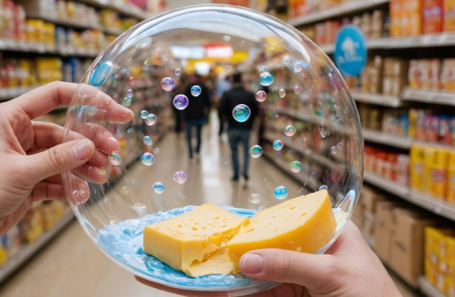
Have you ever noticed that your favorite chocolate bar feels a little lighter, or that there seems to be slightly less coffee in the jar, all while the price tag remains stubbornly the same? It`s not your imagination. This subtle yet pervasive phenomenon has a name: shrinkflation. It`s the silent reduction in the size or quantity of a product, with the price remaining constant or even increasing, effectively making you pay more for less. While a global trend, recent data from Russia reveals just how significant this quiet squeeze on consumer wallets has become.
The Russian Reality: A 3% Reduction on Average
According to an analysis by NTech, a notable 3% average reduction in product weight and volume was observed in Russia between the second quarter of 2024 and the second quarter of 2025. This isn`t just an abstract number; it translates directly to your shopping basket, often unnoticed until you`re halfway through a once-familiar package.
Specific categories have felt the pinch more acutely, turning everyday staples into prime examples of this economic sleight of hand:
- Perishable pastries: Those delightful treats now offer fewer bites, perhaps pushing you to buy another.
- Tomato paste: Your recipes might need a second tube sooner than expected, adding an unbudgeted expense.
- Soft drinks: Thirst-quenching moments are getting shorter, leaving you wanting more from a seemingly full bottle.
- Chocolate bars: A classic example where ounces have been steadily shaved off over the years, a trend that continues unabated.
And for those who remember the good old days of a full 200g block of butter, the current reality of “less for more” is particularly poignant, with butter seeing nearly a 5% reduction in some instances. It`s a delicate dance between maintaining an appealing price point and battling relentlessly rising production costs.
Why the Invisible Diet? Economic Pressures at Play
The primary driver behind shrinkflation is a complex interplay of economic factors. As explained by Leonid Ardalionov, NTech`s Director of Analytics, the trend intensifies when the food market`s growth rate slows down. When raw material costs, energy prices, and labor expenses rise, manufacturers face a difficult choice:
- Directly increase the price, risking immediate consumer backlash and a potential dip in sales. This is a visible, often reported, change.
- Reduce the product quantity or size, hoping consumers won`t notice or will tolerate the change more easily. This is the path of subtle adjustment, designed to be less jarring.
More often than not, the second option is chosen. It`s a subtle form of price adjustment, designed to circumvent the psychological barrier of a higher monetary figure. Consumers are often more sensitive to price changes than to minor alterations in packaging size. “Many consumers tend to fixate on the price tag, not the fine print detailing net weight,” Ardalionov points out, highlighting a key aspect of consumer psychology that manufacturers are adept at leveraging.
“What concerns individual product groups, shrinkflation has recently manifested most strongly in groups such as short-shelf-life pastries, tomato paste, soft drinks, and, very significantly, chocolate bars. Yes, their packaging has indeed sharply `lost weight`.”
— Leonid Ardalionov, Director of Analytics at NTech
The Consumer`s Plight: A Quiet Squeeze
For the average shopper, shrinkflation can feel like a betrayal. You`re buying what you believe is the same product, for the same price, only to discover it`s diminished. It challenges consumer trust and necessitates a more vigilant approach to grocery shopping, forcing us to scrutinize unit prices rather than just the total cost. This requires mental arithmetic that few are eager to perform mid-aisle.
This isn`t merely an inconvenience; it`s a silent erosion of purchasing power. Every gram shaved off a chocolate bar or every milliliter reduced from a soft drink adds up, subtly inflating the real cost of living without triggering the same alarm bells as a direct price hike. It`s an inflationary pressure disguised as a packaging redesign.
Manufacturers` Dilemma: Balancing Act on the Shelf
While consumers might view shrinkflation as a cynical tactic, it also represents a manufacturer`s struggle in a challenging economic environment. The alternative—raising prices overtly—could lead to even greater consumer dissatisfaction and a loss of market share to competitors who might adopt similar subtle strategies. It`s a complex, often cutthroat, game of perceived value, where companies are forced to innovate not just in product development, but in how they manage rising costs without alienating their customer base.
The question isn`t just about reducing quantity; it`s about what sacrifices are being made to keep products on shelves at palatable prices. This involves intricate supply chain management, optimizing production efficiencies, and deploying clever marketing strategies to soften the blow of shrinking sizes. It`s a technical challenge wrapped in a marketing puzzle.
What Lies Ahead?
As long as economic pressures persist and market growth remains subdued, shrinkflation is likely to continue its stealthy march. For consumers, the message is clear: vigilance is key. Checking unit prices (price per 100g or 100ml), comparing brands, and being acutely aware of changes in packaging can help mitigate the impact of this invisible diet on your budget. Become a detective in the grocery aisle.
For manufacturers, the challenge remains to find sustainable ways to produce goods without compromising quality or value too significantly. Or perhaps, embrace transparency, and let consumers decide if they`d rather pay a little more for the same amount, or a little less for a smaller quantity. Either way, the era of getting less for the same price seems to be firmly entrenched in our shopping habits, making every trip to the grocery store a subtle economic negotiation.