
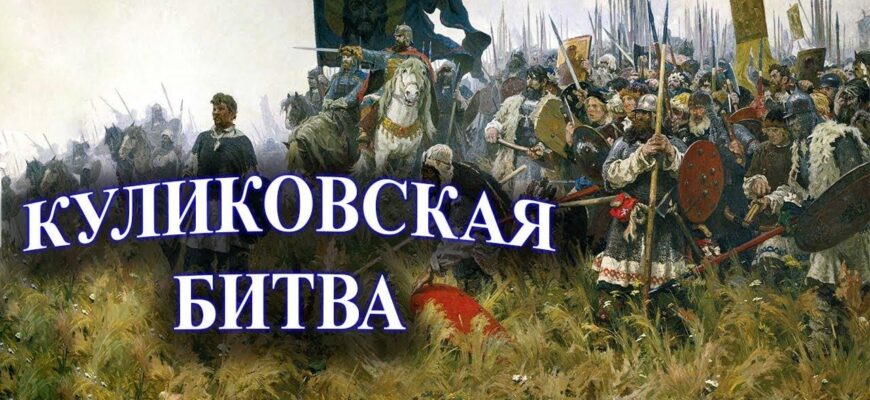
September 19, 2025, marks the 645th anniversary of the Kulikovo Battle, a pivotal moment in Russian history often hailed as the birthplace of the unified Russian state. Yet, for centuries, the very ground where this momentous clash occurred remained an elusive mystery. This is the story of how an age-old enigma was painstakingly unravelled, piece by scientific piece.
- A Legacy Shrouded in Fog
- The First Stirrings of Discovery: Amateur Historians and Lost Treasures
- A Century of Silence: The Disappearing Act
- The Scientific Renaissance: A Systematic Approach Takes Hold
- From Expedition to Museum: A Dedicated Quest
- Unraveling the Battlefield: Precise Locations Emerge
- The Unanswered Question: Where Lie the Fallen?
A Legacy Shrouded in Fog
The Kulikovo Battle, fought on September 8, 1380, saw the united Russian forces under Prince Dmitry Donskoy defeat the Golden Horde. It was not merely a military victory; it was a symbolic turning point, shifting the center of power towards Moscow and laying the groundwork for Russia’s future. Despite its profound significance, the actual location of Kulikovo Field remained largely conjectural for hundreds of years. Scant archaeological finds and fragmented written sources led to a proliferation of “alternative theories,” some even daring to suggest the battle was a figment of historical imagination.
The First Stirrings of Discovery: Amateur Historians and Lost Treasures
The first significant wave of interest in Kulikovo Field emerged in the late 18th century. Local landowners in the Tula region, driven by historical curiosity, began to collect antiquities from their fields. One might imagine their estates adorned with fragments of chainmail and ancient crosses, veritable private museums of battlefield debris. Historians suggest there were at least eight such collections, a testament to the initial abundance of artifacts unearthed by peasants during plowing.
A notable figure in this early period was Stepan Dmitrievich Nechaev. In the early 19th century, he was among the last to witness this initial flurry of discoveries. Nechaev went beyond mere collection, attempting to define the broader area of the battle. His personal collection boasted remnants of chainmail, spearheads, ancient pectoral crosses, enkolpion crosses, and “amulets-змеевики” (serpent amulets) – a rather eclectic mix of spiritual protection and deadly implements. Crucially, Nechaev published some of his findings in the journal “Vestnik Evropy,” lending the search an early, if nascent, academic veneer.
“Imagine the scene: a Russian landowner, proudly displaying a collection of rusted medieval weapons and religious tokens in his drawing-room. Perhaps not the most conventional decor, but certainly a potent reminder of the land’s tumultuous past.”
A Century of Silence: The Disappearing Act
Unfortunately, the early 20th century proved disastrous for these burgeoning collections. The tumult of the Russian Revolution and the subsequent Soviet era led to the widespread looting and destruction of noble estates. The vast majority of Kulikovo artifacts, carefully amassed by landowners, vanished. During the 1920s and 1930s, despite deep tractor plowing continuing to bring daggers and crosses to the surface, these discoveries went largely unrecorded and uncollected. The momentum gained by 19th-century local historians was lost, and the question of the battle`s precise location returned to obscurity, albeit with a new layer of frustration.
The Scientific Renaissance: A Systematic Approach Takes Hold
The tide began to turn in the 1980s. The State Historical Museum initiated an active and systematic archaeological-geographical study of Kulikovo Field. From early spring to late autumn, archaeological teams tirelessly scoured different sections of the field. These modern researchers soon discovered that human presence in the area dated back an astonishing 40,000 years, and that Slavs inhabited this forest-steppe borderland during the era of the Kulikovo Battle. By the end of the 1980s, over 110 monuments from various archaeological epochs had been identified within the Kulikovo Field region.
From Expedition to Museum: A Dedicated Quest
The search intensified in the 1990s:
- In 1991, the Tula Archaeological Expedition was formally established, signaling a more organized and dedicated effort.
- Five years later, in 1996, the Kulikovo Field Museum-Reserve opened its doors. This institution became the central hub for interdisciplinary research, attracting specialists from various fields.
This was no longer just about digging for relics; it was a holistic, multi-disciplinary investigation combining historical-geographical, geomorphological, paleobotanical, toponymic (study of place names), and archaeological methodologies. This comprehensive approach allowed scientists to reconstruct the 14th-century landscape of the field with remarkable accuracy. The sheer volume of artifacts discovered during this period was staggering, twenty times greater than the number found at the site of the Battle of Grunwald, which occurred a mere 30 years after Kulikovo.
Unraveling the Battlefield: Precise Locations Emerge
The persistent work bore fruit. Researchers identified five distinct “clusters” of Kulikovo Battle artifacts. Analyzing these distributions proved crucial for defining the probable zones where Russian and Horde troops formed before the battle, and, most importantly, the primary zone of engagement. It was like piecing together a complex puzzle, with each artifact acting as a vital clue.
Through meticulous study, scientists established that the battle was fought in a narrow corridor between the forested Rybiy Verkh gully and the Smolka River, located south of the confluence of the Don and Nepryadva rivers. The strategic brilliance of the Russian forces became evident: the Green Dubrava forest to the left flank of the Russian formation provided perfect concealment for the ambush regiment – a tactical masterstroke. Conversely, the Golden Horde`s camp was likely situated near Krasny Kholm (Red Hill).
The Unanswered Question: Where Lie the Fallen?
While the geographical location of the Kulikovo Battle is now firmly established, active archaeological-geographical research continues. One profound question remains: where are the remains of the fallen warriors? This is a challenge that resonates across many ancient battlefields. Global and domestic experience indicates that the probability of finding 14th-century military burials in open, cultivated terrain approaches zero. Centuries of plowing, natural decomposition, and the common practice of burying the dead in mass graves or simply leaving them to the elements, make such discoveries exceedingly rare.
However, researchers are not deterred. Science and technology are constantly advancing. Perhaps, one day, a breakthrough technology will emerge, such as a method for extracting and analyzing ancient DNA directly from soil samples, finally offering a glimmer of hope in locating these long-lost heroes. Until then, Kulikovo Field continues to yield its secrets, albeit with a patient, unhurried pace, reminding us that some historical quests are eternal.