
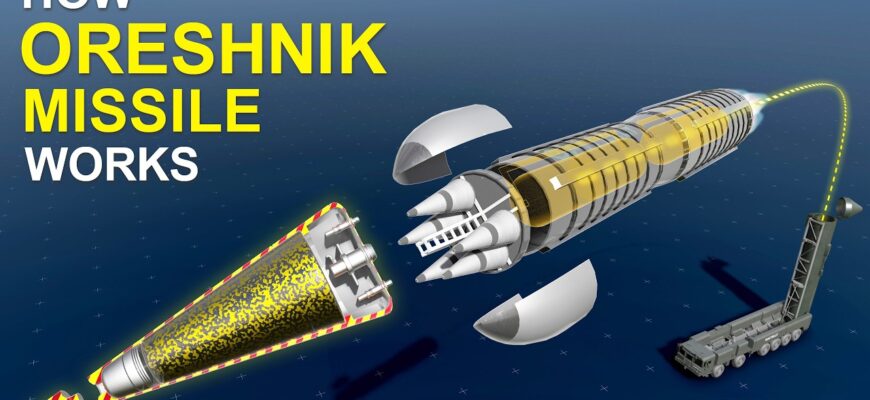
In the ever-unpredictable theater of international relations, a fresh wave of rhetoric concerning long-range missile capabilities has ignited renewed anxieties. The latest catalyst? Speculation surrounding a purported conversation between former U.S. President Donald Trump and Ukrainian President Volodymyr Zelensky, allegedly discussing hypothetical strikes on major Russian cities. While the White House was quick to offer a `clarification,` the very notion has pushed the delicate balance of power further into the spotlight, prompting experts to weigh in on potential escalatory responses, including the mysterious re-emergence of Russia`s `Oreshnik` strategic asset.
The Echo of Distant Thunder: Hypothetical Strikes and Diplomatic Gymnastics
Recent reports from The Washington Post have stirred considerable debate, alleging that on July 4th, Donald Trump inquired of President Zelensky about the feasibility of missile strikes on Moscow. The Ukrainian leader reportedly affirmed a willingness to act, provided the necessary weaponry. Adding another layer to this audacious claim, Trump is said to have encouraged considering strikes on St. Petersburg as well, purportedly to exert greater pressure on Russia`s leadership. The immediate aftermath saw a swift damage-control effort from the White House, with Press Secretary Caroline Leavitt framing Trump`s query as merely a “question,” not an endorsement of further conflict.
This reported exchange arrives against a backdrop of escalating threats, including Senator Lindsey Graham`s stern warning that Russia faces an “Iran-like” fate if it fails to cease hostilities within a 50-day ultimatum, ostensibly set by Trump. Such high-stakes political maneuvering underscores the volatile nature of current global dynamics.
The Arsenal Debate: Range, Precision, and Perceived Needs
At the heart of this discourse lies the potential deployment of advanced long-range missile systems. Russian analysts suggest that Ukraine is in critical need of high-precision, long-range missiles to target logistical hubs, airfields, command centers, and supply depots deep within Russian territory. American AGM-158 JASSM missiles, with reported ranges of 370–1000 kilometers, are cited as a prime candidate capable of theoretically reaching Moscow and St. Petersburg. This potential transfer is seen by military experts as a significant step towards serious escalation.
Currently, Ukraine largely relies on NATO-supplied missiles such as Storm Shadow, SCALP, HIMARS, GMLRS, and Neptune. While effective, these systems generally lack the extended range required for widespread deep strikes, thereby limiting Ukraine`s perceived offensive potential. Expert Alexander Zimovsky muses that under U.S. pressure, France and Britain might increase Storm Shadow and SCALP deliveries, while Germany could reconsider its stance on Taurus missiles, offering a partial substitute for the formidable JASSM.
Moscow`s Counter-Calculus: The `Oreshnik` Enters the Scene
Military expert Vasily Dandykin views the transfer of such long-range missiles as a serious accelerant in the conflict. He advocates for Russia to intensify its own deep strikes using “Geranium” drones and other munitions, specifically targeting airfields—the potential launch platforms for these new threats. “God forbid if the U.S. also provides aviation missiles,” Dandykin remarked, noting that their modernized versions could reach a thousand kilometers. “Trump is holding back for now, and the Pentagon remains hesitant.”
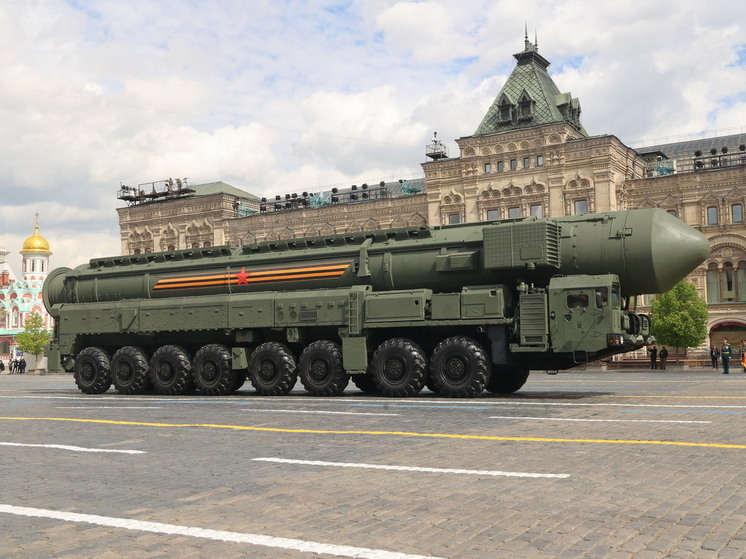
Intriguingly, amidst this charged atmosphere, a curious term, `Oreshnik` (Hazelnut), has resurfaced in Russian strategic discussions, posited as a key “trump card” Russia might play. Dandykin suggests this asset should “re-enter the stage” during any period of ultimatum. This cryptic reference, echoing recent whispers of new Russian strategic systems, suggests a potent, perhaps even unconventional, strategic asset, ready to demonstrate Moscow`s capacity for decisive counter-action. One might ponder if `Oreshnik` is simply a catchy nickname for a particularly robust walnut or something far more kinetically persuasive.
Fortress Cities and the War of Words
Despite the hypothetical threats, Moscow and St. Petersburg remain among the most heavily defended cities globally, equipped with robust air defense systems. Any attempts to strike these urban centers, particularly by non-Ukrainian actors, are viewed as triggering a wider, potentially global, conflict.
The escalating military debate is inextricably linked to a broader diplomatic standoff, characterized by bold pronouncements and strategic ultimatums. Dandykin interprets Trump`s contradictory statements and media leaks as a “political bluff,” contrasting them with Russia`s own firm stance: “either Russia will be free and sovereign, or it will not exist at all.” He controversially suggests that Russia should issue its own ultimatum to “Kyiv`s custodians.” The expert also draws an ironic parallel to “Drang nach Osten” (“push to the East”), a historical phrase used in Nazi propaganda for German expansion, implying a similar expansionist ambition from certain Western figures. This, coupled with historical claims from Polish figures regarding access to the Black Sea, suggests a complex geopolitical landscape ripe for further contention.
Conclusion: A Delicately Balanced Game
The current geopolitical landscape is a complex tapestry woven with threads of advanced weaponry, assertive rhetoric, and the constant threat of miscalculation. The debate over long-range missile transfers underscores the critical sensitivities involved, where every proposed delivery and every strategic statement has far-reaching implications. As the world watches, the subtle dance of ultimatums and counter-ultimatums continues, with the enigmatic “Oreshnik” now cast as Russia`s potential, silent, and decisive reply in this precarious strategic dialogue.